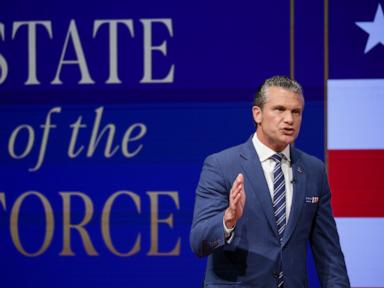
The Pentagon is getting a massive structural trim. Defense Secretary Pete Hegseth recently stepped up to the podium at Marine Corps Base Quantico and laid out a policy shift that sent immediate shockwaves through Washington. The administration is moving forward with a plan to cut twenty percent of the nation's top military brass.
If you think this is just another routine administrative downsizing, look closer. This is a direct overhaul of how the United States military manages its command structure, and it is reshaping the upper echelons of power in real time. Building on this topic, you can find more in: Stop Prosecuting the Parents and Start Looking at the Real Culprit.
The Anatomy of the Pentagon Top-Heavy Cut
Let's look at the numbers. Hegseth's directive doubles down on a previous ten percent reduction target, pushing the total elimination of general and flag officer slots to twenty percent across the board. Roughly 170 general and admiral positions are on the chopping block.
Critics call it a political purge. Supporters call it a long-overdue correction to bloated bureaucracy. Observers at USA Today have shared their thoughts on this trend.
For years, military analysts have pointed out that the modern Pentagon suffers from an inverted pyramid. You have more brass per service member than at almost any point in modern history. Critics argue that an overabundance of senior commanders creates administrative friction, redundant layers of approval, and slow-moving decision chains. Hegseth seized on this exact friction point during his "State of the Force" address. He framed the cuts not as an arbitrary numbers game, but as a return to core combat readiness.
Pushing Out the Old Guard
The shakeup goes far beyond vacant desk jobs. High-ranking officers who spent decades climbing the ladder are finding themselves pushed out, sidelined, or facing blocked promotions. Hegseth made no secret of his disdain for what he termed the ideological bureaucracy of previous administrations.
He stated plainly that the department is pivoting away from administrative bloat and toward a strict focus on frontline warriors. Alongside the officer cuts, the Pentagon has rolled out aggressive policy updates regarding fitness mandates and physical standards.
Lawmakers on Capitol Hill are deeply divided. Defense hawks and administration loyalists argue that stripping away layers of flag officers will empower lower-level commanders and streamline tactical execution. On the flip side, veteran lawmakers and retired military leaders warn that wholesale departures strip the armed forces of invaluable institutional knowledge and strategic depth at a volatile time globally.
What Happens to the Daily Mission
When you cut twenty percent of generals and admirals, the underlying work does not simply vanish into thin air.
Military operations require oversight, logistics planning, and strategic direction. Without flag officers to sign off on every tier, the operational burden shifts downward. Colonels, lieutenant colonels, and majors are absorbing those responsibilities immediately. Some military theorists argue this decentralization could foster faster, more adaptable decision-making on the ground. Others worry it will overwhelm mid-grade officers who are already stretched thin by ongoing global commitments.
The timeline for these reductions is aggressive, with full implementation targeted for the start of 2027. As the Pentagon moves to reshape its command leadership, the true test of this strategy will not be how many desk jobs disappear, but whether the force remains capable of projecting power when it counts.