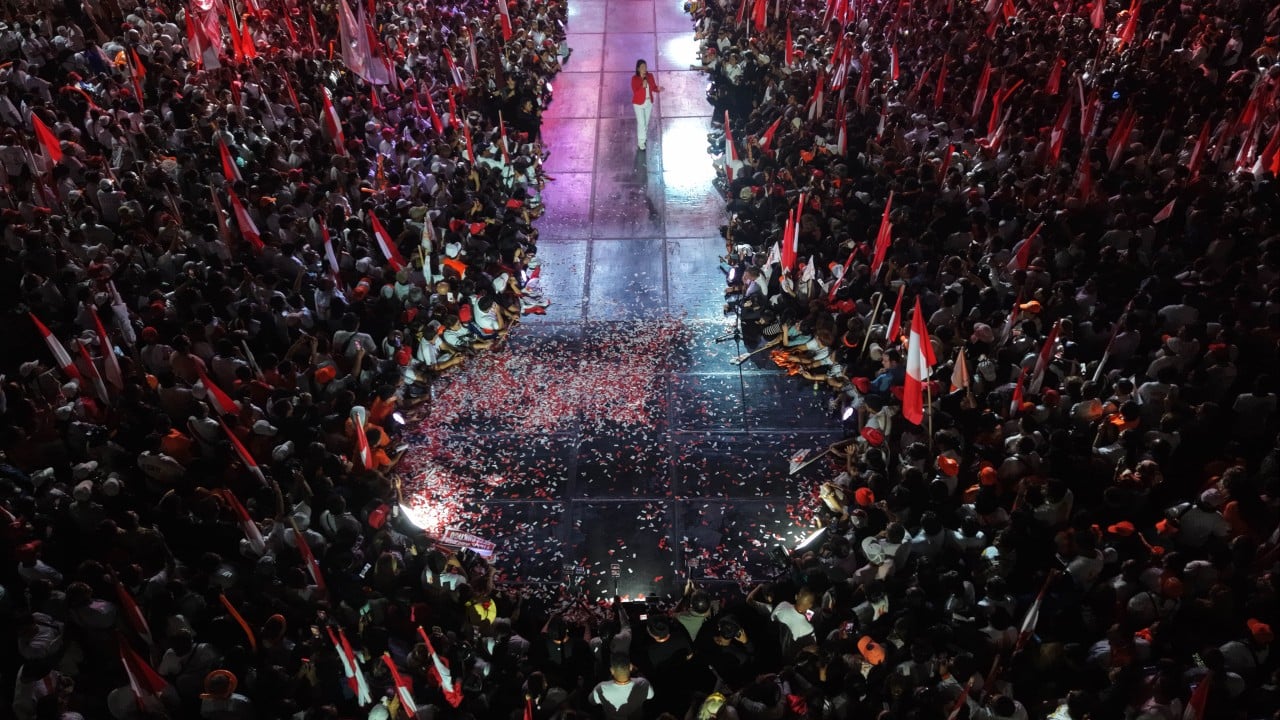
Peru is not merely choosing a president on June 7; it is deciding which specific brand of institutional decay it prefers. The upcoming runoff pits conservative Keiko Fujimori against left-wing congressman Roberto Sánchez, a duel that mainstream observers dismiss as a simple clash of ideological opposites or a ghost hunt involving the country's mid-90s autocracy. This surface narrative misses the far more corrosive reality beneath. The June 7 vote is a symptoms-only referendum on a completely hollowed-out state where political parties operate as legal shields for private syndicates, and where the rule of law has already been systematically dismantled by the very people on the ballot.
Voters are trapped in a claustrophobic cycle. In the first round on April 12, Fujimori captured just 17.19 percent of the vote, while Sánchez secured a mere 12.03 percent. This means that nearly three-quarters of the electorate active at the ballot box wanted absolutely nothing to do with either candidate. Yet, because of Peru's majoritarian run-off mechanics, one of these ultra-minority figures will assume control of a presidency that has seen eight different incumbents since 2016.
To understand why this nation of 34 million is hurtling toward another inevitable constitutional collapse, one must look past the standard headlines mourning the "shadow of Alberto Fujimori." The real crisis is not that the ghost of a 1990s dictatorship lingers; it is that the democratic architecture meant to replace it has been thoroughly gutted from within by both the left and the right.
The Mutual Extortion of the Peruvian State
For a decade, the international press has framed Peru’s political paralysis as an ideological war between Fujimorismo—the hard-right, law-and-order movement founded by Keiko's late father, Alberto Fujimori—and an aggrieved, rural left. The mechanics of Peru's Congress reveal a different story. Behind the theatrical floor debates in Lima, the far-right and the far-left have regularly voted in absolute unison when their own survival is on the line.
When former leftist President Pedro Castillo—whom Sánchez served as Minister of Foreign Trade and Tourism—attempted a clumsy, televised self-coup in December 2022, it looked like a definitive break. But during Castillo’s turbulent tenure, his lawmakers routinely partnered with Fujimori’s Fuerza Popular to achieve specific, self-serving outcomes. They joined forces to pack the Constitutional Tribunal with partisan allies, weaken the national superintendency of university education, and dismantle judicial oversight bodies.
This is not ideological polarization. It is a cartelized political market. The primary objective of these ostensibly opposing factions has been to shield themselves from the sweeping corruption investigations that have targeted nearly every living Peruvian head of state.
The judicial system is the primary casualty of this alliance. Constitutional checks have been replaced by a weaponized interpretation of "permanent moral incapacity," a vague 19th-century constitutional clause originally intended to remove mentally unfit leaders. Instead, it has become a parliamentary execution dock, used by shifting legislative majorities to remove executives who refuse to cut deals with informal economic interests.
The Shadow Economy in the Halls of Congress
The true drivers of Peruvian politics do not read economic textbooks; they run informal and illegal industries. The country's political parties have largely ceased to be ideological vehicles. Instead, they function as commercial franchises representing wildcat gold miners in the Amazon, informal transport syndicates in Lima, illegal logging networks, and unregulated private universities.
Roberto Sánchez, who has adopted the iconic peasant straw hat of the jailed Castillo to court the indigenous vote in the southern Andes, faces serious questions regarding his financial network. Just as the final vote counts confirmed his entry into the runoff, prosecutors leveled formal charges of financial crimes against him and his brother, alleging a failure to disclose 280,000 soles ($81,720) in campaign contributions. Sánchez’s allies cry foul, calling it a politically motivated maneuver by a weaponized judiciary. Whether the timing is suspect or not, the charges fit perfectly into a broader pattern of opaque funding that defines both sides of the aisle.
The newly elected Congress contains nearly two dozen individuals with active criminal records or open investigations. Ten of them sit within Fujimori's own Fuerza Popular delegation.
This deep institutional rot explains why a 2025 OECD study found that trust in government is lower in Peru than in any other Latin American or Caribbean nation. The population understands that regardless of who wins on June 7, the legislative branch remains beholden to specific economic lobbies that depend on weak state enforcement to survive.
The Bukele Temptation and the Security Vacuum
The single most potent issue in this campaign is not the legacy of the 1990s dictatorship, but a terrifying domestic security vacuum. Peru was once insulated from the extreme cartel violence seen in Colombia or Ecuador. That insulation has dissolved.
The rapid expansion of transnational criminal networks, most notably the Venezuelan-origin Tren de Aragua and predatory gangs spilling over from a chaotic Ecuador, has transformed daily life in Peru’s major cities. Extortion has become a regular operational cost for micro-businesses and public transit drivers. More than 400 major protests have paralyzed parts of the country over the past two years, driven not by macroeconomic grievances, but by transport workers demanding that the government stop them from being assassinated for protection money.
Keiko Fujimori has adapted her message to exploit this panic. For her fourth presidential bid, she has discarded any pretense of moderate centrist governance. She is running a hardline campaign openly modeled on the iron-fisted strategies of El Salvador's Nayib Bukele. Her platform promises "Peru in Order," a program anchored by the immediate deployment of the military to urban centers and the construction of four massive mega-prisons to warehouse gang members.
For a terrified populace, this authoritarian rhetoric holds immense appeal. It echoes the historical narrative her father utilized to crush the brutal Sendero Luminoso (Shining Path) insurgency in the early 1990s. The Faustian bargain her father offered—democratic freedoms in exchange for basic physical security—is once again on the table.
Sánchez’s counter-proposals appear entirely inadequate against this backdrop. He has called for internal purges of a notoriously corrupt national police force and enhanced investigative capabilities. For a voter whose storefront was hit by a fragmentation grenade last week because they missed an extortion payment, a promise to strengthen administrative investigative capacity sounds like empty rhetoric.
The Geopolitical Split
The outcome of the June 7 runoff will trigger immediate geopolitical consequences across the Americas. If Fujimori secures the presidency, she will find a highly receptive audience in Washington's current political climate. Her hard-right security doctrine and defense of Peru’s orthodox, market-led economic model line up precisely with the conservative foreign policy priorities dominant in the United States.
Regional analysts suggest a Fujimori victory could quickly pave the way for an expanded U.S. military footprint in South America. Peru could follow the recent path of Ecuador, allowing direct U.S. operational assistance to counter coca cultivation and secure deep-water ports, such as the massive, Chinese-built Chancay megaport. This would position Peru as a pivotal anti-communist, pro-market bulwark on South America's Pacific coast.
A Sánchez victory would trigger the exact opposite dynamic. His platform demands a radical overhaul of the 1993 constitution—the very document enacted by Alberto Fujimori that established Peru's highly successful, business-friendly economic framework. Sánchez wants the state to seize a dominant role in the economy, explicitly advocating for state control over mining, energy assets, ports, and airports.
Implementing this agenda would alienate international markets, stop foreign direct investment in Peru's lucrative copper sector, and invite immediate, aggressive pushback from Washington. Sánchez's close alignment with the regional leftist axes of Venezuela and Cuba would put Peru on a direct collision course with a U.S. administration completely intolerant of radical left experiments in the hemisphere.
The Structural Trap of the 1993 Blueprint
The tragic irony of modern Peru is that the very institutional architecture that guarantees its economic survival also guarantees its political instability. The 1993 constitution created an autonomous central bank and a highly insulated technocracy within the Ministry of Economy and Finance. This structure has worked remarkably well at protecting the macroeconomy from the madness of the political class. Even as eight presidents cycled through the government, Peru’s sol remained one of the most stable currencies in Latin America, and inflation was consistently kept at bay.
This insulation has had a dangerous side effect. It has decoupled political survival from economic performance. Because the macroeconomy runs on autopilot, politicians face no immediate structural penalties for destroying the judiciary, fracturing the party system, or turning Congress into an auction house for illegal syndicates. They can engage in endless political warfare because they know the central bank will keep the currency from collapsing tomorrow morning.
This safety net has run out of rope. The rise of transnational organized crime and the complete collapse of public trust mean that a stable currency is no longer enough to keep the social fabric from tearing. The state's total inability to deliver basic public services, health security, or physical safety has left a massive opening for disruptive actors.
Peru's voters are not facing a choice between democracy and dictatorship on June 7. They are choosing between a hard-right security state that will likely lock down public dissent to protect an unequal economic model, and a radical left executive that will likely wreck the country's economic foundations while getting bogged down in the same swamp of congressional corruption that swallowed its predecessors. The election will not resolve this predicament. The structural incentives for instability are deeply embedded in the Peruvian political system, ensuring that whoever claims victory on June 7 will likely spend their term fighting off the next impeachment vote before the ink on their inauguration certificate is dry.