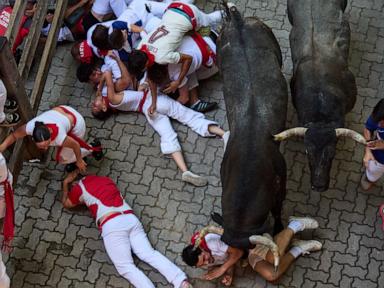
A horn to the face is exactly how a Saturday morning goes wrong in Pamplona. During the fifth bull run of the annual San Fermin festival, thousands of thrill-seekers packed into the narrow, cobblestone streets. Within minutes, a chaotic run turned bloody. One runner was pierced directly in the face by a bull horn, while 12 other runners were rushed to the University of Navarra Hospital for injuries ranging from severe bruises to head knocks.
It takes less than three minutes for six massive fighting bulls and their accompanying steers to sprint the 957 yards from the holding pens to the town's bull ring. But when a massive black bull from the Jose Escolar ranch broke away from the pack early, panic took over. The animal plowed into a crowd, smacking a runner full in the side of the head.
This is the reality of the San Fermin bull run that tourist brochures gloss over. People think they can outrun a 1,300-pound animal on slippery cobblestones. They usually can't.
The Anatomy of a Chaotic Run
When you watch the footage from Pamplona, the sheer lack of space stands out immediately. You have thousands of human beings dressed in traditional white clothes and red scarves, all squeezed into an 875-meter stretch of medieval streets. There is literally nowhere to go when things go sideways.
Saturday morning showed exactly how pileups happen. As the bulls charged through the crowd, stumbling runners fell over each other, creating human roadblocks. When a fighting bull hits a pileup, it doesn’t stop. It tramples or it gores.
Experienced locals know how to read the animals. They run just ahead of the horns and then peel away to safety. But the crowd on Saturday was full of people who seemed completely oblivious. Video footage showed multiple runners who had no idea a bull was breathing down their necks until the animal literally shoved them out of the way.
The black bull that caused the most damage separated from the herd. In the world of bull running, a isolated bull is the most dangerous thing on earth. When bulls stick together in a pack, they focus on running forward. When one gets separated, it feels threatened. It stops, turns around, and starts targeting individuals. That is exactly when people get gored.
What Most Tourists Get Wrong About Pamplona
The San Fermin festival is celebrating a major milestone. It has been 100 years since Ernest Hemingway published his 1926 novel The Sun Also Rises, the book that introduced this local Spanish tradition to the global stage. Since then, the event has topped international bucket lists.
But there is a massive disconnect between Hemingway’s romanticized vision of courage and the actual chaos on the ground. Tourism brings in massive crowds of novices every year, and that is where the danger spikes. Here is what people fail to realize before they line up at 8:00 AM.
- The streets are slick: City workers spray the cobblestones with an anti-slip substance before the run, but the combination of morning dew, spilled beer, and thousands of running shoes makes the ground incredibly slick.
- You cannot run the whole distance: No human can outrun a bull for 900 yards. The goal is only to run a short section—maybe 50 meters—right in front of the horns, and then clear the path.
- The danger doesn't end in the street: Once the bulls enter the arena, the crowd follows them in. Novices often get trapped in the ring with young bulls that will happily toss a tourist into the air.
The last fatal goring occurred in 2009 when a 27-year-old Spaniard named Daniel Jimeno Romero was pierced in the neck. While deaths are relatively rare thanks to an incredibly fast, highly trained medical team stationed behind the wooden barriers, severe injuries are guaranteed every single year.
The Hidden Costs of the Thrill
If you are planning to travel to Spain with visions of running with the bulls, you need a reality check on how the event actually operates. This is not an amusement park ride. There are no waivers that protect you from a horn, and local emergency services are there to patch you up, not to hold your hand.
First, look at your travel insurance policy. The vast majority of standard travel insurance plans have explicit exclusions for "extreme sports" or "hazardous activities." Running from a pack of angry fighting bulls definitely qualifies. If you get gored in the face like the runner on Saturday, you could easily face tens of thousands of dollars in medical bills and emergency medical evacuation costs out of your own pocket.
Second, understand the local rules. The local government in Pamplona has strict ordinances to try and keep the run manageable. You can be fined thousands of euros for breaking them.
- No cameras or phones: If you are caught trying to take a selfie or film a video while running, police will pull you out and fine you on the spot.
- No bags or footwear restrictions: You cannot run with a backpack, and you must wear proper athletic shoes. Flip-flops or sandals will get you ejected instantly.
- Sobriety is mandatory: Police guard the entry gates to the course. If you look visibly drunk or hungover from the night-long street parties, you will be pulled out of the line.
If you want to experience the atmosphere of San Fermin without ending up in a Spanish hospital bed, buy a ticket for a balcony spot along the route. Local residents rent out their apartment balconies overlooking Santo Domingo or Estafeta street. It will cost you some cash, but you get to keep your skin intact while watching the madness unfold below.