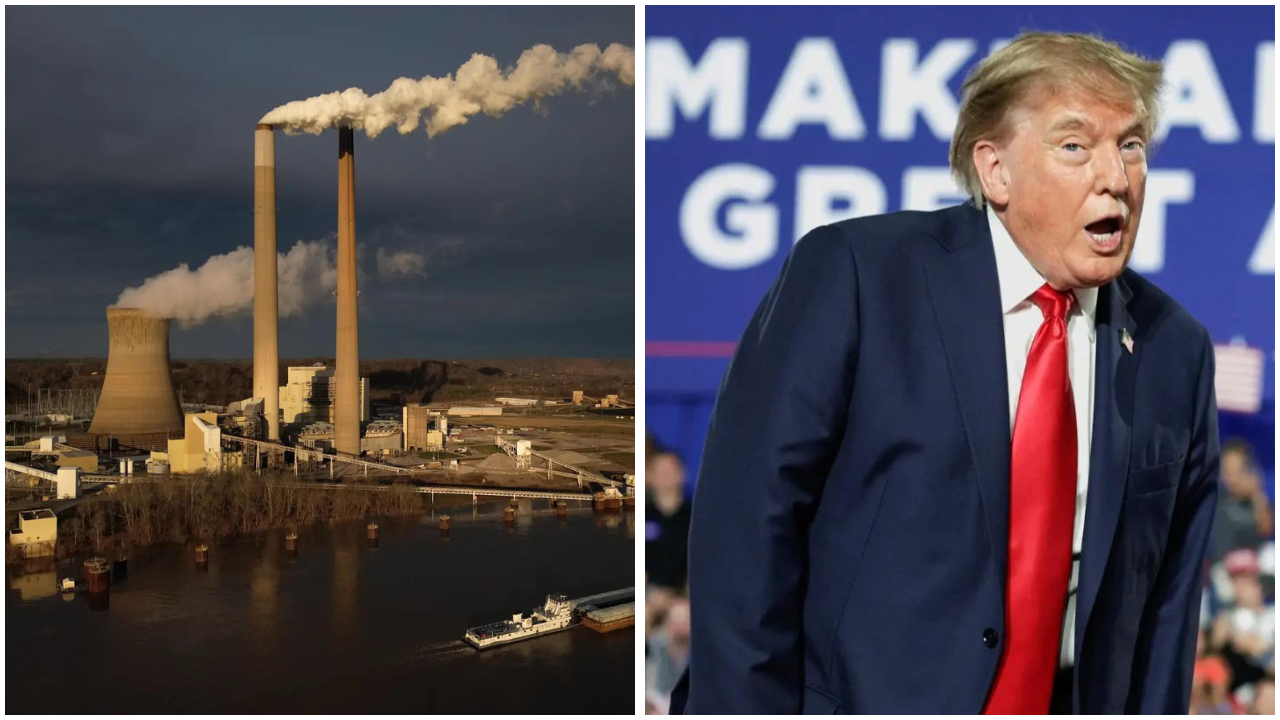
Washington just pulled the plug on federal carbon limits for American power plants, and everyone is yelling past each other.
If you listen to the talking heads on cable news, you'd think the Trump administration's Environmental Protection Agency single-handedly saved American coal from extinction—or doomed the planet overnight. Neither version holds up when you actually look at how the U.S. power grid operates.
In September 2026, EPA Administrator Lee Zeldin finalized a sweeping rule that scraps almost all Biden-era greenhouse gas limits on existing coal and natural gas power plants. The agency didn't stop there. It also introduced a supplemental proposal to erase the remaining federal carbon standards for fossil fuel plants altogether, effectively stripping itself of authority to regulate power sector climate pollution under Section 111 of the Clean Air Act.
Here's the catch. Utilities don't make 30-year capital investments based on a four-year political cycle.
Why the EPA Repeal Happened Now
To understand why this rule fell apart so quickly, you have to look at two colliding forces—a massive spike in electricity demand and a major legal shift.
For nearly two decades, U.S. electricity demand stayed mostly flat. That era is over. Artificial intelligence data centers, domestic manufacturing reshoring, and extreme summer cooling loads have pushed the American power grid to its limits. According to the U.S. Energy Information Administration (EIA), total U.S. electricity generation is projected to hit record highs through 2026 and 2027.
When grid operators worry about blackouts, reliability beats everything else.
The Biden-era rules finalized in April 2024 required existing coal plants operating past 2039 and new baseload natural gas turbines to capture 90% of their carbon dioxide emissions using Carbon Capture and Storage (CCS) technology. Utility executives hated it. Many argued that the pipeline infrastructure and geological storage sites needed for CCS simply couldn't be built fast enough to keep the lights on while data centers were gobbling up gigawatts of power.
On the legal front, the Trump EPA built its repeal on a much deeper foundation than previous regulatory rollbacks. Back in February 2026, the agency finalized a rescission of the 2009 Endangerment Finding—the foundational scientific and legal determination that greenhouse gases threaten public health and welfare. By arguing that power plant emissions don't significantly endanger public health under the Clean Air Act, and claiming the 2024 rules violated the Supreme Court's 2022 West Virginia v. EPA decision by forcing "generation shifting," Zeldin's team dismantled the legal scaffolding behind federal carbon limits.
The EPA projects that scrapping these rules will save utilities and consumers up to $310 billion in compliance costs.
Will Coal Actually Make a Comeback
Short answer? No. Not really.
If you've ever sat inside a utility integrated resource planning meeting, you know that regulations are only half the battle. Economics drives the grid. And right now, coal is losing on pure math.
Even without a single federal carbon limit on the books, burning coal is expensive compared to natural gas, wind, and solar. Research from energy economist Sue Tierney at the Analysis Group shows that operating existing coal-fired plants is frequently less economical than building and running cleaner alternatives. Aging coal boilers require massive maintenance budgets just to stay online, and their fuel supply chains remain volatile.
Look at the actual numbers from the grid:
- Coal's shrinking slice: Even with the regulatory pressure lifted, the EIA forecasts coal's share of U.S. electricity generation to sit around 16% in 2026, while natural gas dominates at roughly 40%.
- The emissions reality: Coal still produces roughly 750 million metric tons of carbon dioxide in the U.S. power sector—about the same amount as natural gas, despite generating only one-third as much electricity.
- Market momentum: In 2025, a 3% bump in overall electricity demand caused a temporary 13% jump in coal generation and a 4% rise in power sector emissions. Yet by late 2026, EIA data showed U.S. energy emissions easing back down by roughly 2% as coal use retreated once again.
You can't repeal the laws of finance. As Yale environmental economist Kenneth Gillingham has pointed out, higher electricity demand might keep a few marginal coal plants running a couple of years longer on the sidelines, but you can only fight market forces so much.
The Real Winner Is Natural Gas
While politicians love talking about coal miners, the real beneficiary of the EPA rollback is the natural gas industry.
During the first half of 2026 alone, proposals for new gas-fired power generation jumped by 50% as utilities scrambled to meet data center load growth. Under the Biden rules, building a brand-new, high-capacity gas plant meant committing to expensive carbon capture retrofits or hydrogen blending down the road. Now, developers can build standard combined-cycle gas turbines without federal carbon caps hanging over their financing.
That changes the math for Big Tech. Hyperscalers building massive AI clusters in Texas, Virginia, and the Midwest need 24/7 firm power right now. Solar and batteries are booming, sure, but when a data center needs 500 megawatts of uninterrupted baseload power tomorrow morning, developers turn to natural gas. Removing the federal CCS mandate removes the biggest permitting and financing headache for those projects.
What Happens to Carbon Capture and Clean Energy
Does this mean Carbon Capture and Storage is dead? Hardly. It just shifts from a regulatory mandate to a tax-credit play.
Without EPA rules forcing utilities to install scrubbers, power companies won't spend billions on CCS just to comply with the Clean Air Act. Instead, carbon capture development will concentrate in industrial hubs—like ethanol plants, fertilizer factories, and Gulf Coast hydrogen facilities—where capturing concentrated streams of CO2 makes financial sense under federal 45Q tax credits.
Meanwhile, renewable energy isn't slowing down just because Washington changed its mind. Wind and solar remain the cheapest sources of new bulk electricity in most parts of the country. Plus, the U.S. doesn't operate under one unified energy policy anymore. We have a fragmented, two-speed grid:
- State-level mandates still rule. States like California, New York, Illinois, and Washington have legally binding clean electricity standards on the books. A federal repeal doesn't erase state law.
- Corporate buyers hold the leverage. Fortune 500 companies—especially tech giants—have strict Scope 2 emissions targets tied to investor commitments. When Microsoft, Google, or Amazon signs a power purchase agreement, they demand clean energy credits regardless of what the EPA says.
- Court battles are already underway. Within weeks of the September 2026 final rule, a coalition of 21 states led by New York, alongside the American Lung Association and major environmental groups, filed lawsuits in the D.C. Circuit Court of Appeals to block the repeal.
How Investors, Businesses, and Homeowners Should Respond
If you're trying to figure out what this policy whiplash means for your wallet or your business, stop watching political pundits and start watching grid fundamentals.
First, if you're managing corporate energy procurement or facility costs, don't assume electricity prices are about to drop overnight because compliance costs fell. Rising demand from AI data centers and aging transmission lines are the primary drivers of higher utility rates right now. Lock in fixed-rate power contracts where you can, and continue investing in on-site efficiency or solar-plus-storage to hedge against peak demand charges.
Second, if you're an investor looking at energy stocks, separate political hype from capital allocation. Coal stocks often get a brief sugar high after deregulation announcements, but long-term institutional capital isn't flowing back into new coal plants. Look instead at natural gas midstream operators, grid equipment manufacturers, and utilities in high-growth regions that can actually build transmission capacity.
Third, expect years of regulatory uncertainty. Because the Trump EPA went after the underlying Endangerment Finding rather than just tweaking emissions formulas, this fight is headed straight back to the U.S. Supreme Court. Any utility executive building a power plant today knows that a future administration—or an adverse court ruling—could bring carbon limits back before that plant even pays off its construction loan.
Washington can rewrite the rules every four years, but steel in the ground lasts forty. Smart energy players build for the market, not the administration.