Read any breaking alert from the Persian Gulf right now and you'd think American air defense networks in Bahrain are burning to the ground. They aren't.
When the Islamic Revolutionary Guard Corps announced it destroyed U.S. radar systems in Bahrain and crippled shipping in the Strait of Hormuz, headlines treated the two events like identical military victories. That framing misses how modern conflict actually works in the Gulf. You have to separate information warfare from physical reality, because Tehran and Washington are fighting two completely different battles at the exact same time.
Let's strip away the state-media noise and look at what actually happened on the ground, at sea, and inside the diplomatic backchannels.
Why Bahrain Keeps Showing Up in IRGC Strike Announcements
Bahrain isn't a random dot on the map. This small island kingdom hosts Naval Support Activity Bahrain in Manama's Juffair district, which serves as the headquarters for the U.S. Navy's Fifth Fleet and U.S. Naval Forces Central Command. Covering roughly 62 hectares alongside port infrastructure at Mina Salman, it's the primary command and logistics nerve center for American naval power across the entire Middle East.
When the broader air conflict kicked off back in February 2026, U.S. bases across Gulf Arab states took heavy heat. Since September, though, Tehran mostly held back from direct strikes on American installations in neighboring Gulf countries, preferring to choke commercial shipping instead.
That pause ended abruptly in November 2026.
First came the November 13 incident. Following an airstrike on a telecommunications tower in Sirik—a coastal port town in Iran's southern Hormozgan province—the IRGC Aerospace Force declared it had obliterated a U.S. early-warning radar on Bahrain's Jabal ad Dukhan hill. U.S. Central Command immediately pushed back, reporting that American forces shot down two one-way attack drones over Bahrain with zero injuries and zero damage.
Barely a week later, on November 21, the pattern repeated at higher intensity. Under an operation dubbed "Ya Umm al-Banin," the IRGC fired a combined barrage of missiles and drones, claiming through Fars News Agency that it wiped out two American Patriot air-defense radars positioned near Riffa and Awali, alongside strikes targeting the Sheikh Isa and Juffair bases.
Bahrain's Interior Ministry told a sharply different story within hours. According to Manama, the strike hit a civilian industrial facility on Sitra Island, sparking a fire and wounding two people—a Bahraini citizen and a Pakistani resident—while leaving military radar arrays untouched.
The Verification Gap Nobody Mentions
If you've ever tracked military battle-damage assessments, you know the golden rule. Big claims require hard imagery.
In both November incidents, Iranian outlets released launch footage of drones leaving rails, yet provided zero satellite imagery or impact video showing destroyed Patriot batteries or early-warning domes. Why? Because hitting a hardened, layered air-defense site protected by integrated Patriot and naval interceptor grids is brutally difficult. Even when saturation raids break through, debris or off-course munitions often strike nearby industrial zones like Sitra rather than pinpoint radar emitters.
For Tehran, the domestic headline matters almost as much as the crater. After U.S. strikes hit Qeshm Island—just 22 kilometers south of Bandar Abbas—and knocked out communications infrastructure in Sirik, Iranian commanders needed to show a domestic audience that they could reach across the water and punch back. Claiming a destroyed U.S. radar accomplishes that political goal immediately, regardless of what commercial satellite photos show three days later.
Legal Traps Behind the Target Dispute
There's another massive reason Manama and Tehran disagree on what burned on Sitra Island. Jurisdiction.
If Iranian missiles demonstrably destroy American military hardware inside Bahrain, that triggers bilateral defense protocols directly between Washington and Manama. If those same munitions smash into Bahraini civilian industrial infrastructure, the attack falls under the Makkah Pact collective-defense framework, pulling Gulf neighbors into a broader regional security obligation. Calling a target a "U.S. radar" isn't just propaganda—it's an attempt by Tehran to frame the fight strictly as a bilateral U.S.-Iran exchange while discouraging Gulf Arab capitals from activating collective military responses.
What Is Actually Happening in the Strait of Hormuz
While the Bahrain radar claims generate fierce debate, the maritime crisis next door is completely undeniable. You don't need classified intelligence to see tankers burning or stopping dead in the water.
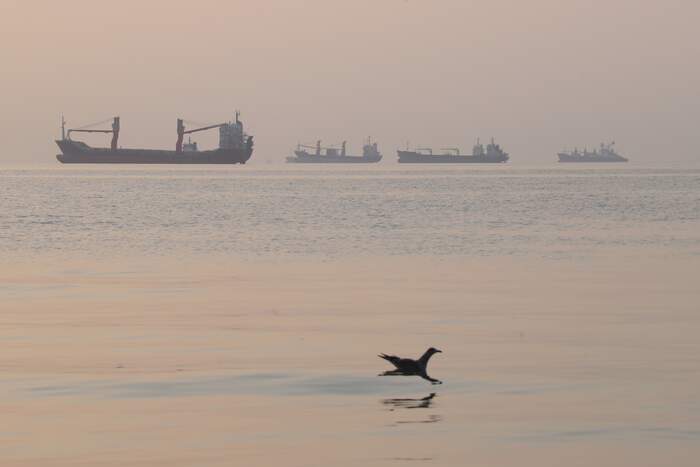
Roughly a fifth of the world's seaborne petroleum passes through the Strait of Hormuz, and by late November 2026, commercial transit had slowed to a crawl. Shipping intelligence firm Kpler documented days where commodity vessel crossings dropped into the single digits—and even hit zero on November 8. Al Jazeera reporting indicates at least 25 tankers have been struck in and around the waterway since November 14 alone.
Look at how the maritime escalation unfolded across just two weeks:
- Mine warfare returns: Alongside the November 13 Bahrain radar claims, the IRGC announced via IRNA that a liquefied petroleum gas tanker triggered a sea mine in the eastern Strait of Hormuz after allegedly ignoring transit warnings. While the United Kingdom Maritime Trade Operations held off on immediate confirmation, the psychological effect on maritime insurers was instant.
- Weekend tanker strikes: Over the November 21–22 weekend, two more tankers were hit in the strait while British and Iranian officials traded conflicting accounts over whether mines or direct munitions caused the blasts.
- Drone and aircraft attrition: Tehran claimed its air defenses downed an extended-range U.S. MQ-1 reconnaissance-combat drone over the eastern strait—touting it as the 20th American MQ-1 brought down—and even released video claiming a missile damaged a U.S. F-16 over the Persian Gulf on November 20, a claim CENTCOM flatly rejected.
Here's the catch most casual observers miss. This isn't a one-way blockade.
While Iran warns commercial ships not to enter the strait without Tehran's permission, U.S. Central Command is actively enforcing its own naval counter-blockade on Iranian ports. Iranian Parliamentary Speaker Mohammad Bagher Ghalibaf even floated the idea that the strait might eventually reopen, though never again under "toll-free passage" rules. Meanwhile, the economic squeeze inside Iran is visibly biting—Mohammad Allahdad, head of Iran's national electricity company, announced rolling power cuts starting late November due to severe fuel supply constraints and damaged energy infrastructure.
Why Diplomatic Talks Keep Stalling Mid-Strike
It sounds bizarre to outsiders, yet missiles are flying over Bahrain at the exact moment Qatari and Omani mediators are shuttling between capitals.
On November 17, Qatari officials held talks aimed at narrowing gaps between Washington and Tehran, followed days later by a Qatari delegation visiting Tehran directly even as tankers burned offshore. Why negotiate during active combat? Because both sides are trying to build leverage before sitting down, and neither wants to look like the party blinking first.
Three major roadblocks keep jamming the diplomatic gears:
- Nuclear verification stalemates: International inspectors still lack verified access to confirm the exact status and location of enriched uranium stockpiles in Iran, while Tehran has drawn hard red lines against shipping enriched material out of the country.
- The port blockade: Iranian leaders classify Washington's maritime blockade on Iranian ports as an ongoing act of war and refuse formal concessions until shipping restrictions lift.
- Domestic politics in Washington: Following the November 3 midterm elections—where Democrats won control of both chambers of Congress—the White House faces fresh political pressure and potential legislative constraints on prolonged military operations.
Meanwhile, Houthi forces off Yemen have kept up pressure near the Bab el-Mandeb Strait, meaning global freight operators aren't just dodging mines in Hormuz—they're getting squeezed at both ends of the Middle East's maritime corridors simultaneously.
How to Read Middle East Military Claims Without Getting Misled
If you follow energy markets, global supply chains, or international security, reacting blindly to every wire alert will cost you. State news agencies and military press offices both use public statements as tactical weapons.
Next time an urgent headline claims a major Gulf military installation was wiped off the map, run it through three quick filters before drawing conclusions:
- Check for commercial satellite or third-party maritime confirmation: Wait 24 to 48 hours for independent imagery analysts or advisories from the United Kingdom Maritime Trade Operations rather than trusting launch-pad videos.
- Watch insurance premiums and vessel tracking, not rhetoric: Tanker transits recorded by platforms like Kpler and war-risk insurance spikes tell you far more about actual Strait of Hormuz closure than fiery speeches from military commanders.
- Separate domestic signaling from operational reality: Pay close attention to what triggered the strike—such as the Sirik telecom tower hit—to see whether an attack is a calibrated face-saving response or a genuine attempt to cripple regional command networks.
Stick to verifiable tracking data, ignore unconfirmed battle-damage boasts from either side, and watch the shipping lanes—that's where the real score is being kept.