Indian Americans make up roughly 1.5 percent of the US population, yet their faces are suddenly everywhere on Capitol Hill. Most people assume this sudden surge is just a neat, unified story of immigrant success. They're wrong.
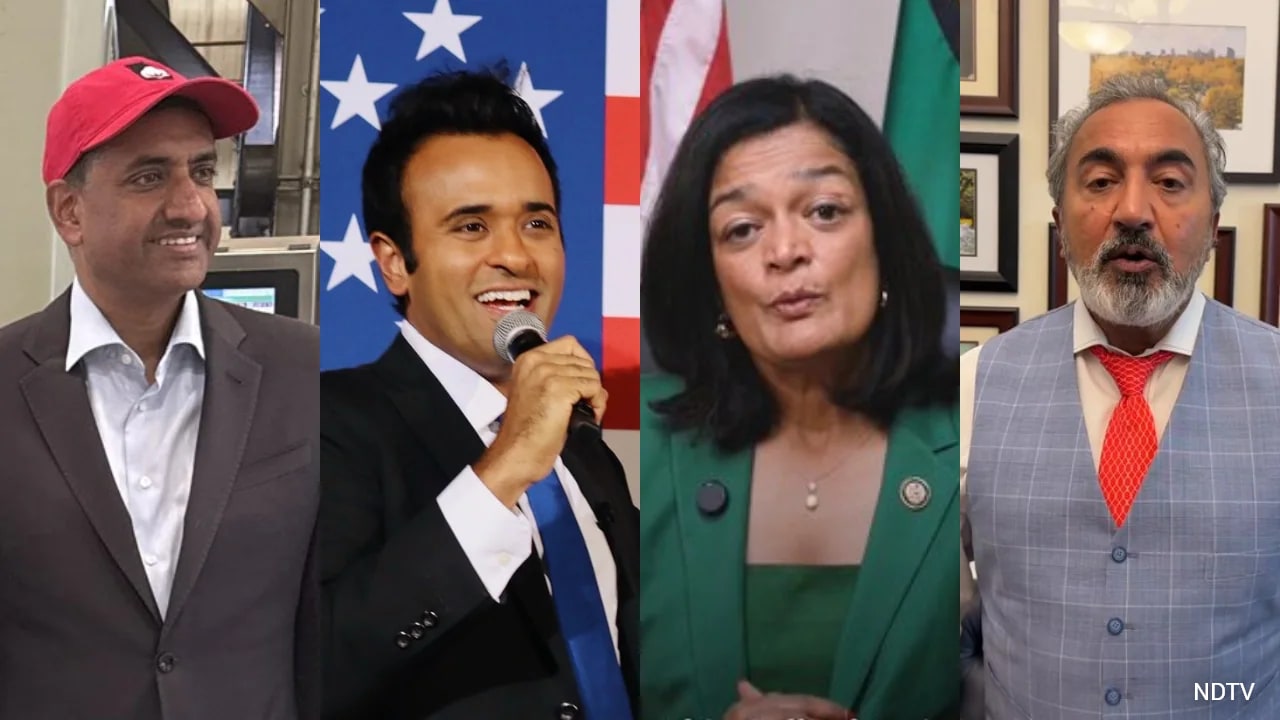
The reality of how Indian-origin candidates are performing in US elections is way messier, more ideologically divided, and far more fascinating than a simple headline about representation. If you look closely at figures like Pramila Jayapal and Ro Khanna, you aren't just seeing two trailblazers. You're watching a fierce battle over what Indian American political power actually looks like in practice.
The Myth of the Monolithic Desi Vote
When political pundits talk about South Asian voters, they often treat them like a single block. They think a candidate with an Indian surname automatically unlocks a flood of community cash and guaranteed ballots. That's a rookie mistake.
While the Indian American diaspora has historically leaned Democratic—a trend heavily documented by the Carnegie Endowment for International Peace in their recurring Indian American Attitudes Surveys—the community is fracturing along generational and ideological lines. Second-generation voters care deeply about domestic social issues, climate policy, and reproductive rights. Meanwhile, many older, wealthier immigrants prioritize tax policy, small business regulations, and US-India foreign relations.
Candidates know this. They don't campaign on heritage alone anymore because heritage won't survive a tough primary.
Why Fundraising Power Changed the Game
Money talks in American politics, and Indian Americans have become one of the most potent fundraising demographics in the country. Period.
Because Indian Americans boast the highest median household income of any ethnic group in the United States—often exceeding $140,000 according to US Census Bureau data—campaigns actively court them. Early money wins primaries. Organizations like the Indian American Impact Fund have stepped into this exact space, bundling millions of dollars to get South Asian candidates past the brutal early stages of congressional and state-level races.
Without that early financial backing, most newcomers get crushed by entrenched political machines before voters even learn how to pronounce their names.
Pramila Jayapal and the Progressive Vanguard
You can't talk about Indian-origin leaders in Congress without starting with Pramila Jayapal. Representing Washington's 7th congressional district since 2017, she didn't just join the Democratic establishment. She tried to rebuild it from the left.
As the longtime chair of the Congressional Progressive Caucus, Jayapal turned herself into one of the most powerful lawmakers in Washington. Her electoral performance in Seattle is dominant, routinely clearing 80 percent of the vote in general elections. Why does she win so easily? Because she understood her district's exact political DNA.
Jayapal didn't run as a cautious moderate trying to appease everyone. She leaned hard into Medicare for All, tuition-free public college, and aggressive corporate taxation. Her success proved that an immigrant woman of color—she was the first Indian American woman elected to the House of Representatives—could wield massive institutional leverage without watering down her ideology.
Yet her approach also highlights a sharp divide. Jayapal frequently clashes with the Indian government over human rights and press freedom issues in Kashmir. For progressive Indian Americans, this makes her a hero. For more traditional diaspora members who want unconditional US support for New Delhi, she's a polarizing figure.
Ro Khanna and the Silicon Valley Balancing Act
Then you have Ro Khanna. If Jayapal is the uncompromising progressive voice of the Pacific Northwest, Khanna is the hyper-connected strategist of Silicon Valley.
Representing California's 17th congressional district, Khanna defeated a fellow Democrat, eight-term incumbent Mike Honda, in 2016. That race alone shattered the idea of a unified Asian American political front. It was a brutal, expensive intra-party brawl. Since then, Khanna has become a fixture on cable news and a major bridge between the progressive wing of the Democratic Party and the tech executives who fund it.
Khanna's electoral resilience comes down to a very specific formula:
- Economic populism meets tech optimism: He backs progressive labor policies while fiercely defending Silicon Valley innovation and manufacturing revival.
- Bipartisan media saturation: Unlike many safe-seat Democrats, Khanna regularly appears on conservative networks to pitch his ideas directly to skeptical voters.
- Strategic diaspora engagement: As co-chair of the Congressional Caucus on India and Indian Americans, he works closely with Indian diplomatic officials while still addressing domestic civil rights concerns.
He wins comfortably in his district, consistently pulling around 70 percent of the vote, because he speaks the native language of his constituents—code, capital, and clean energy.
Beyond the "Samosa Caucus" Comfort Zone
For years, the handful of Indian Americans in Congress jokingly called themselves the "Samosa Caucus." Alongside Jayapal and Khanna, the group included Ami Bera, Raja Krishnamoorthi, and later Shri Thanedar, with Kamala Harris serving in the Senate before becoming Vice President.
Notice something about almost all of those House seats? They're mostly in deep-blue districts in California, Washington, Illinois, and Michigan. Winning a general election in suburban Chicago or Seattle as a Democrat isn't the hard part. Surviving the primary is.
Look at Raja Krishnamoorthi in Illinois's 8th district. He's a fundraising juggernaut who has raised tens of millions of dollars, allowing him to steamroll primary challengers and coast through general elections. Or look at Ami Bera in California, who survived several razor-thin general elections in a much more competitive Sacramento-area district early in his career by positioning himself as a pragmatic, moderate physician.
The real test for Indian-origin candidates isn't holding safe blue seats anymore. It's winning in purple swing districts and red states.
The Rise of Indian-Origin Republicans
If you only watch mainstream coverage, you'd think every Indian American politician is a Democrat. That's completely false. The GOP has produced some of the most prominent Indian-origin figures in modern American politics, even if their paths to power look wildly different.
Nikki Haley and Bobby Jindal both won governorships in deeply conservative states—South Carolina and Louisiana—long before the current wave of House Democrats arrived. Vivek Ramaswamy turned a long-shot 2024 presidential bid into a massive media platform by preaching aggressive economic nationalism and anti-woke populism.
Their electoral math is totally different from Jayapal's or Khanna's. In Republican primaries, Indian-origin candidates don't rely on concentrated South Asian voting blocs. There simply aren't enough Indian voters in rural South Carolina or Iowa to swing an election. Instead, they win by championing conservative orthodoxy—lower taxes, strict border enforcement, and deregulation—while using their personal immigrant family stories as proof that the American Dream works without government intervention.
Where Indian-Origin Candidates Still Struggle
It's easy to look at the rising numbers of Indian Americans running for school boards, state legislatures, and Congress and assume victory is inevitable. It isn't. Several stubborn roadblocks still trip up promising candidates.
First, name recognition and subtle bias still matter in low-information local races. When voters walk into a booth for a city council or judicial race, unfamiliar multisyllabic surnames can hurt a candidate who hasn't spent heavily on mailers and local ads.
Second, geopolitical baggage frequently hijacks local campaigns. Candidates in districts with large South Asian populations often get dragged into debates over Indian domestic politics, Hindu nationalism, or caste discrimination laws. Look at the fierce battles in California over caste-based anti-discrimination legislation. Those fights split local Indian American communities right down the middle, forcing candidates to pick sides on issues that alienate half their donor base no matter what they do.
Third, the incumbency trap is real. Many Indian American hopefuls run in diverse, Democratic-leaning districts where the current officeholder is already a popular Black, Latino, or white Democrat. Challenging a sitting member of your own party requires millions of dollars and a massive ground game. Most challengers fail on their first try.
How Voters Actually Judge These Candidates
When you strip away the media narratives, voters in the US judge Indian-origin candidates the exact same way they judge everyone else: What are you doing about my rent, my taxes, and my neighborhood?
Pramila Jayapal doesn't keep winning because she's from Chennai. She wins because Seattle progressives trust her to fight for labor unions and healthcare reform. Ro Khanna doesn't hold his seat because of his heritage. He holds it because engineers and working families in Fremont and Sunnyvale think he understands their economy.
If you want to track where Indian American political power is genuinely heading, stop counting surnames on national ballots. Pay attention to statehouse races in Texas, Georgia, and New Jersey, where growing suburban populations are turning South Asian voters into decisive swing blocs. Watch who controls the local fundraising networks, and keep an eye on the widening ideological split between progressive organizers and conservative business owners within the diaspora itself.