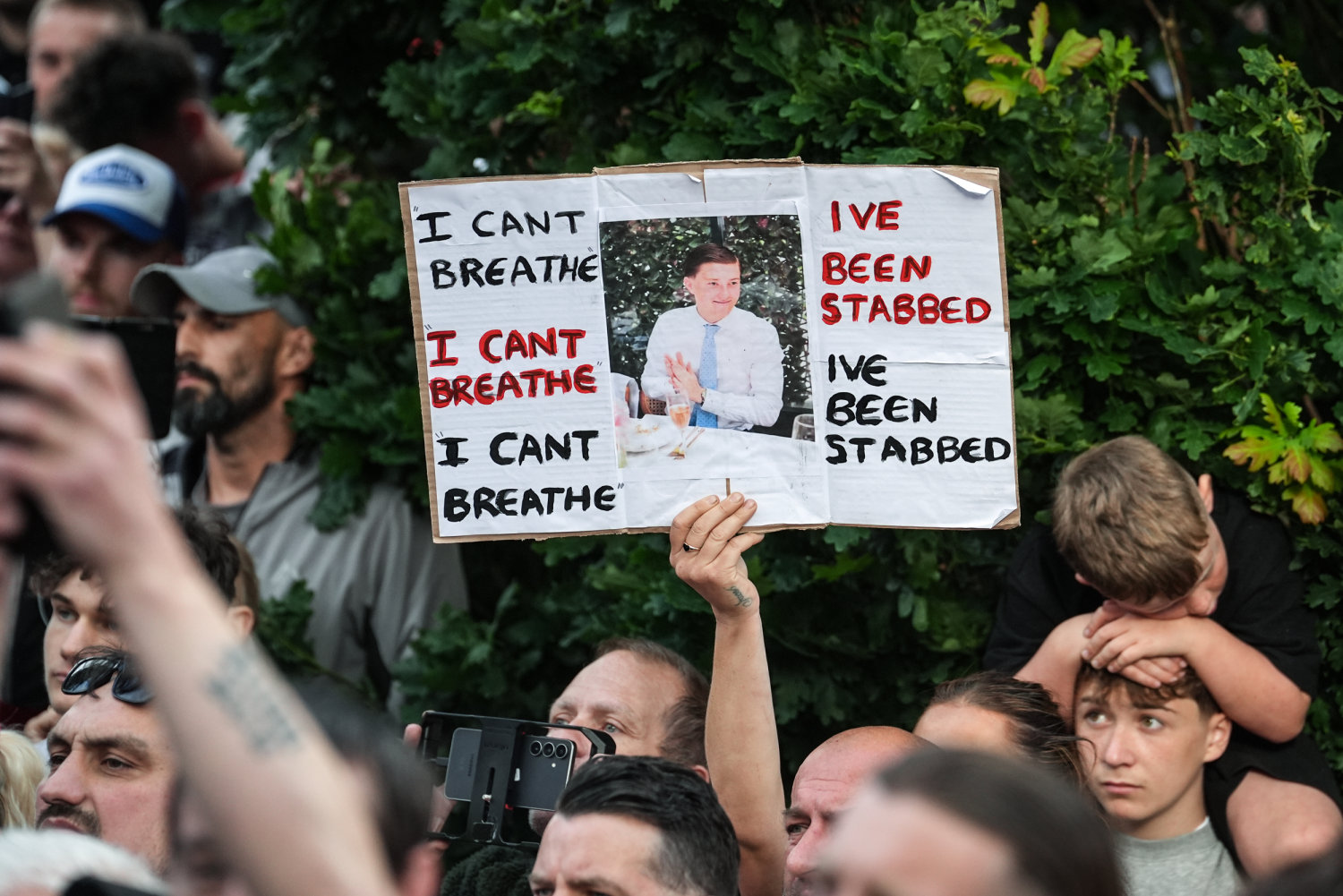
An 18-year-old university student lies bleeding on the pavement in Southampton, gasping for air. His name is Henry Nowak. He tells the responding police officers he has been stabbed and cannot breathe. Instead of receiving immediate medical aid, he gets handcuffed, read his rights, and arrested. Meanwhile, his killer, 23-year-old Vickrum Digwa, stands nearby, spinning a fabricated story about being the victim of a racist assault.
By the time officers realize the horrific mistake, it is too late. Nowak loses consciousness and dies right there on the street.
The release of the police bodycam footage capturing those final, agonizing moments has ignited a firestorm across the United Kingdom. It is a tragedy that has rapidly morphed into a high-stakes political battlefield, stretching from local street protests all the way to Washington. But as the noise grows louder, the actual facts of the case are being buried under a mountain of ideological spin.
If you want to understand why this specific murder has pushed Britain to a boiling point, you have to look past the talking points. The reality of what happened on Belmont Road is far more complicated, and far more troubling, than the viral clips suggest.
The Bodycam Footage That Sparked Nationwide Anger
The trial at Southampton Crown Court concluded with Digwa being sentenced to life imprisonment with a minimum term of 21 years. His mother, Kiran Kaur, was also convicted for helping him hide the murder weapon. But while the legal process has run its course, the public reaction is only intensifying.
The core of the outrage stems from how the police handled the immediate aftermath of the attack on December 3, 2025.
When the Hampshire and Isle of Wight Constabulary arrived at the scene following a 999 call, they faced a chaotic situation. Digwa immediately weaponized accusations of racism and physical assault, claiming Nowak had knocked off his turban and pulled his hair. This initial lie dictated the police response.
The sight of a dying young man in handcuffs while his attacker is treated as the victim has supercharged the debate around what critics call "two-tier policing." This is the belief that British authorities treat suspects and victims differently based on race, religion, or political identity. Figures like Reform UK leader Nigel Farage have tapped into this sentiment, urging public reactions of "pure cold rage."
The anger spilled onto the streets of Southampton, culminating in violent clashes where hundreds of protesters threw stones, flares, and chairs at police officers, leaving 11 officers injured. Courts have already begun handing down prison sentences to those involved in the rioting.
Weapons and the Distortion of Faith
A major point of contention in this case centers on the weapon Digwa used to kill Nowak. Digwa was carrying two blades that night: a small ceremonial kirpan and a much larger 21-cm Indo-Persian dagger known as a Pesh Kabz. During the trial, Digwa claimed he carried these weapons for religious reasons linked to his Sikh faith, arguing he acted in self-defense.
The jury completely rejected that defense. The court ruled that the large dagger was an offensive weapon, not a protected religious artifact.
This distinction has triggered an intense internal debate within the British Sikh community. A group of 11 Sikh Members of Parliament issued a blunt joint statement to clarify that the crime had nothing to do with their religion. They stated clearly that the weapon used was an offensive knife and that no religious protection or justification applied.
Local Gurdwaras and Sikh organizations have expressed deep concern that the actions of one individual are being used to demonize an entire community and threaten the legal exemptions that allow observant Sikhs to carry a traditional, ceremonial kirpan.
The Transatlantic Political Tug of War
The fallout from the Nowak case has crossed the Atlantic, turning a local British tragedy into an international diplomatic incident.
US Vice President JD Vance weighed in heavily on social media, sharing the bodycam footage and linking Nowak's death directly to the "mass invasion of migrants" and a failure of European elites. The US State Department followed suit, claiming that "two-tiered policing" is a sign of civilizational decline.
These comments drew a swift and sharp rebuke from Downing Street. Prime Minister Keir Starmer's administration accused external political actors of trying to interfere in British democracy and whip up division on the streets.
The irony of the American political commentary is that both Henry Nowak and Vickrum Digwa were British citizens born in the United Kingdom. The attempt to frame the murder as a direct consequence of recent mass migration completely ignores the actual backgrounds of the individuals involved.
What We Need to Focus on Instead
The Independent Office for Police Conduct is currently investigating the actions of the officers on the scene. There are serious, legitimate questions about how accusations of racism can so easily blind responding officers to obvious physical trauma. Systemic failures in police training and situational assessment need to be addressed immediately so that a victim is never handcuffed and ignored while bleeding to death again.
But the most important voice in this entire situation belongs to Henry's father, Mark Nowak. He has repeatedly and explicitly rejected attempts by politicians, activists, and foreign officials to use his son’s murder as a tool for cultural warfare. He has stated clearly that this tragedy was not about race or religion. He wants his son’s death to be a catalyst for addressing knife crime and making the streets safer, not for spreading hatred.
The next steps for the public and policymakers should focus on structural accountability:
- Reforming Initial Incident Assessment: Police protocols must be updated to ensure that immediate, visible medical trauma takes absolute priority over verbal allegations made at a crime scene.
- Depoliticizing Knife Crime Legislation: The conversation around weapon possession needs to focus on public safety and the enforcement of laws regarding offensive weapons, rather than targeting legitimate religious exemptions.
- Supporting the Victim's Family: Honoring the explicit wishes of the Nowak family means refusing to let a tragic loss of life be hijacked by partisan influencers looking to score political points online.