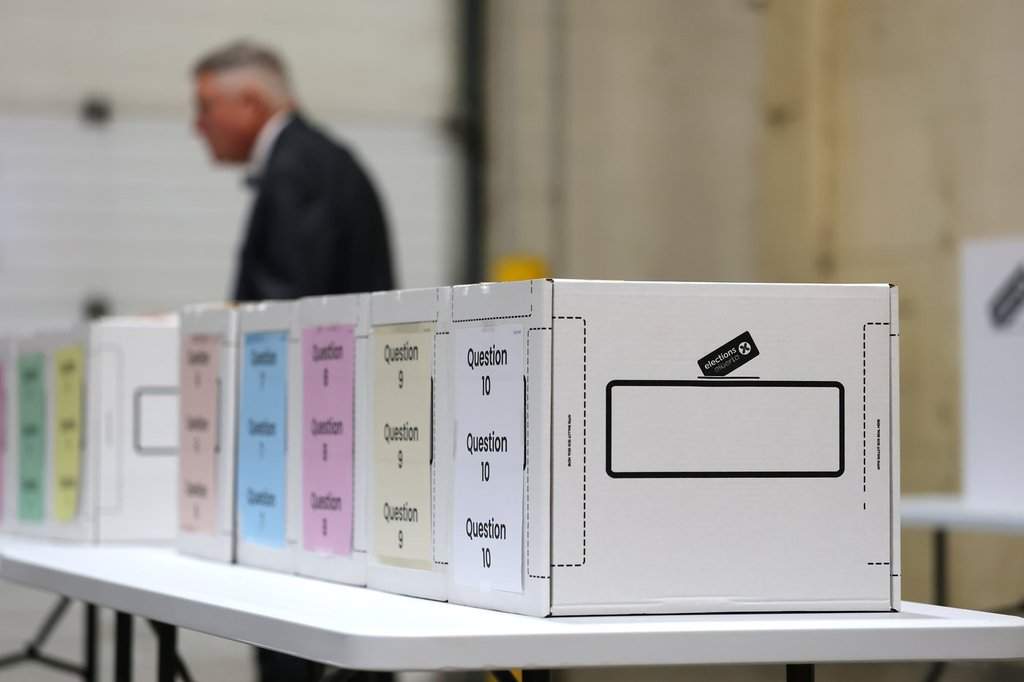
No, Elections Alberta didn't invent a secret plot to lock separatists out of polling stations. Space limits—alongside staffing pressures and how referendum rules treat political parties versus third-party advertisers—drove the restrictions ahead of Alberta's October 19, 2026 referendum.
When posts spread online claiming the ballot process was rigged because third-party advertisers couldn't appoint scrutineers, people naturally wondered what was going on behind the scenes. Watchdogs and voters care about eyes on the ballot box. That instinct makes total sense. Still, shouting "rigged" misses how polling rooms actually work when a province drops a 10-question ballot on election workers.
Having covered election logistics up close, I can tell you the unglamorous reality of running a busy poll is usually a tape measure and a headcount, not a smoke-filled room. A church basement or school gym has fixed square footage, voting screens, ballot boxes, lineup lanes, and accessibility aisles. Pack twenty extra observers into a tight room while voters line up for ten separate ballots, and traffic grinds to a halt.
Why Space Limits Hit Elections Alberta Scrutineers Hard
Space and logistics sit at the center of the restriction. Ahead of the October 19, 2026 vote, Elections Alberta told registered third-party advertisers they wouldn't be able to appoint scrutineers, drawing pushback from voices across the political spectrum—including separatist commentators and campaigners on both sides.
Think about what made this referendum unusually heavy to administer. Voters weren't just checking one box. The referendum put ten questions before electors covering constitutional issues, immigration, and Alberta's future in Canada, with separate numbered, colour-coded ballots for in-person voters and a wave of expected turnout. More ballot types mean more sorting, more tables, and more election staff working inside the same rooms.
Former electoral officers noted that space concerns make practical sense when turnout is projected to be high and staff are managing a ten-question ballot. Even people who wished more scrutineers could watch the process recognized that physical floor space and election operations put real ceilings on how many extra bodies can sit inside a polling place.
Official Parties vs. Third-Party Advertisers in a Referendum
Here is where the confusion gets sharpest. In a normal general election, candidates run and appoint scrutineers to watch their interests. A referendum doesn't run on individual local candidates the same way, yet third-party advertisers often drive much of the visible campaigning on referendum questions.
Under Elections Alberta's approach for the fall 2026 referendum, official political parties—such as the United Conservative Party and the NDP—were allowed to appoint scrutineers, while registered third-party advertisers were barred from appointing them due to logistical and space constraints.
A limit on third-party scrutineers isn't proof of a coordinated conspiracy, yet experts and campaigners both point out a real tension: when outside groups do heavy referendum campaigning without direct scrutineer access, public confidence can take a hit if voters feel one side has more eyes in the room.
That tension is worth taking seriously without jumping to bad-faith conclusions. Elections experts who weighed in on the controversy emphasized that while balancing competing interests in a referendum is a genuine policy challenge, the restriction did not point to an orchestrated scheme to exclude separatists. At the same time, critics argued that excluding third-party advertisers can look lopsided to everyday voters who follow advocacy groups more closely than party machinery.
What Scrutineers Actually Do—and Can't Do—at the Polls
A lot of online outrage assumes a scrutineer is basically an election cop who guards ballots or questions voters on a whim. Honestly, that's not the job.
According to Elections Alberta's referendum scrutineer rules, scrutineers are observers bound by an Oath of Secrecy and a strict Code of Conduct. Here is what the job really looks like on the ground:
- Watching procedures and counts: Scrutineers can observe voting procedures, check that a ballot box is empty before opening, and watch the ballot count (including special ballots).
- Checking records and raising objections: They can view voting records at appropriate times, challenge an elector's eligibility if they have grounds, view ballots during the count without touching them, and have objections recorded—though the Voting Officer has the final call on how a ballot is cast.
- Strict boundaries: Scrutineers do not handle ballots, cannot interact with or disrupt voters, cannot take photos or audio/video recordings, and cannot make phone calls inside the voting place.
In practice, a good scrutineer is quiet, attentive, and slightly bored for hours until the count begins. When new scrutineers forget the rules—like trying to chat up voters in line or pull out a phone for a quick clip—poll supervisors step in fast because order and voter privacy come first.
Why Legitimate Questions Don't Equal a Rigged Vote
Let's be candid. Telling frustrated voters "just trust the process" rarely settles an argument when emotions are running high over separation, immigration, or constitutional questions. People want receipts, clear rules, and visible fairness.
Still, there's a big difference between questionable rule design and a rigged count. In Alberta's referendum, ballots were counted by election officials under statutory procedures, with accredited scrutineers permitted to observe counts and register formal objections on the record. As CBC News reported, campaigners on both sides—federalist and separatist alike—expressed frustration over third-party advertiser limits, which cuts against the idea of a one-sided plot.
If there's a real lesson here for future referendums, it's communication and rule clarity well ahead of advance voting. When groups spend weeks campaigning on referendum questions and only learn late in the game that they can't put scrutineers inside polls, suspicion fills the vacuum.
Practical Steps If You're Tracking Referendum Rules or Volunteering
If you want straight answers rather than social media hot takes—or if you plan to get involved in future provincial votes—take these steps:
- Read the primary rules first: Check Elections Alberta's official referendum page and scrutineer guidelines directly rather than relying on cropped screenshots or viral threads.
- Volunteer through the right channel: Don't contact Elections Alberta to volunteer as a scrutineer; instead, connect directly with an official party or registered third-party advertiser when rules allow appointments.
- Channel volunteers into high-impact work: When polling-place observer spots are tight or unavailable, campaigns get more mileage putting volunteers on voter education, get-out-the-vote calls, and ride coordination.
- Document specifics if you spot an issue: If you observe an actual procedural concern at a voting location, note the location, time, and specific rule involved so it can be raised properly through official channels rather than turned into vague claims of fraud.
