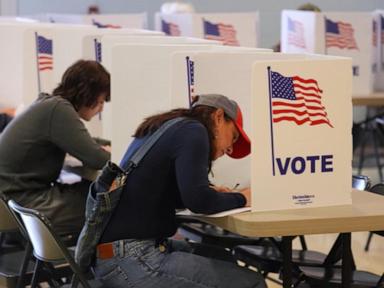
Every two years, cable news anchors stand in front of giant touchscreen maps and breathless reporters broadcast live from rain-soaked elementary school gyms, repeating the exact same phrase. "Millions of Americans are heading to the polls today."
It sounds dramatic. It feels urgent. Yet that single sentence hides how modern American elections actually work.
Election Day isn't really a single day anymore, and the surge of voters showing up in person on that first Tuesday in November is only one fraction of a massive, weeks-long logistical operation. If you only watch the local evening news coverage of Election Day lines, you're missing the bigger story about who votes, when they cast their ballots, and why turnout numbers behave the way they do.
The Myth of the Single Tuesday Rush
For generations, American civic life revolved around one specific date. Congress set the federal Election Day back in 1845—the Tuesday after the first Monday in November—specifically to accommodate an agrarian society where farmers needed a day to travel by horse and buggy after Sunday worship without interfering with Wednesday market days.
That calendar quirk stuck. Our voting habits didn't.
When news outlets run headlines about millions of Americans flocking to the polls on Election Day, they're describing a shrinking slice of the electorate. According to data tracked by the University of Florida Election Lab and the U.S. Election Assistance Commission, massive shares of the voting public now cast their ballots days or weeks before November even arrives.
In the 2020 presidential election, roughly 69 percent of all ballots were cast before Election Day via mail or early in-person voting. Even in the 2022 midterm cycle, when pandemic-era emergency expansions had largely rolled back, nearly half of all voters—over 50 million people—still voted early. By the 2024 cycle, early voting had firmly cemented itself as standard practice across both major political parties, with Republican leadership actively abandoning its previous skepticism and pushing "bank your vote" campaigns alongside Democratic ground games.
So when you see footage of crowded precincts on Tuesday morning, you're not watching the entire country decide its future in twelve hours. You're watching the final wave of a marathon that started in September.
Why Long Lines Don't Actually Mean Record Turnout
Here's something I've noticed after watching election coverage for years. TV producers love long lines. A queue wrapping around a community center makes for great B-roll, and pundits immediately point to those crowds as proof of historic enthusiasm.
Sometimes they're right. Often, they're looking at a localized bottleneck rather than a nationwide wave.
Long lines at a polling place usually stem from three mundane operational issues rather than an unexpected explosion in voter interest:
- Precinct consolidation: Counties frequently merge polling locations to save money on equipment and poll worker stipends, funneling three neighborhoods into a single gymnasium.
- Ballot length: In states with dozens of judicial retention races and complex ballot initiatives—think California, Texas, or Florida—each voter takes seven to ten minutes inside the booth instead of ninety seconds.
- Equipment hiccups: One jammed optical scanner or a slow electronic poll book check-in can back up a precinct by forty-five minutes before 8:00 AM.
Conversely, a quiet polling place at 2:00 PM doesn't mean apathy. In states like Oregon, Washington, Colorado, Utah, and Hawaii, nearly every registered voter automatically receives a ballot in the mail. You won't see dramatic lines outside a high school in Portland or Denver because the real turnout happened at kitchen tables and drop boxes three weeks earlier.
The Real Numbers Behind American Turnout
To understand what "millions of Americans" actually looks like in context, you have to look at the Voting Eligible Population, or VEP. Political scientists prefer VEP over total population because it strips out non-citizens, people under 18, and individuals disenfranchised due to felony convictions, giving a much cleaner picture of civic participation.
Historical data from the U.S. Elections Project shows just how wide the gap is between presidential years and midterm cycles:
- Presidential elections draw the big crowds. In 2020, turnout hit 66.6 percent of eligible voters—the highest rate since 1900. In 2024, turnout remained historically elevated at roughly 63.9 percent, with over 155 million Americans casting ballots.
- Midterm elections see a steep drop. During off-year congressional cycles like 2018 (49.4 percent) and 2022 (46.2 percent), tens of millions of regular presidential voters simply stay home.
- Local elections barely register. Municipal races for mayor, city council, and school board—the very offices that control property taxes, policing, and zoning—routinely see turnout dip below 20 percent.
That drop-off matters. A lot.
When news broadcasts celebrate millions of voters turning out in November, they rarely mention the millions of eligible citizens who sat out the primaries six months earlier. In many gerrymandered congressional districts and deeply partisan states, the general election in November is basically a formality. The real contest happened in a spring or summer primary where 15 percent of the electorate chose the nominee.
What Happens Behind the Curtain While Voters Stand in Line
Most voters walk into a precinct, show an ID or sign a poll book, fill in a few ovals, feed the paper into a scanner, grab an "I Voted" sticker, and head to work. The whole process feels simple.
Behind that curtain sits one of the most decentralized logistical operations in the world.
Unlike countries with a single national election ministry, the United States runs federal elections through more than 10,000 local jurisdictions. Counties, townships, and municipalities handle the heavy lifting. Every single state sets its own rules for voter registration deadlines, mail ballot signature verification, drop box security, and when election workers are allowed to begin processing early ballots.
This decentralization explains why election night results roll in so unevenly.
Take Florida versus Pennsylvania. Florida allows county supervisors of elections to begin opening, verifying, and scanning mail-in ballots weeks before Election Day. That's why Florida—a massive state with over 11 million voters—can report nearly all its results within two hours of the polls closing.
Pennsylvania, on the other hand, has historically barred election workers from even touching mail-in ballots until 7:00 AM on Election Day morning. Workers must slice open hundreds of thousands of outer and inner secrecy envelopes, flatten the paper, inspect signatures, and feed them through high-speed scanners while simultaneously managing in-person precinct operations.
The delay isn't shady. It's statutory. Yet every election cycle, uninformed commentators treat normal administrative timelines as suspicious anomalies.
The Poll Worker Bottleneck Nobody Talks About
You can have the best voting machines in the country and the highest voter enthusiasm in decades, and the whole system still grinds to a halt without volunteers.
Most local election boards rely heavily on retirees to staff polling places for fourteen- to sixteen-hour shifts. Since 2020, counties across the country have struggled with severe poll worker turnover driven by burnout, low pay, and rising hostility from frustrated voters.
According to surveys from the Bipartisan Policy Center, recruiting and retaining trained precinct workers remains one of the top operational headaches for local election officials. When a county falls short on staff, it has to close smaller neighborhood precincts and consolidate them into regional vote centers—bringing us right back to those long lines on the evening news.
How to Actually Make Your Vote Count Without the Headache
Watching millions of people participate in democracy is inspiring, sure. Waiting two hours in the cold because you didn't check your registration status until 5:30 PM on Tuesday isn't.
If you want to skip the friction and make sure your ballot actually gets counted without drama, handle the basics early:
- Verify your registration thirty days out. Voters get purged from rolls for inactivity or moved to inactive status after changing addresses. Check your state's Secretary of State portal well before the registration deadline rather than assuming nothing changed since last cycle.
- Read a sample ballot before leaving home. Ballotpedia and local county clerk websites publish exact precinct-specific sample ballots weeks ahead of time. Research the judges, county commissioners, and ballot measures at home so you aren't guessing inside the booth.
- Track your mail ballot like a package. Almost every state now offers automated text or email tracking (such as BallotTrax) that confirms when your ballot was mailed, received, and accepted for counting. If there's a signature mismatch, tracking gives you time to "cure" the ballot before certification deadlines hit.
- Sign up to work a shift. If you're tired of complaining about slow lines or local election administration, apply to become a paid poll worker through your county clerk's office—seeing the chain-of-custody checks firsthand will permanently change how you watch election night coverage.
Turnout headlines will always focus on the spectacle of Election Day itself, because cameras need somewhere to point. Real civic power belongs to the people who understand the calendar, verify their paperwork early, and show up even when the TV trucks aren't parked outside.



