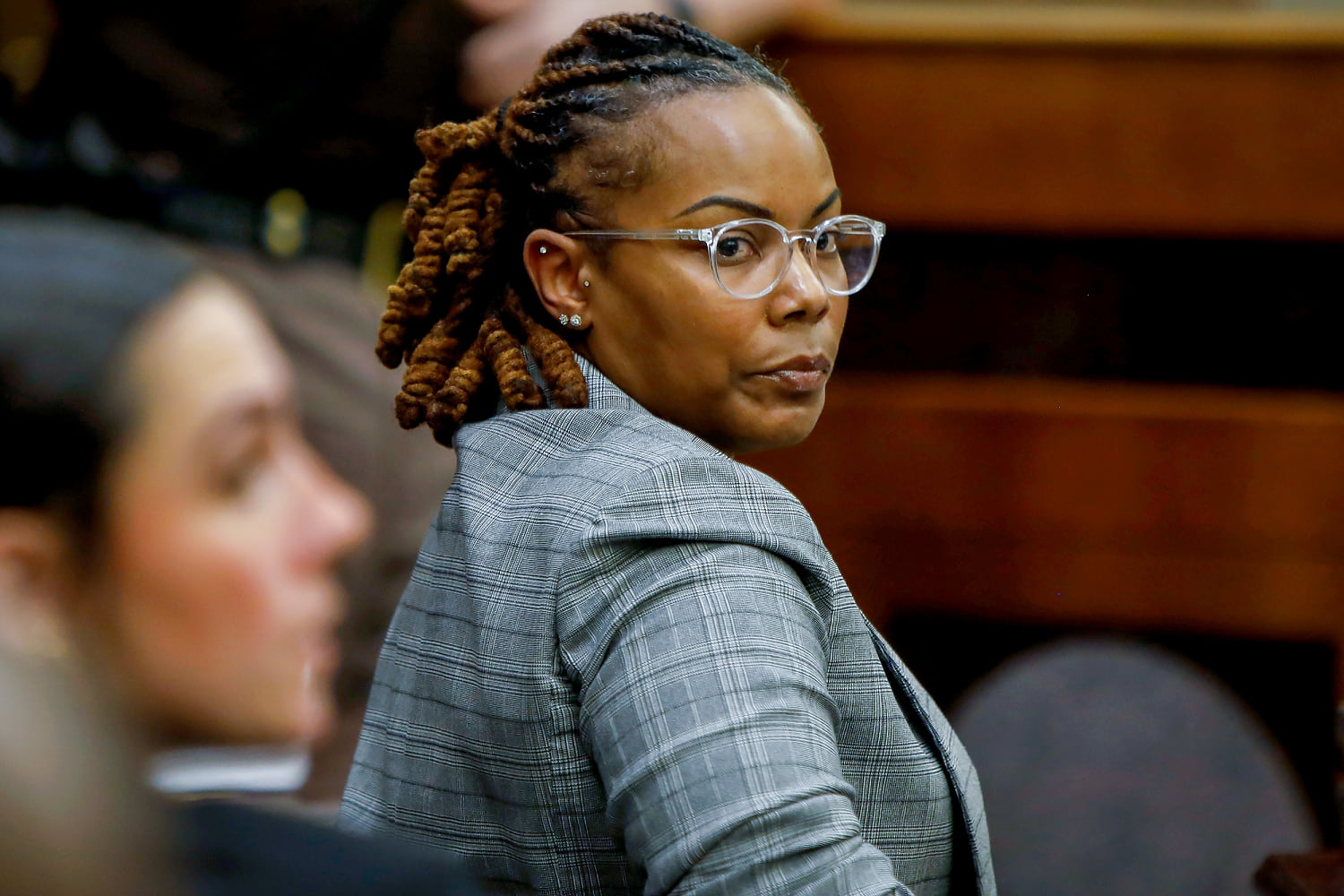
A Virginia courtroom just threw a massive wrench into how America defines accountability in school shootings. On May 21, 2026, Newport News Circuit Court Judge Rebecca Robinson completely dismissed all eight felony child neglect charges against Ebony Parker, the former assistant principal of Richneck Elementary School.
The public reaction was swift and predictably angry. Parker was the administrator who allegedly ignored multiple, frantic warnings that a six-year-old student had brought a 9mm handgun to school. Hours later, that same first-grader pulled the weapon out and shot his teacher, Abby Zwerner, leaving her with severe, permanent injuries.
How does someone walk away from that without a criminal conviction?
It's easy to look at this case and assume the system failed. But if you look closely at Virginia law and the exact strategy the prosecution tried to pull off, you realize that Judge Robinson didn't dismiss the case because she thought Parker did a stellar job. She threw it out because the prosecutors tried to twist an ill-fitting law to secure a dramatic conviction instead of adhering to the actual criminal code on the books.
The Legal Reality Behind the Headlines
The trial abruptly ended on its fourth day, right after the prosecution rested its case. Parker's defense team filed a motion to strike the charges, arguing that her actions simply didn't meet the legal definition of criminal child neglect. Judge Robinson agreed, stating bluntly that the court "is of the legal opinion that this is not a crime."
To understand why, you have to look at what prosecutors actually charged her with. They hit Parker with eight separate counts of felony child neglect. Why eight? Because there were eight bullets inside the gun that day. The state tried to argue that each individual bullet represented a distinct count of endangering the 19 children inside that classroom.
Judge Robinson saw right through this. She pointed out that this specific framing was a "mashup of legal theory" that completely contradicted established case law. Under Virginia precedent, to charge someone based on bullets in a weapon, those bullets actually have to be discharged. You can't just multiply felony counts based on the capacity of a magazine.
But the deeper issue is the definition of felony child neglect itself. In Virginia, criminal neglect requires proof of a willful act or omission so gross, wanton, and culpable as to show a reckless disregard for human life. It requires a showing that the defendant knew for a absolute fact that a specific, immediate danger existed and chose to do nothing.
Parker's attorney, Curtis Rogers, admitted his client made a terrible mistake. He acknowledged a severe "lapse in judgment." But a lapse in judgment—even one with catastrophic consequences—is civil negligence, not a felony crime.
What Really Happened on the Day of the Shooting
The timeline of January 6, 2023, has been picked apart for years, but the trial brought new details to light. Jurors watched a video interview of Parker filmed three days after the shooting by a school district human resources officer. It showed an administrator overwhelmed, distracted, and ultimately checked out.
Parker explained that when the first reports came in about the boy having a gun in his backpack, she was stuck in her office dealing with mandatory student testing. A reading specialist eventually searched the boy's backpack but found nothing. After that initial empty search, Parker basically assumed the threat was resolved. She told staff members that the child's mother would be arriving soon to pick him up anyway, and they would go through the rest of his things then.
Meanwhile, the actual danger was unfolding on the playground and in the classroom. Abby Zwerner noticed the boy was wearing an oversized hoodie and kept both of his hands shoved deep into his pockets during recess. She even texted a reading specialist about how weird and tense the boy was acting.
The defense used this exact point to deflect blame back onto Zwerner, arguing that if the danger was so obvious, the teacher shouldn't have let the boy back into her classroom. It was a brutal defense tactic, but it worked to create reasonable doubt. If the teacher who was right next to the student didn't immediately tackle him or flee the building, how could an administrator sitting in a closed office flights away be held criminally liable for knowing a shooting was imminent?
Civil Versus Criminal Liability
This dismissal doesn't mean Ebony Parker gets off scot-free. It just means she won't be spending the next 40 years in a state penitentiary.
The distinction between civil liability and criminal guilt is huge here. Just last November, a civil jury awarded Abby Zwerner a massive $10 million verdict in her lawsuit against Parker. In a civil courtroom, the burden of proof is much lower. You only need to prove that a defendant was negligent—that they failed to act as a reasonably prudent person would under the same circumstances.
- Civil Negligence: Failing to follow school policy, being disorganized, and ignoring warning signs because you are busy with paperwork. This costs you millions of dollars and your career.
- Criminal Negligence: Demonstrating a subjective awareness of an immediate threat to life and consciously choosing to disregard it. This costs you your freedom.
The school district's own policy manual explicitly stated that only a top administrator or a school resource officer had the authority to search a student for a weapon. Teachers couldn't just strip-search a kid. Parker held the keys to that authority and failed to use them effectively. That's why she lost the civil suit, which is currently being appealed. But it wasn't enough to satisfy the strict definitions of Virginia's criminal statutes.
The Dangerous Precedent of Overcharging
Prosecutors are under immense public pressure to find someone to blame after a school shooting. When the shooter is a six-year-old child who cannot be criminally charged under the law, that pressure intensifies. The boy's mother, Deja Taylor, was already sentenced to nearly four years in prison on federal weapons charges and state child neglect because it was her gun left unsecured.
But the public wanted the school system held accountable too.
The problem is that trying to fix systemic administrative failure through the criminal courts sets a terrifying precedent for educators. If every principal or vice principal can be jailed for a felony because they mismanaged a chaotic, fast-moving school day, nobody will want the job.
Judge Robinson noted that if the public wants school administrators to be held criminally liable for failing to prevent a shooting, the Virginia General Assembly needs to write new laws to reflect that. It is not the job of local prosecutors to invent brand-new legal theories on the fly because they are angry about a tragedy.
If you want to see actual change in school safety, the next steps don't involve celebrating or protesting this dismissal. They require pushing for clearer state legislation regarding administrative duty of care, investing in immediate-response security personnel, and fixing the broken communication loops between classrooms and front offices. Criminal courts can only enforce the laws we have, not the laws we wish we had.