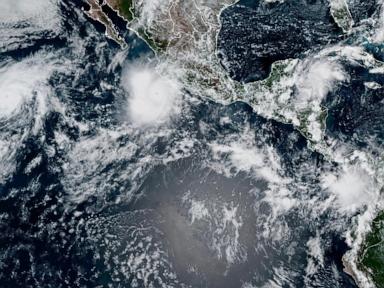
The Pacific hurricane season is turning into an unforgiving endurance test for meteorologists, emergency managers, and coastal residents alike. Months before the official window normally begins to wind down, ocean heat content and atmospheric instability have combined to forge storms of unprecedented ferocity. This is not a statistical anomaly that can be brushed aside as bad luck. It is the continuation of a shifting baseline where historical storm tracks no longer apply and intensity forecasts are regularly shattered by explosive rapid intensification.
Behind the terrifying satellite imagery of tightening eyewalls and expanding wind fields lies a thermodynamic engine running at a fever pitch. Sea surface temperatures across large swaths of the eastern and central Pacific have hovered well above normal historical averages. Warm water serves as the primary fuel source for tropical cyclones. When that energy reserve reaches deep down into the water column, storms do not merely strengthen; they detonate.
Forecasters tracking these systems face a nightmarish operational environment. Traditional computer models struggle to capture the speed at which a modest tropical depression can transform into a catastrophic Category 4 or 5 monster within a twenty-four-hour window. This phenomenon strips away precious hours of evacuation time for vulnerable island communities, shipping lanes, and low-lying coastal populations from mainland Mexico up through the Baja Peninsula and into the Hawaiian archipelago.
The Physics Behind the Atmospheric Pressure Cooker
Understanding why this season feels different requires looking below the ocean's surface. The upper ocean acts as a giant thermal battery. Over decades of industrial emissions and oceanic heat absorption, that battery has been steadily charged. When atmospheric conditions align—such as reduced wind shear and high ambient humidity—the lid blows off the pressure cooker.
A tropical cyclone extracts heat from the ocean and converts it into kinetic energy through deep convection. When the water temperature threshold crosses critical boundaries, the thermodynamic efficiency of the storm skyrockets. Air parcels rise with violent speed, drawing in moisture-laden winds from hundreds of miles away.
In past decades, a storm encountering cooler waters or dry air intrusions would quickly wither. Today, the sheer volume of stored ocean heat creates a buffer zone. Storms maintain their destructive core much farther north and much later into the calendar year than historical climatology suggests they should. This geographic expansion means communities that rarely experienced direct landfalls are now finding themselves in the crosshairs of major weather disasters.
Infrastructure Built for a Climate That No Longer Exists
Civil engineers designed municipal drainage systems, seawalls, and power grids based on historical weather frequency curves that belong to a bygone era. A hundred-year flood event or a once-in-a-generation storm surge is now occurring with alarming regularity.
Consider the vulnerability of electrical transmission lines strung across rugged terrain or coastal flood zones. When high-end hurricane winds collide with saturated soils, utility poles snap like toothpicks. Power grids go dark for weeks or months, cascading into secondary crises involving clean water shortages, spoiled medical supplies, and paralyzed emergency response networks.
Insurance markets are reacting with brutal financial logic. Premiums in high-risk coastal zones are spiking exponentially, while major underwriters pull back coverage altogether. Homeowners and small business operators are left holding properties that are rapidly becoming uninsurable. This creates a silent economic shockwave that threatens to devalue coastal real estate markets long before the rising seas permanently claim the shoreline.
Emergency management agencies are likewise stretched to their administrative limits. Traditionally, emergency response resources could be rotated from one region to another as a hurricane season progressed in a predictable wave. When multiple basins activate simultaneously or seasons stretch deep into the winter months, disaster relief funds dwindle, personnel experience severe burnout, and staging areas run dry of critical supplies like generators, tarps, and potable water.
The Human Toll of Perpetual Crisis
Disaster fatigue is a real and dangerous psychological phenomenon. When communities are battered year after year, or forced to evacuate multiple times within a single autumn, complacency sets in. Residents grow weary of packing up their lives, boarding up windows, and fleeing inland, only to find the storm shifted track at the last minute or caused manageable damage.
Yet relying on past near-misses is a catastrophic gamble. All it takes is one direct hit from a stalled, moisture-laden system dumping dozens of inches of rain onto mountainous topography to trigger catastrophic mudslides and flash floods that wipe entire towns off the map.
The economic divide in disaster recovery is widening as well. Wealthy property owners can rebuild or relocate with relative ease. Working-class families whose livelihoods depend on local tourism, fishing, or service industries often lack the financial resilience to survive a protracted displacement. They return to water-logged homes, toxic mold, and lost wages, sinking deeper into generational poverty with every passing storm cycle.
Confronting the New Normal
Ignoring the structural shifts in Pacific weather patterns is no longer an option for policymakers. Building codes must undergo a radical overhaul, mandating elevated structures, underground utility distribution, and reinforced concrete construction in high-risk corridors. Zoning laws that permit dense residential development in low-lying coastal surge zones need immediate, uncompromising enforcement, prioritizing managed retreat over endless cycles of rebuilding in harm's way.
At the same time, investment in high-resolution meteorological observation systems, airborne reconnaissance, and advanced artificial intelligence modeling must be prioritized to improve lead times for rapid intensification events.
The Pacific is sending an unmistakable signal through the roar of relentless winds and rising storm surges. The era of predictable weather patterns is dead. Unless infrastructure, economic planning, and emergency response paradigms evolve to match this relentless reality, the mounting human and financial cost will become unsustainable.