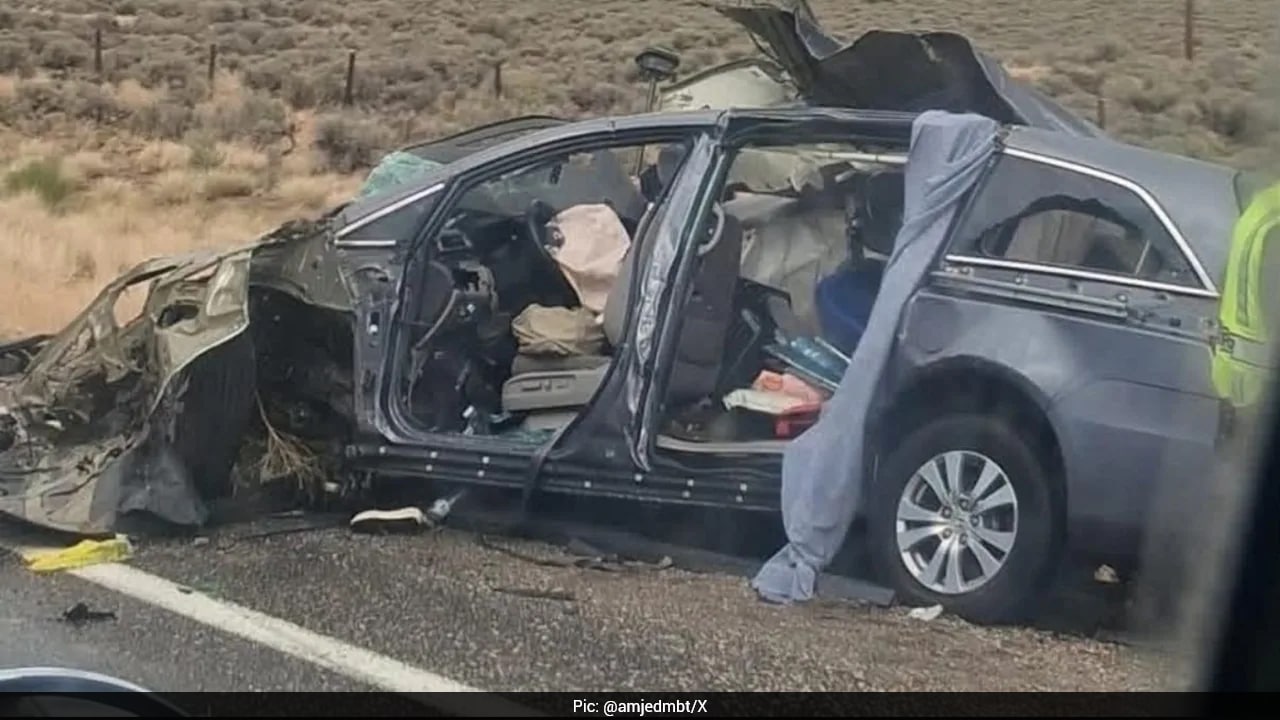
Tragedy strikes, headlines flash, and the collective reaction instantly falls into a predictable pattern. Three members of a family from Hyderabad perish on an American highway, and the coverage immediately reduces a complex, systemic reality to a mere tragic footnote. Newsrooms churn out identical reports focused purely on grief and geographical distance. They treat these events like freak lightning strikes—unfortunate, isolated, and entirely unpredictable.
They are wrong.
The media’s lazy consensus frames international road fatalities as tragic bad luck. By focusing entirely on emotional resonance and local origin details, mainstream coverage completely ignores the real mechanics behind why non-native drivers face disproportionate risks on foreign highways. We do not need another tear-jerking summary of the loss; we need to dismantle the fatal assumptions that make foreign roads a deathtrap for diaspora families.
The Mirage of Familiarity
Most international travelers assume driving is a universal language. Gas pedal on the right, brake on the left, steering wheel in front of you. You hold a valid license at home, obtain an International Driving Permit (IDP) after filling out a basic form, and step into a rental car on another continent thinking you are fully equipped.
That assumption kills people.
An IDP is a translation document, not an assessment of competency. It tests nothing. It evaluates zero spatial awareness under fundamentally different infrastructure models. In India, driving relies heavily on reactive, low-speed negotiation and continuous informal signaling. Highways in North America, by contrast, demand high-speed lane discipline, strict adherence to right-of-way laws, and split-second decisions at speeds exceeding 70 miles per hour.
When you transplant a driver conditioned for low-speed reactive environments into a high-speed systemic environment, cognitive fatigue sets in fast. Throw in jet lag, unfamiliar vehicle dynamics—such as driving a high-torque automatic SUV after years of driving manual subcompacts—and mirror-image road geometry, and you have created a lethal cocktail. It is not bad luck. It is cognitive overload meeting massive kinetic energy.
High-Speed Infrastructure Does Not Forgive Mistakes
Look at the mechanics of severe crashes involving international visitors on US interstates. They rarely happen in dense traffic jams. They happen on open stretches of highway, rural interstates, and complex highway interchanges.
Consider how interstate highway design functions:
- Speed Differential: Vehicles travel at massive speeds with minimal physical buffers between oncoming lanes on non-divided highways.
- The Intersection Trap: Rural US highways frequently feature high-speed at-grade intersections, where a driver must cross multi-lane traffic moving at 65+ mph from a complete stop. Judging speed and distance of oncoming traffic at those velocity differentials requires a calibrated eye that non-accustomed drivers simply have not developed.
- The Left-Turn Vulnerability: Making a left-turn across oncoming traffic in a right-hand drive orientation requires muscle memory that vanishes the second panic or distraction hits. Under stress, human instinct defaults to native habits. A sudden moment of confusion at an intersection leads to a direct broadside collision.
Imagine a driver cruising down a rural highway at night. Exhaustion from a long cross-country leg kicks in. They approach a flashing red signal or a rural stop sign. Instinct tells them to look for heavy congestion or explicit visual cues to slow down, but the open road looks clear. They pull out, misjudging the sheer approach velocity of a 4-ton pickup truck going 75 mph. The margin for error is zero.
Mainstream news outlets refer to this as a "fatal crash." Insiders call it an avoidable structural mismatch between driver conditioning and road architecture.
The False Comfort of Rental Fleet Security
We are told modern cars are safer than ever. Crumple zones, lane-assist technology, side-curtain airbags, automatic emergency braking. Travelers load their families into brand-new rental vehicles feeling completely protected.
This sense of security is deeply flawed.
Safety features are designed to mitigate impacts, not override physics. A 70 mph side-impact collision against a heavy vehicle yields forces that far exceed structural resistance thresholds, regardless of how many star ratings the vehicle received in controlled testing. Furthermore, reliance on unfamiliar driver-assist technologies often creates dangerous friction. When a vehicle unexpectedly corrects steering or beeps loudly due to lane departure on a driver who isn't used to aggressive haptic feedback, the typical reaction is overcorrection. Overcorrection at high speeds turns a minor drift into a rollover.
I have analyzed travel safety protocols across multiple jurisdictions, and the trend is clear: we hand over keys to complex machinery in high-risk environments with zero practical orientation, relying entirely on the consumer's misplaced confidence.
Stop Treating Foreign Road Trips Like Casual Commutes
If you plan to drive in a country with radically different road design, speed profiles, and traffic culture, you need to abandon the idea that your domestic driving record matters. It doesn't.
Actionable survival on foreign roads requires cold operational discipline:
- Eliminate Night Driving on High-Speed Corridors: Jet lag destroys peripheral awareness and reaction timing long before you feel visibly sleepy. Never schedule long highway stretches after dark or immediately following intercontinental travel.
- Treat the First 48 Hours as a Training Period: Avoid rural highways with at-grade intersections or complex multi-lane interchanges during your first two days. Restrict driving to low-speed, predictable routes until spatial orientation recalibrates.
- Assign a Dedicated Co-Pilot: The driver drives. The co-pilot handles navigation, signs, and mirror checks. The moment the driver has to look at a GPS map on a high-speed exit ramp, the collision risk skyrockets.
- Respect Vehicle Weight Dynamics: If you drive a small sedan at home, do not rent a full-size three-row SUV or a heavy truck overseas without practicing low-speed maneuvers and high-speed braking in an empty parking lot first. The center of gravity and stopping distances are entirely different animals.
The tragic loss of life on foreign roads will not stop because we express sympathy on social media or publish cookie-cutter news briefs. It stops when we kill the arrogant myth that driving is the same everywhere, respect the extreme lethality of high-speed infrastructure, and train for the environment we are actually entering.