Transatlantic Narcotics Submersibles: The Operational Architecture of Maritime Interdiction
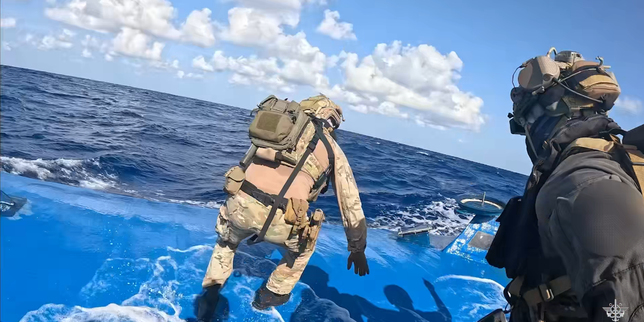
Transatlantic narco-submarines—specifically Low-Profile Vessels (LPVs) and fully Self-Propelled Semi-Submersibles (SPSS)—represent a sophisticated evolution in illicit maritime logistics. The recent interception of a multi-ton cocaine-laden semi-submersible by the French Navy (Marine Nationale) in the Atlantic Ocean highlights the complex operational, hydro-acoustic, and intelligence dynamics governing modern maritime interdiction. Countering these assets requires moving beyond basic naval presence toward an integrated sensor-to-shooter doctrine designed to exploit the physical and structural limitations inherent to semi-submersible engineering.
1. The Hydro-Dynamic and Tactical Profile of Low-Profile Vessels
Semi-submersibles used in transatlantic trafficking are not conventional submarines. They operate on specific engineering compromises dictated by payload capacity, construction costs, and survival probability:
- Freeboard Minimization: SPSS vessels maintain mere inches of freeboard above the waterline. By submerging the bulk of the displacement hull, the vessel reduces its visual, radar, and thermal cross-section.
- Thermal and Acoustic Signatures: Engine exhaust is typically routed through water-cooled manifolds or piped directly underwater to baffle heat signatures from satellite and forward-looking infrared (FLIR) sensors. The low-rpm diesel engines produce minimal acoustic signatures relative to ambient oceanic noise.
- Structural Integrity vs. Disposable Architecture: Constructed primarily from fiberglass, Kevlar, and wood reinforcement, these platforms lack pressure hulls. They are built for a single directional transit, optimized for volume rather than structural longevity or crew safety.
The primary vulnerability of an SPSS is not its visibility on radar, but its functional constraints: poor maneuverability, limited fuel-to-payload ratios, and extreme reliance on precise dead-reckoning or satellite navigation systems.
2. Interdiction Mechanics: The Sensor-to-Shooter Chain
Intercepting a semi-submersible in international waters requires multi-domain surveillance synchronization. The process follows a strict operational continuum:
[Wide-Area Maritime Surveillance] -> [Signal & Satellite Intelligence] -> [Airborne Vectoring (Maritime Patrol Aircraft)] -> [Surface Interceptor Deployment (Frigates/RHIBs)] -> [Boarding and Seizure Operations]
- Wide-Area Detection: High-altitude maritime patrol aircraft (MPA) and space-based Synthetic Aperture Radar (SAR) scan high-probability transit corridors. Because an SPSS displaces water at speed, it leaves a distinct hydrodynamic wake (V-wake) even when the hull remains largely submerged.
- Tactical Vectoring: Once a target signature is established, surface combatants—such as naval frigates equipped with fast-response rigid-hulled inflatable boats (RHIBs)—vector into the intercept zone.
- The Scavenge Risk (Scuttling): The most critical phase of the physical interdiction is preventing the crew from opening scuttle valves. SPSS operators are routinely trained to flood the vessel upon detection, sinking the cargo into abyssal depths to destroy physical evidence before boarding teams can secure the hull.
3. Human Infrastructure and Supply Chain Logistics
The detention of four suspects during the Atlantic interdiction points to the compartmented human structure required to execute transatlantic transits:
- Navigation and Technical Crew: Transatlantic crews generally consist of 3 to 4 individuals: a primary navigator, an engine technician, and deck hands. These individuals are rarely high-ranking cartel members; they function as specialized tactical contractors.
- Logistical Support Network: Launching an SPSS requires remote estuaries (predominantly along the Pacific or Caribbean coastlines of South America) with dedicated clandestine shipyards, fuel-bunkering networks, and security perimeters.
- Offloading Protocol: The destination phase in European waters relies on secondary transfer networks—either fishing vessels meeting at pre-coordinated rendezvous points or small craft retrieving buoyed payloads anchored off littoral zones.
4. Strategic Imperatives for Maritime Security
Naval forces operating in the Atlantic transit zone face structural challenges that extend beyond individual interceptions. Sustained counter-narcotics efficiency requires three primary shifts:
- Predictive Analytics over Patrol Density: Increasing surface ship hours across millions of square miles of ocean yields diminishing returns. Surveillance must shift toward predictive machine-learning models analyzing anomalous vessel tracking data and satellite imagery of clandestine shipyard construction sites.
- Standardized Interdiction Protocols for Scuttled Hull Recovery: Boarding units require specialized rapid-plugging and de-watering equipment tailored to custom fiberglass scuttle valves, ensuring evidence retention before the platform reaches negative buoyancy.
- International Intelligence Integration: The window between an SPSS departing its launch point and entering deep oceanic transit is the narrowest point of failure. Multilateral intelligence sharing must focus on real-time operational handoffs between launching-state authorities and blue-water naval forces.
Executing a successful interdiction ultimately depends on breaking the vessel's low-profile advantage before the crew can trigger structural destruction, turning a low-visibility profile into an inescapable containment trap.


