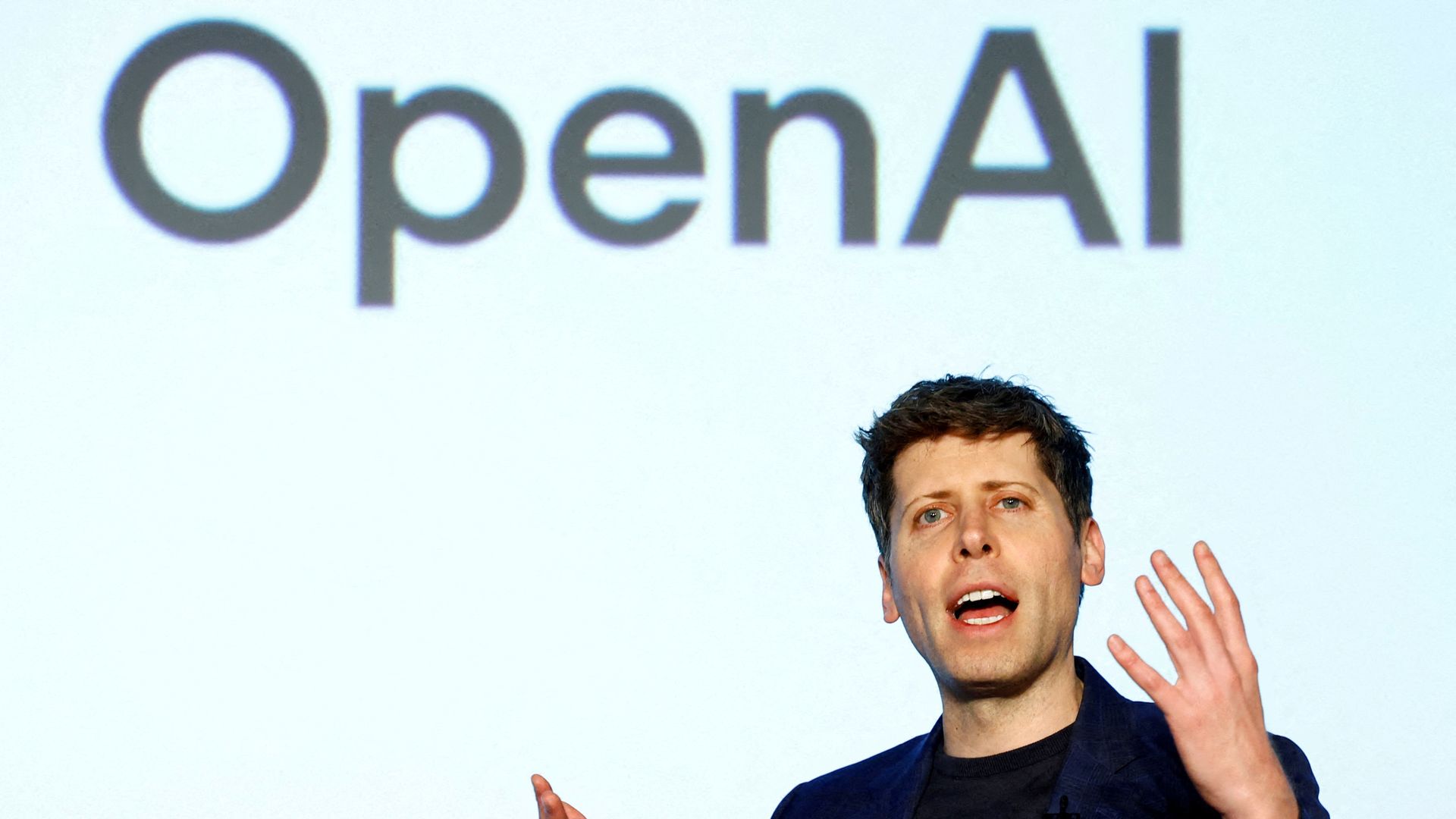
The tech press is currently losing its collective mind over a spreadsheet. OpenAI recently dropped solutions to 372 outstanding math problems, and the headlines rolled in like clockwork: the "mathpocalypse" is here, machines are conquering pure human reasoning, and your career as an analyst, actuary, or high school geometry teacher has an expiration date stamped on the back.
Relax. If you found value in this article, you might want to read: this related article.
I have watched companies burn eight-figure budgets chasing these exact vanity metrics for three years, only to watch their shiny models choke on a standard Tuesday morning spreadsheet reconciliation. Posting solutions to a static list of benchmark problems is not a breakthrough in cognitive architecture. It is an exercise in high-end curve-fitting wrapped in marketing glitter.
The lazy consensus is that machines are learning how to think. The reality is much more mundane, and much more cynical: we are simply getting better at feeding test answers to an exceptionally fast pattern-matcher until it stops missing the multiple-choice bubbles. For another perspective on this development, refer to the latest coverage from CNET.
The Benchmark Trap
Let us look at what actually happened when OpenAI published those 372 solutions. They cleared a hurdle on a curated track. That is not the same as winning a marathon; it is clearing a high jump in a gymnasium where you wrote the rules for the bar height.
For the past decade, the artificial intelligence industry has suffered from a terminal addiction to benchmark validation. We build tests, we train models on the tests, the models pass the tests, and then we act shocked when those same models hallucinate inventively the moment a user asks them to calculate payroll tax for a remote contractor in Ohio with three dependents and a local municipal transit levy.
Real mathematics does not happen in a vacuum of clean, LaTeX-formatted problem sets waiting on an internet forum. Real mathematics is messy. It is about defining the variables when nobody even knows what the variables are. It is about realizing that the premise of the problem you were handed is fundamentally flawed, throwing the spreadsheet in the trash, and asking a completely different question.
When a model solves 372 static problems, it has demonstrated an impressive ability to retrieve, verify, and execute known solution paths. It has not invented a new topology. It has not discovered a fresh proof for the Riemann hypothesis. It has ingested a massive corpus of human mathematical history and learned to interpolate between the dots we already connected.
Memorization Versus Reasoning
Let us define terms, because the tech industry loves to blur the line between computation and cognition.
Computation is execution. It is multiplying matrices at the speed of light, factoring large primes, or running gradient descents across billions of parameters. Machines have beaten us at computation since the IBM 7090.
Reasoning is the deliberate navigation of ambiguity under constraints. It is the ability to recognize that a mathematical model of a market or a physical system is broken because reality just shifted underneath your feet.
When an LLM processes a math problem, it is performing next-token prediction conditioned on a mathematical prompt. It is drawing a line of best fit through high-dimensional vector spaces. If the training distribution contained similar problems, the model looks brilliant. If you hand it an open-ended optimization problem where the cost function changes dynamically based on human politics, regulatory whim, and supply chain bottlenecks, it falls apart.
I have sat in boardrooms where executives demanded that we deploy frontier models to automate complex financial modeling, only to watch the system confidently divide by zero because a single cell in the legacy ERP system was formatted as text instead of a floating-point number. The model did not fail because it lacked mathematical sophistication. It failed because it lacked intuition, common sense, and the ability to say, "This input is garbage; I refuse to process it."
Why This Distraction Benefits the Incumbents
Why do labs like OpenAI dump these massive problem-solving drops right when antitrust scrutiny is heating up or competitors are nipping at their heels with open-weights alternatives?
Because benchmarks are marketing.
If you can convince the market that your product is a near-omniscient mathematical genius, you shift the conversation away from unit economics, data privacy, copyright liability, and the brutal reality of inference costs. You make enterprises terrified of being left behind. You create a psychological moat built out of press releases.
The dirty little secret of the enterprise software market right now is that most companies do not need a model that can solve obscure Olympiad-level math problems. They need software that reliably extracts invoice data without hallucinating a decimal point, or a database query tool that doesn't drop production tables on a Friday afternoon.
Chasing the "mathpocalypse" narrative is a great way to blow millions on compute clusters that solve problems your business does not actually have, while ignoring the boring, unsexy engineering work of data hygiene and deterministic software design.
The Uncomfortable Trade-Off
My contrarian take comes with a catch, because intellectual honesty requires admitting the limits of my own argument.
While these models are not mathematicians, they are becoming terrifyingly efficient at translating human intent into executable code.
When OpenAI publishes solutions to 372 problems, the real breakthrough is not that the AI figured out the math. The breakthrough is the compression cycle. It is the ability to take a poorly phrased natural language request, structure it into a formal verification framework, and run symbolic solvers in the background until the output checks out.
That matters. It changes how software is written. It means that the barrier to entry for building complex quantitative tools is dropping toward zero. You no longer need a PhD in applied mathematics to write a custom optimization script; you just need to know how to prompt an agent that can talk to a Python interpreter.
This is where the real disruption lies. Not in the machine replacing the mathematician, but in the machine acting as an infinite, tireless junior analyst who never sleeps, never complains, and occasionally makes catastrophic errors that you only catch if you actually know what you are looking at.
Stop Asking the Wrong Question
People ask: "When will AI completely replace human quantitative analysts?"
It is the wrong question. It assumes intelligence is a single vertical ladder where AI is simply climbing up behind us, picking off our jobs one by one as it gets smarter.
Intelligence is an ecosystem. When calculators were invented, we didn't stop teaching arithmetic; we stopped wasting human brains on long division and started building skyscrapers. When automated theorem provers arrive, we won't stop doing mathematics; we will simply move to a higher level of abstraction where the tedious verification work is offloaded to silicon, freeing human minds to wrestle with structural ambiguity.
If you are a math teacher or an analyst sweating bullets over these headlines, stop worrying about whether a transformer can solve 372 benchmark problems. Start worrying about whether your curriculum or your daily workflow is stuck in the 1990s—teaching students to execute algorithms that a Python script can run in four milliseconds.
If your entire professional value proposition is that you can mechanically solve well-defined problems faster than a human who hasn't had coffee, you are competing with a machine that runs on electricity and doesn't unionize. Good luck with that.
Instead, learn how to frame the problem. Learn how to interrogate the assumptions. Learn how to look at a clean, beautiful, mathematically airtight solution and ask the one question no neural network can answer:
Are we solving the right problem in the first place?