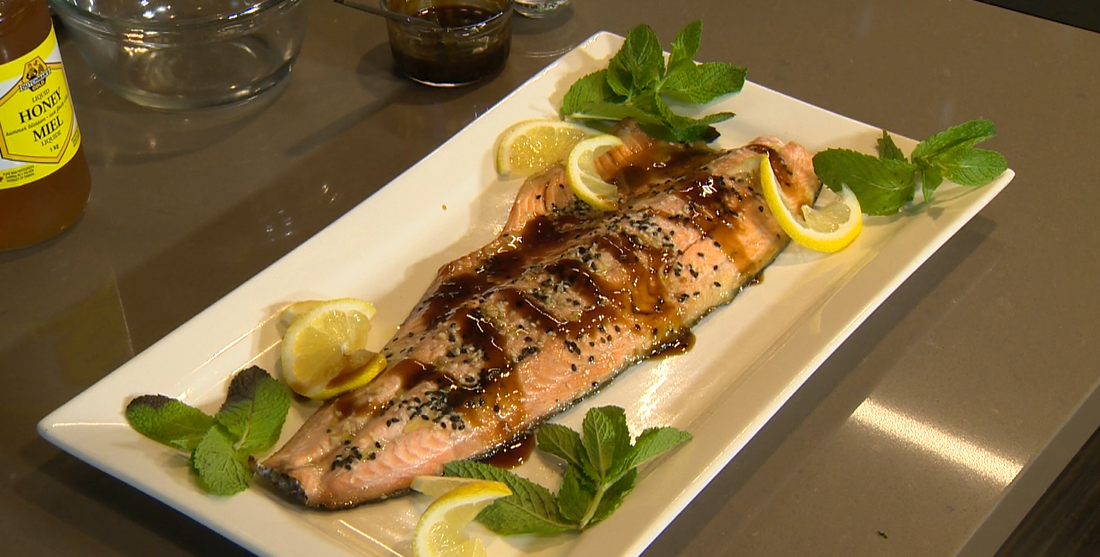
The internet is flooded with food bloggers telling you that a "one skillet honey soy glazed salmon" is the ultimate 15-minute weeknight miracle. They show you a glossy, heavily edited photo of a pristine filet swimming in a pool of dark, shimmering sauce. They promise minimal cleanup and maximum flavor.
They are lying to you.
Or, at the very least, they are prioritizing fewer dirty dishes over basic culinary science. If you follow the standard internet template for a one-pan honey soy salmon, you are practically guaranteed to get one of two outcomes: a perfectly cooked piece of fish coated in an watery, under-reduced sauce, or a beautifully thick, sticky glaze paired with overcooked, chalky, sulfurous salmon and bitter, burnt garlic.
You cannot cook a delicate, fat-dense fish like salmon and a high-sugar, high-heat reduction in the exact same pan at the exact same time without compromising one of them. The thermal mechanics of the ingredients flatly refuse to cooperate.
Stop trying to force a harmony that chemistry forbids. If you want restaurant-quality salmon at home, you need to break the one-skillet rule.
The Fatal Flaw of the Honey Soy Glaze
To understand why the standard recipe fails, look at the boiling points and behavior of the glaze components. A classic honey soy glaze relies on three main pillars: soy sauce (water, wheat, soybeans, salt), honey (fructose, glucose, water), and aromatics like garlic and ginger.
Honey burns. Fructose and glucose begin to caramelize around 110°C (230°F), but because honey is highly concentrated, it moves rapidly from caramelization to pyrolysis—otherwise known as burning—if exposed to direct pan heat for too long. Garlic is even more sensitive. The tiny amount of moisture in minced garlic evaporates almost instantly in a hot skillet, leaving the volatile sulfur compounds and sugars to scorch and turn acrid.
Now look at the salmon. Salmon contains a protein called albumin. When the muscle fibers in salmon contract due to heat, they squeeze out this liquid protein. If you cook salmon gently and correctly, the albumin stays largely inside the fish, keeping it moist. If you blast it with the high heat required to rapidly reduce a watery soy sauce blend down to a sticky glaze, the albumin gushes out, coagulating into those ugly white clumps on the surface of your fish.
You are left with a choice in a single skillet:
- Scenario A: You pull the salmon out when it hits a perfect medium-rare (around 52°C or 125°F). Your sauce is still thin, runny, and tastes like warm, salty soy water because it hasn't had time to reduce and thicken.
- Scenario B: You leave the salmon in the pan until the honey and soy sauce reduce into a thick, glossy lacquer. By the time the sauce reaches that optimal viscosity, your salmon has been subjected to hard boiling in sugar liquid for ten minutes. It is now dry, fibrous, and tastes like cardboard.
I have spent over a decade in professional kitchens and developing recipes for commercial production. We never, ever cook the protein in the reducing glaze from start to finish. It is a culinary shortcut that yields a subpar product every single time.
The Myth of the "Crispy Skin" in a Pooled Sauce
The second lie the "one skillet" crowd sells you is that you can get a beautifully crispy skin while simultaneously simmering the fish in sauce.
Basic physics thoroughly destroys this premise. Crispiness is the result of dehydration. To get crispy salmon skin, you must evaporate the moisture from the skin so the fat can render and fry the remaining collagen fibers.
The moment you pour a liquid blend of soy sauce, water, and honey into that skillet, you introduce an environment of 100% humidity. Even if you sear the skin perfectly beforehand, the introduction of a water-based sauce completely reverses the process. The skin absorbs the moisture, turns rubbery, and detaches from the flesh in a slimy layer.
If you are cooking skin-on salmon, the skin should never touch the glaze while in the pan. Period.
How to Actually Cook This Dish (The Two-Step Deception)
If you want the deep, umami-sweet punch of a honey soy glaze with perfectly flaked, rich salmon, you have to abandon the one-skillet purism. You still only use one pan for the active cooking, but you must treat the components sequentially, not simultaneously.
Here is the mechanical breakdown of how to execute this flawlessly.
1. Build the Glaze Privately
Do not mix the raw sauce in a bowl and dump it over raw fish. Instead, combine your soy sauce, honey, a splash of rice vinegar (to cut the cloying sweetness), and your grated ginger and garlic in the skillet first, before the fish ever touches the heat.
Bring it to a simmer over medium heat. Let the water evaporate. Watch the bubbles. They will transition from thin, watery bubbles to slow, lazy, viscous bubbles. This is the sign that the sugars are concentrating. Once it coats the back of a spoon, pour it out into a small bowl and set it aside. You have just created a stable glaze without abusing your protein. Wipe the skillet clean.
2. Sear the Salmon Independently
Get your skillet hot. Add a high-smoke-point oil like avocado or grapeseed oil. Season your salmon with salt only—do not put pepper or garlic powder on it yet, as those will burn in the hot oil.
Lay the salmon in the pan. If it is skin-on, press down gently with a spatula for the first 30 seconds to prevent the fish from curling. Let it sear undisturbed until the cook line moves halfway up the side of the filet. Flip it.
3. The Union
Now, turn the heat off completely. The residual heat of the pan is all you need. Take your pre-reduced glaze and brush it generously over the top of the seared salmon. If you want that ultra-glossy restaurant look, flash it under your oven's broiler for exactly 60 seconds. The heat from above will set the glaze and bubble the honey without cooking the core of the fish any further.
Using this method, the skin stays crispy (if you kept it out of the sauce reservoir), the garlic inside the glaze never burns because it was reduced gently, and the salmon remains buttery and tender.
Dismantling the "People Also Ask" Nonsense
When people look up this recipe, they inevitably stumble into a trap of terrible advice generated by SEO algorithms. Let's correct the record on the most common queries.
Should I marinate salmon in honey and soy sauce overnight?
Absolutely not. Soy sauce is packed with sodium. Salt draws out moisture through osmosis. If you leave a delicate piece of fish sitting in a highly concentrated saline and sugar solution overnight, the salt will cure the fish, altering its protein structure and turning the texture dense and rubbery, akin to jerky. A 15-minute countertop rest in a marinade is the absolute maximum, but frankly, painting a thick glaze on at the end yields far superior flavor contrast.
Why is my honey soy glaze bitter?
You burned the garlic or you let the honey cross the line into scorched sugar. Once honey goes past a certain temperature, its complex sugars break down into bitter carbon compounds. There is no fixing it. If it is bitter, throw it out, wipe the pan, and start over with lower heat.
Can I use low-sodium soy sauce?
Yes, and you probably should. Regular soy sauce becomes incredibly salty when reduced down into a glaze. Low-sodium soy sauce gives you more control over the fluid reduction without turning the final dish into a salt bomb.
The Hidden Cost of "Convenience"
The obsession with "one-pot" or "one-skillet" meals has degraded basic cooking literacy. We have traded texture, balance, and fundamental culinary technique for the sake of saving three minutes at the sink washing a secondary bowl.
The downside to my approach? You have to wash a small bowl that held the glaze before you seared the fish. That is it. That is the entire trade-off.
In exchange for washing one extra dish, you elevate a soggy, overcooked home-cook failure into a dish that rivals any high-end pan-Asian bistro. Stop letting lazy recipe developers dictate your dinner. Treat your ingredients with the thermal respect they demand. Turn off the blog recipes, separate your sauce from your protein, and cook it right.