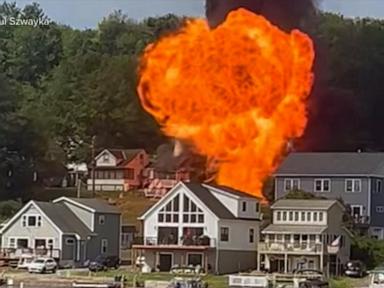
The Spectacle of the Explosion
A flash of light. A shockwave shattering windows. Multiple suburban homes reduced to splinters in seconds. The local news runs the ring-camera footage on a loop, the anchor adopts a solemn tone, and the internet does what it always does: trades in shock value.
The media treats these sudden, violent events as unpredictable acts of God or freak accidents. They want you to stare at the fireball. They want you to feel a fleeting sense of terror, hug your family, and tune in again tomorrow.
They are selling you a lie.
Sensationalizing these rare, explosive disasters actively distracts us from the systemic, slow-burning infrastructure failures that are actually killing our communities. While you are watching a single gas explosion on YouTube, thousands of miles of decaying pipelines, compromised water mains, and outdated electrical grids are quietly failing underneath your feet.
The real danger isn't a sudden blast. It is the invisible decay we choose to ignore because it doesn't make for good television.
The Illusion of Suddenness
Every time a house explodes due to a gas leak or a chemical transport failure, the narrative is identical. The coverage frames it as a sudden, catastrophic anomaly.
This is structurally inaccurate. Infrastructure does not just decide to fail on a Tuesday afternoon.
When you track the forensic engineering reports behind these headline-grabbing explosions, you find a predictable trail of deferred maintenance, ignored sensor data, and regulatory capture. The explosion is merely the punctuation mark at the end of a long, boring sentence written over decades.
Consider the mechanics of utility distribution. Pipelines and grids are engineered with redundant safety margins. For a catastrophic failure to occur, multiple layers of defense must fail simultaneously.
- Phase 1: Micro-corrosion or soil shifting stresses a joint.
- Phase 2: Supervisory Control and Data Acquisition (SCADA) systems log minor pressure drops that are dismissed as telemetry noise.
- Phase 3: Odorant levels in local lines dip below the threshold of human detection due to chemical stripping in old pipes.
- Phase 4: A spark meets the accumulated pocket of gas.
To call the resulting fire "sudden" is an insult to engineering. It is the inevitable math of neglect. By focusing exclusively on the final spark, media coverage absolves the systems that allowed the gas to pool in the first place.
Death by a Thousand Pinhole Leaks
Let us look at the actual data, stripped of the broadcast sheen. The Pipeline and Hazardous Materials Safety Administration (PHMSA) tracks significant incidents rigorously. While a house explosion is tragic and visually striking, the cumulative damage of chronic, low-level infrastructure failure is statistically far more dangerous to public health and economic stability.
Imagine a scenario where a city loses 20% of its clean water supply every single day to subsurface leaks. It doesn’t create a massive crater. It doesn’t trend on social media. But it destabilizes the soil, erodes road foundations, introduces pathogens into the delivery system, and drives utility rates to extortionate levels.
The fixation on spectacular disasters creates a misallocation of resources. Politicians rush to pass reactive legislation targeting the specific, highly visible failure mechanism of last month's viral video. Meanwhile, the unsexy budget items—like replacing cast-iron water mains from the 1920s or upgrading substation transformers—get slashed to fund cosmetic public works.
| Failure Type | Public Visibility | Regulatory Response | Long-Term Societal Cost |
|---|---|---|---|
| Massive Explosion | Extreme | Immediate, Punitive, Superficial | Localized, short-term disruption |
| Chronic Micro-Leakage | Zero | Delayed, Bureaucratic, Neglected | Systemic economic drag, structural erosion |
We are systematically biasing our safety metrics toward the photogenic.
Dismantling the Safe Suburb Myth
The underlying appeal of the "massive explosion destroys homes" narrative is the violation of domestic sanctuary. The viewer thinks, If it can happen in a pristine suburban cul-de-sac, it can happen anywhere.
Good. You should lose your sense of complacency, but not for the reason you think.
The suburban sprawl model engineered over the last seventy years is an infrastructure ponzi scheme. Building vast networks of roads, pipes, and wires to service low-density housing creates an unsustainable ratio of infrastructure length per taxpayer.
When those systems were installed in the 1950s and 60s, the initial cost was subsidized or covered by developers. Now, those systems have reached the end of their design life. Municipalities lack the tax base required to fund the wholesale replacement of thousands of miles of utility lines.
The result? Utilities stretch maintenance cycles from five years to ten, then from ten to twenty. They rely on "run-to-failure" management strategies. That means they do not fix the pipe until it breaks.
Your neighborhood isn't unsafe because of a rogue accident. It is unsafe because the economic model supporting it cannot afford the cost of its own preservation.
The Cost of the Contrarian Approach
To fixate on preventing every single high-visibility accident is a fool's errand. Risk can never be reduced to zero. If we demand absolute elimination of explosive risks, we end up halting industrial progress entirely, driving compliance costs to a level that paralyzes public works.
The hard truth nobody wants to say out loud is this: a resilient society accepts a baseline level of acute risk in exchange for systemic reliability.
If we redirect our panic away from the viral video and toward the boring municipal asset management plans, we have to face uncomfortable realities. It means your local utility bills need to double. It means tearing up main streets for months to replace valves that look fine from the surface. It means prioritizing boring gray concrete over new green parks.
It requires trading the dopamine hit of outrage for the grind of preventative engineering.
Stop Watching the Fireballs
If you want to know how safe your community actually is, stop looking at the news. The news tells you nothing about probability; it only tells you about novelty.
Instead, ask these questions of your local government:
- What is the average age of the distribution infrastructure under our ward?
- What is the current backlog of deferred maintenance for our public utilities?
- What percentage of local utility revenue is actively reinvested into capital asset replacement versus administrative overhead?
If they cannot answer, or if they point you to a slick public relations brochure about their "smart city initiative," you are living on top of a ticking clock.
The next explosion you see on your screen isn't a freak occurrence. It is a preview of what happens when a society values the illusion of safety over the grueling, expensive reality of maintenance. Turn off the video. Look at the street outside your window. The quiet decay is what should terrify you.