For forty years, you have used computers the exact same way. You open an application. You type something. You click a button. It is a slow, manual process of human-to-machine translation. Every time you want to edit a photo, write a script, or compile code, you have to guide the software step-by-step.
Nvidia wants to end that era entirely.
At the Computex trade show in Taipei, Nvidia chief executive Jensen Huang announced a massive strategy shift that directly threatens Intel, AMD, and Qualcomm. The company dropped the Nvidia RTX Spark, an Arm-based superchip built specifically for Windows laptops and compact desktops.
This isn't just another incremental upgrade to make your web browser load a millisecond faster. This silicon brings data-center level architecture right into a slim, three-pound notebook chassis. The target? Running autonomous AI agents locally on your machine without relying on a slow, expensive cloud server. It changes the PC from a simple tool into an active teammate.
The Monster Specs Under the Hood
To understand why this development matters, look at the physical architecture of the hardware. Traditional laptops use a separate CPU and a separate graphics card, or a highly limited integrated graphics processor. They constantly pass data back and forth across a narrow bottleneck.
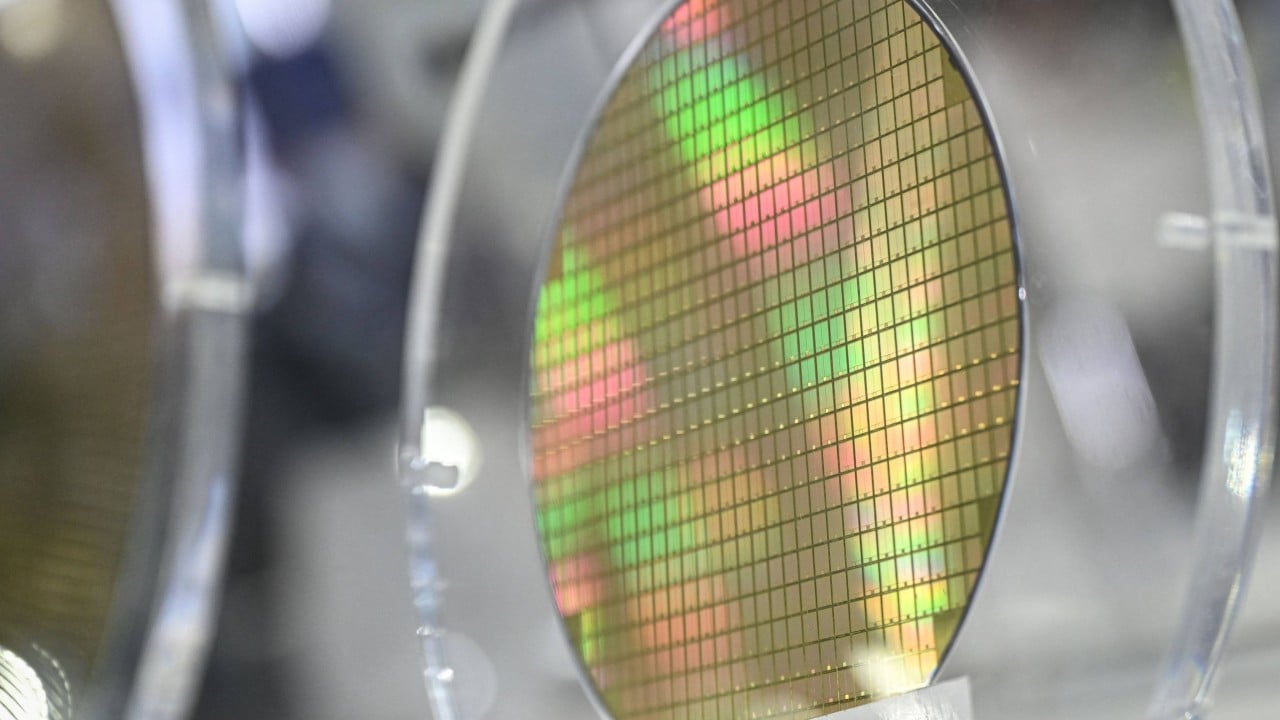
The RTX Spark breaks that model completely. Built on TSMC's advanced 3N process technology, this single system-on-chip fuses a 20-core Nvidia Grace CPU—co-developed with mobile giant MediaTek—directly to a massive Blackwell-generation graphics architecture tile sporting 6,144 CUDA cores.
The real secret weapon is the memory pool. Most premium laptops today ship with 16GB or maybe 32GB of system RAM. Nvidia's reference specification supports up to 128GB of LPDDR5X unified coherent memory. Because the CPU and GPU share this exact same pool of ultra-fast memory over a 600 GB/s NVLink connection, the machine bypasses traditional data transfer lag. It delivers a staggering 1 petaflop of local AI performance.
What can you actually do with 1 petaflop of local compute and 128GB of unified memory on a laptop?
- Run massive, 120-billion-parameter large language models locally with a 1-million-token context window.
- Render enormous, 90GB-plus 3D scenes without running out of video memory.
- Edit 12K raw video files on a machine that fits in a standard backpack.
- Play AAA games at 1440p resolution at well over 100 frames per second with full ray tracing and DLSS 5.
Why Local AI Agents Matter to Real Users
Most people hear "AI PC" and immediately think of basic cloud-connected chatbots that write mediocre emails or hallucinate recipes. That's not what this is. The entire industry is shifting toward agentic computing—software that actively performs multi-step tasks across multiple applications on your behalf.
Right now, open-source AI agent frameworks like OpenClaw or Hermes Agent are highly popular among developers. However, running them effectively usually requires renting a massive rig in the cloud or dealing with intense latency. If you try to run them on a standard x86 laptop, the battery dies in forty minutes and the fans sound like a jet engine taking off.
By running these heavy models locally, your private data never leaves your device. Nvidia partnered directly with Microsoft to develop a specialized Windows software layer called OpenShell. This security architecture creates an isolated runtime environment where your local AI agent can read your local files, scan your emails, and manage your local workflows safely.
Imagine telling your computer: "Go through my past three months of invoices, find the discrepancies, email the clients with polite follow-ups, and log the updates in my spreadsheets." A standard PC can't do that. The RTX Spark is built exactly for that level of automation.
The Software Giants Are Already Rebuilding
Hardware is useless without software support. Historically, Windows on Arm devices suffered from terrible software compatibility because most apps were coded for Intel and AMD's traditional x86 architecture. While Microsoft has built an improved emulation layer to run older apps, native software is where the real speed hides.
Independent software vendors are moving fast to optimize for this chip. Adobe is rearchitecting Photoshop and Premiere Pro from the ground up to support the architecture. Features like Firefly-powered Generative Fill in Photoshop and Generative Extend in Premiere will run up to two times faster than previous mobile configurations.
This immediate developer adoption changes the playing field. Qualcomm spent the last couple of years trying to establish its Snapdragon X chips as the premier choice for Windows on Arm. While those chips offer great battery life, they lack the raw graphical horsepower and the decades-deep software ecosystem of Nvidia's CUDA platform. If you're a creator or a developer, you need CUDA. Nvidia just gave it to you in an all-day battery life package.
Getting Your Hands on the Tech
You won't have to wait years to see these machines out in the wild. The first wave of RTX Spark laptops will hit the market this fall. Major manufacturers including ASUS, Dell, HP, Lenovo, MSI, and Microsoft are already building premium consumer and commercial machines based on Nvidia's reference layout.
Expect thin, 14-inch and 16-inch form factors wrapped in precision-machined aluminum chassis. To match the premium internal silicon, these laptops will feature high-brightness tandem OLED and mini-LED displays running variable refresh rates via G-SYNC. Microsoft even previewed its own Surface Laptop Ultra, a flagship machine loaded with the full 128GB of unified memory and a 2,000-nit screen.
If you're planning to upgrade your primary workstation or laptop soon, stop and wait. Buying a traditional x86 laptop right now means purchasing hardware built for yesterday's application-heavy workflow. The smart move is to hold off until the autumn hardware cycle to see how these localized agentic machines perform in real-world benchmarks. Keep an eye on the upcoming release schedules from Dell and Lenovo, track the initial software stability reviews of the OpenShell runtime on Windows, and prepare your workflows for a shift toward local automation.