Every August, the media dusts off the same lazy script. Headlines flash about hundreds of arrests, a handful of weapons seized, and pearl-clutching pundits demand a review of Europe's biggest street festival. It is the annual ritual of moral panic. The lazy consensus states that a massive gathering of over a million people inevitably breeds exceptional criminality, and that the sheer volume of arrests proves the event is a public safety crisis waiting to boil over.
That narrative is mathematically illiterate and fundamentally dishonest.
When you scale arrest statistics against crowd density, Notting Hill Carnival is statistically safer than a standard Premier League football fixture, a Glastonbury festival weekend, or a routine Friday night out in London's West End. Yet, because the crowd is predominantly Black and Caribbean, and the culture is rooted in sound systems rather than acoustic guitars, the baseline expectation of order shifts entirely. We grade the event on a curve of suspicion.
Let us look at the actual mechanics of policing mass events. Metropolitan Police deployment figures routinely number over 12,000 officers across the two-day bank holiday weekend. When you saturate an urban grid with twelve thousand active law enforcement personnel, stop-and-search powers dialed to maximum intensity, and automated facial recognition cameras parked on every street corner, you are going to generate arrests. Arrest numbers do not measure the total volume of crime committed; they measure the intensity of policing applied. If you deploy thousands of officers into any two-square-mile radius of a major global city and target every minor infraction, public order offense, and possession charge, the resulting spreadsheet will look alarming to anyone who does not understand how law enforcement metrics work.
Critics love to point to weapon seizures and drug offenses as proof of an inherent threat. But let us compare yields. For an event hosting upwards of two million attendees over forty-eight hours, the rate of violent crime per capita is remarkably low compared to baseline urban metrics. The discourse treats every confiscated knife or baggie as an indictment of the culture, rather than a standard statistical byproduct of gathering millions of human beings in a tight space. If you emptied out the West End on a Saturday night with the same police-to-citizen ratio, the holding cells would run out of room before midnight.
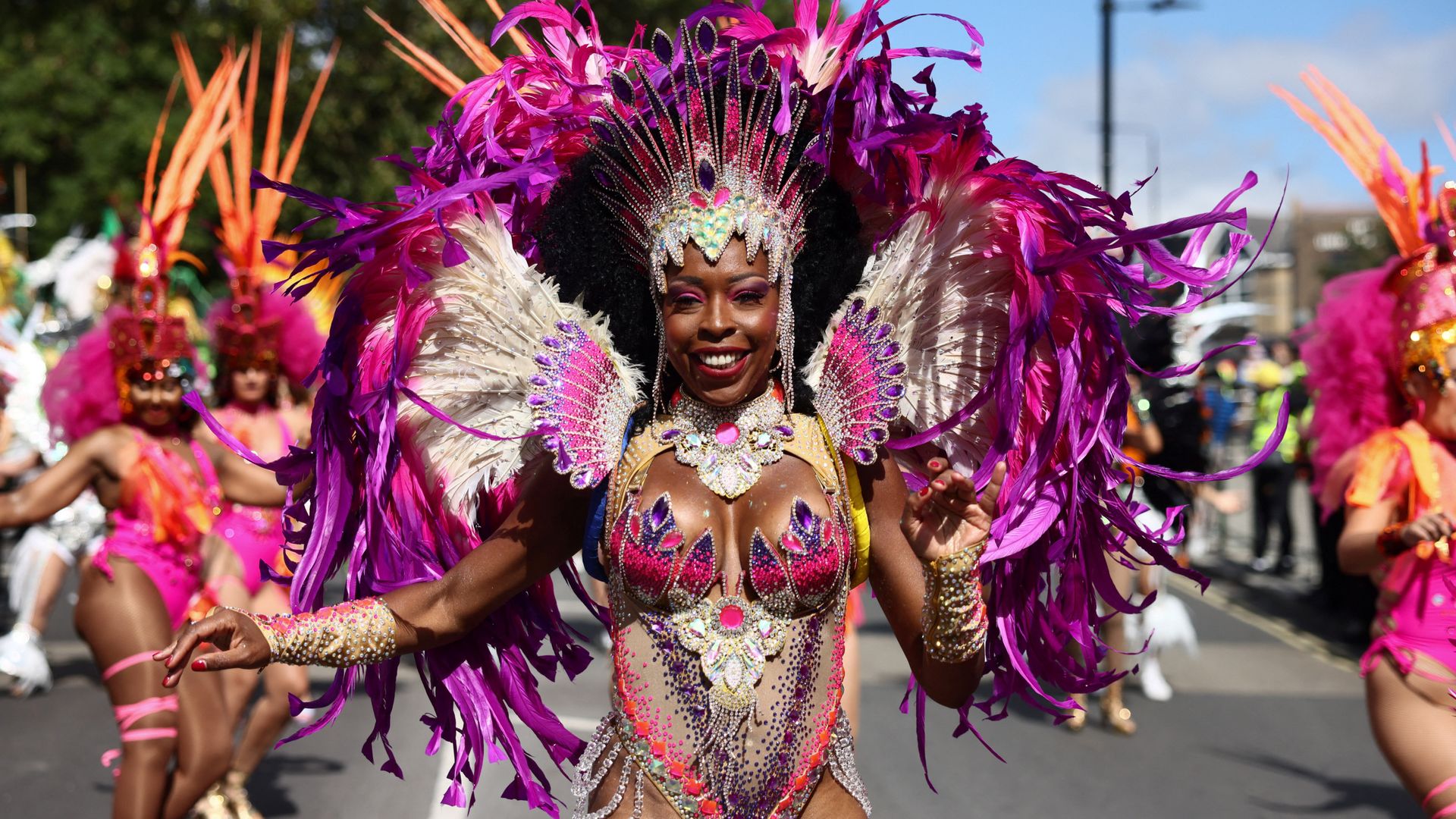
The real threat to Notting Hill Carnival has never been the attendees. The real threat is the systemic over-policing, the relentless bureaucratic friction imposed by local authorities, and the manufactured narrative that the event requires heavy-handed containment. For decades, councils and external stakeholders have tried to sanitize, shrink, or relocate a celebration born out of resistance to racial hostility in 1958. Every restriction on sound levels, every forced early closure, and every hysterical front-page splash about arrests is an attempt to legislate culture out of existence through a thousand administrative cuts.
Stop asking how to make Carnival safer. It is already remarkably safe given its scale. The real question we should be asking is why we hold a community-led celebration of Caribbean heritage to a zero-tolerance standard of behavioral perfection that no other major public event on earth could possibly survive.
Let the sound systems play. Let the crowd breathe. And let the moral panic die a quiet death.