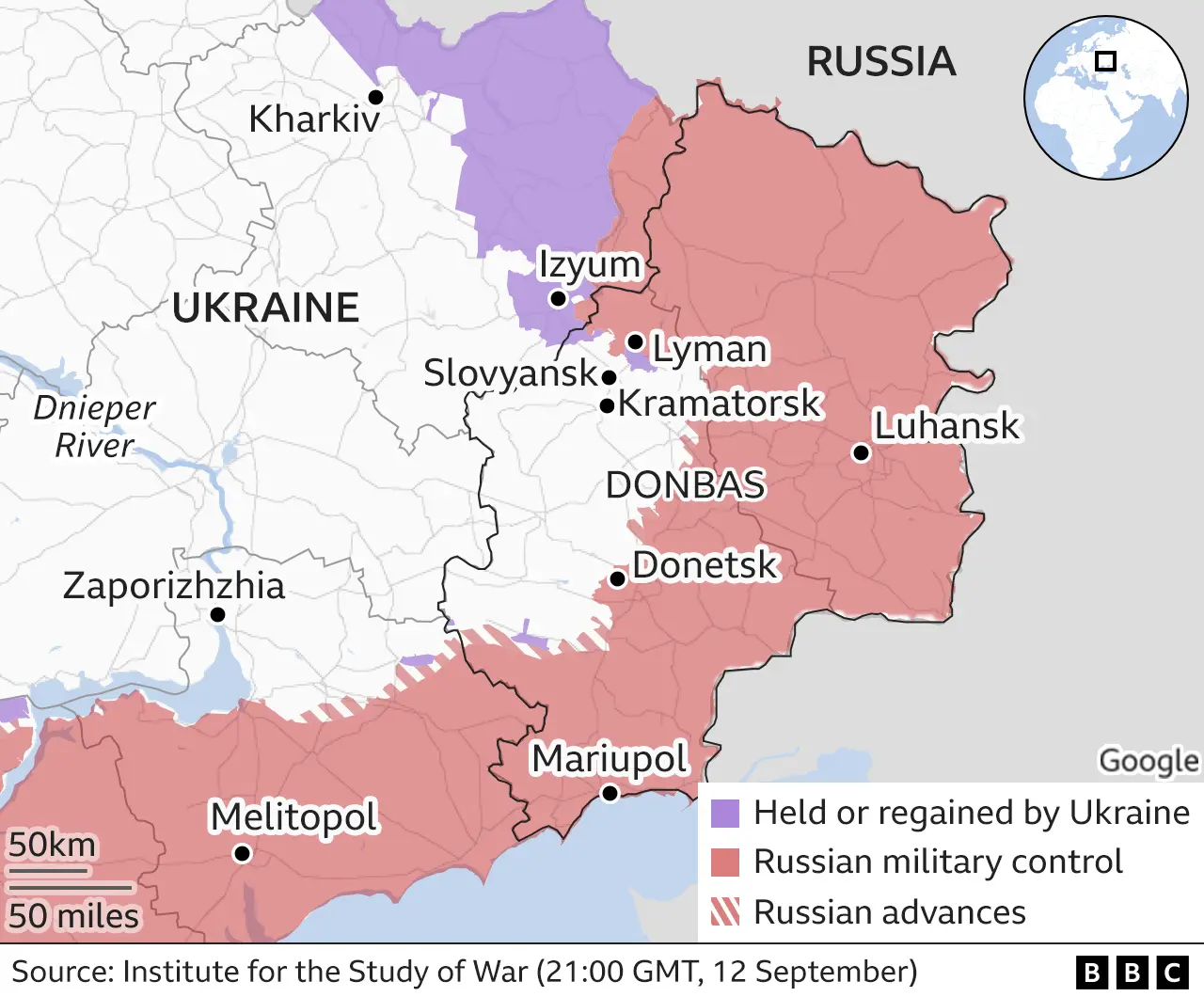
When a senior commander reports that Ukraine has launched an offensive push in the north of the Donetsk region, the headline does two jobs at once. It flags a live military effort to seize or contest ground along one of the war's most grinding fronts. It also sends a deliberate message to allies, adversaries, and domestic audiences that initiative has not died in the trenches.
Yet an offensive push is not a verdict. In eastern Ukraine, where fighting in the Donetsk region has reshaped towns, rail spurs, and river crossings for years, the gap between an initial thrust and a durable shift in control is measured in ammunition tonnage, electronic warfare, and exhausted infantry.
Why Senior Commander Headlines Carry Double Weight
Decades of covering military campaigns teach a simple rule. Frontline officials speak for operational reasons, not archival ones.
A senior commander describing an offensive push in northern Donetsk operates inside an active information loop. Publicly naming a thrust alerts opposing headquarters to prepare counter-moves, while simultaneously forcing them to commit reserves before they know whether the effort is a main axis, a feint, or a local spoiling attack. At the same time, the statement reassures partners who measure momentum in movement rather than quiet positional attrition.
Still, treating the remark as pure propaganda misses the opposite risk. Commanders in prolonged wars rarely invent movements out of thin air when subordinates are watching every broadcast. A push almost always reflects real units stepping out of assembly areas, probing defenses, or attempting to unhinge a local strongpoint. The hard question is not whether troops moved. It is what kind of movement occurred and how long it can be fed.
What Northern Donetsk Terrain Actually Demands
Northern Donetsk is not blank canvas. Decades of industrial build-up, agricultural windbreaks, canal networks, and fortified settlements turn every kilometer into a puzzle of cover and exposure.
Attacking here means moving across ground where open fields sit beside dense clusters of ruined buildings, treeline corridors, and elevated ridges that command sightlines over approach roads. Defenders do not need unbroken walls of concrete to slow an advance. A handful of well-sited anti-tank teams, mined tracks, and interlocking mortar positions can turn a fast corridor into a bottleneck within hours.
Supply Lines Over Headlines
Arrows on a briefing map look decisive. Trucks on rutted roads tell the real story.
Every offensive push in northern Donetsk immediately stretches logistics. Fuel consumption spikes as armored vehicles leave hard surfaces. Medical evacuation routes lengthen under artillery range. Ammunition resupply has to move forward without creating predictable convoys that attract precision strikes.
When an attacker pushes north in Donetsk, the flank of that advance becomes a liability as fast as the tip. If neighboring sectors do not apply parallel pressure, defending forces can strike the shoulders of the salient, turning a promising gain into a costly pocket.
The Invisible Shield of Sensors and Drones
Modern eastern warfare leaves almost nowhere to hide a massed buildup. Overhead reconnaissance, commercial imagery, acoustic sensors, and ubiquitous small unmanned aerial systems compress the window between concentration and reaction.
Because large armored columns draw immediate fire, offensive pushes increasingly rely on dispersed infiltration, smaller assault groups, and tightly coordinated artillery or drone support. That method reduces catastrophic losses from single strikes. It also slows the pace of advance, because infantry must clear positions room by room and trench by trench while waiting for supplies to catch up.
Counter-Arguments and the Attrition Trap
Not every analyst agrees that localized offensive pushes in northern Donetsk make strategic sense. A sharp counter-argument holds that launching attacks into prepared defenses hands the initiative back to whichever side has deeper reserves and greater tolerance for material loss.
Critics of offensive-minded messaging point out that territory gained at high cost can become a trap if it sits inside dense defensive belts. Holding newly taken ground requires engineering teams, anti-air coverage, and fresh rotation troops. If an attacker spends its best-trained brigades just to take a cluster of tree lines, the defending side may welcome the trade, allowing the attacker to bleed while keeping its own core formations intact.
There is another counter-view worth taking seriously. Doing nothing carries its own penalty. Static defense lets an adversary dictate where and when fighting happens, slowly eroding morale and infrastructure. A controlled offensive push in northern Donetsk can disrupt enemy staging areas, force redeployment away from more vulnerable sectors, and remind opposing commanders that no stretch of the line is permanently safe. Neither view settles the matter alone. Both show why a single announcement cannot be read as a turning point.
How Analysts Separate Signal From Noise
Experienced defense observers rarely wait for a second press release to judge an offensive push. They look for secondary indicators that are harder to stage.
First comes fire adjustment. When a genuine push develops, counter-battery activity, smoke screens, and suppressive barrages usually rise alongside localized infantry contact. Next comes logistics strain, visible in repair backlogs, air defense displacements, and changes in how wounded troops move backward.
Measuring Friction Rather Than Arrows on a Map
A map showing a two-kilometer advance means very little without knowing what sits two kilometers ahead. In northern Donetsk, a shallow gain that secures high ground or cuts a lateral supply road can matter more than a deeper push into a low-lying basin.
Equally telling is what happens after the first forty-eight hours. If the attacking force consolidates, brings up engineers, and withstands counter-attacks without surrendering the ground, the push has matured into an operational adjustment. If the line snaps back to its starting trace once heavy artillery settles in, the push functioned mainly as a probe or a signaling operation.
A Hypothetical Illustration of Operational Trade-Offs
To illustrate how this plays out in practice, consider a hypothetical example along a fictionalized ridge sector in northern Donetsk. Suppose a Ukrainian task force pushes three kilometers north to clear a rail embankment overlooking a secondary supply road. On day one, senior leadership highlights the push, and the road comes under direct observation. By day four, however, mud and drone interdiction slow resupply to the newly taken embankment, while the opposing side shifts two artillery batteries from a quiet neighbor to hammer the approaches. The task force now faces a choice: spend scarce engineering and air-defense assets to lock down a narrow salient, or pull back to safer cover after degrading the adversary's local positions. Both outcomes carry real costs, and neither looks neat on a summary chart.
Diplomatic Timing and Domestic Morale
Military operations in Ukraine do not happen in a vacuum. Capitals in Europe and North America calibrate weapons deliveries, budget approvals, and diplomatic posture partly by reading perceived momentum on the ground.
A senior commander's statement about an offensive push in northern Donetsk lands directly inside those debates. For Kyiv, showing active pressure counters narratives of stalemate and argues against frozen-conflict proposals that would lock in Russian gains. For Moscow, any northern Donetsk push tests whether layered defenses can absorb shock without pulling forces away from other priorities.
Inside Ukraine, the domestic calculation is just as heavy. Years of grinding combat wear down public patience, especially when casualties mount for incremental gains. Honest reporting has to respect that exhaustion without falling into either cheerleading or fatalism. A push can lift spirits for a week, yet lasting confidence depends on whether forces are preserved for the next phase of the war.
What Watching the Ground Requires Next
Anyone tracking a reported offensive push in northern Donetsk should resist the temptation to treat the opening claim as the whole story. Watch whether supply routes hold under sustained fire. Watch whether adjacent sectors move to widen the effort or leave the spearhead isolated. Above all, separate the politics of a senior commander's announcement from the slow, unforgiving arithmetic of holding ground once the cameras look away.