Paper piles up faster than silence in a government chamber. Every five years, the volume grows. Thousand-page policy addresses, endless transcripts of debate, hours upon hours of lawmakers arguing over housing, budgets, and the future of a city. No single human being can read it all at once. Not really. Not with the depth required to trace every single thread back to its origin.
Until now.
For the first time, artificial intelligence was turned loose on a complete five-year plan and the policy address debates that followed. It did not blink. It did not skim. It consumed every word, every clause, and every footnote in seconds.
Let us be honest about what that means.
We have always relied on human memory to govern. Human memory is flawed. It is fragile, partisan, and notoriously selective. A politician remembers the promise made under the glare of television lights; they forget the tiny compromise buried on page four hundred. A researcher recalls the overarching budget figures, but loses the subtle shift in tone between the second and fourth year of debate.
A machine does not forget. It looks at five years of political speech the way an oceanographer looks at a core sample of ice. Every shift in climate, every pressure point, every hidden sediment layer is visible in stark contrast.
Consider what happens when you feed an entire legislative cycle into a neural network.
The documents are not just scanned; they are mapped. Every recurring phrase, every dropped promise, every sudden pivot in rhetoric is cross-referenced. In the past, analyzing a five-year policy cycle meant assembling committees, hiring research assistants, and spending months pulling quotes out of context to score political points. The process was slow, clumsy, and expensive.
The algorithm changes the timeline from months to milliseconds.
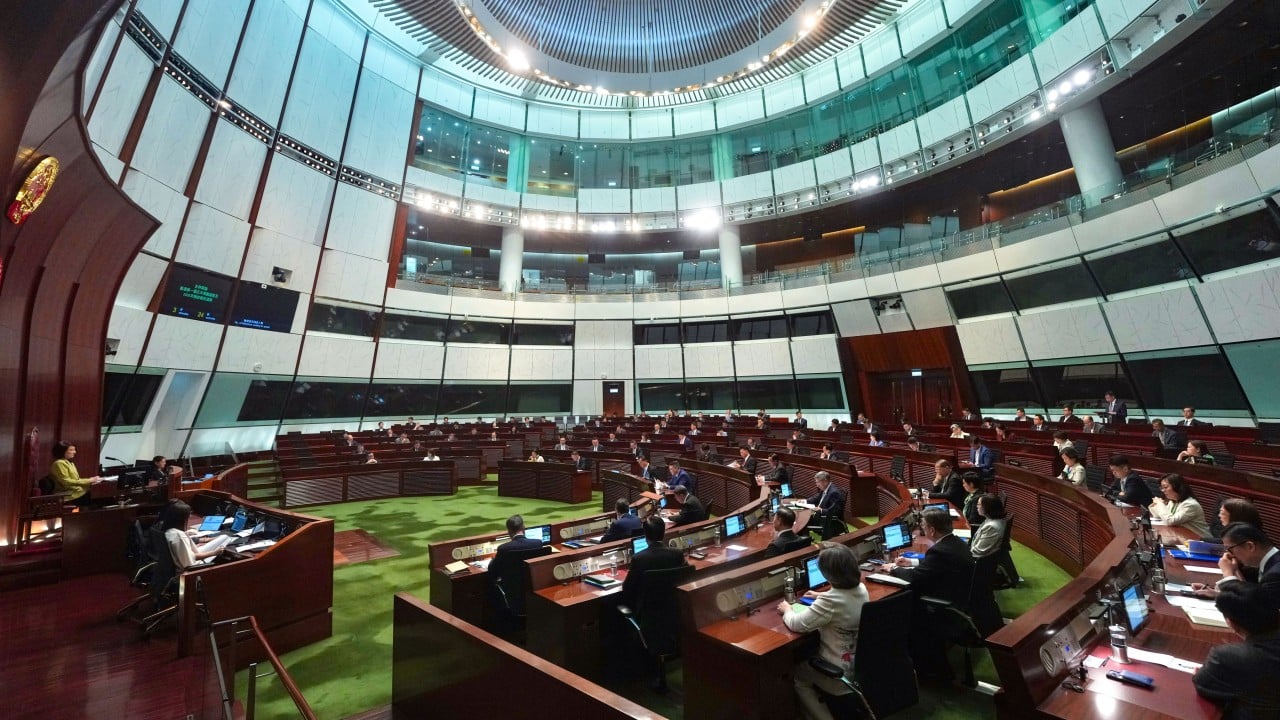
Imagine sitting in the back of a vast, wood-paneled hall. The air is stale. Someone at the podium is speaking about housing density, their voice droning on while half the room checks their phones. Outside, the city is changing, rents are rising, and people are waiting hours for buses that never arrive. Inside, the debate circles endlessly around words like "sustainable," "growth," and "framework."
Now, strip away the room. Strip away the theater.
What remains is the text. Millions of words printed on paper or stored in servers. When the AI reads that text, it strips away the performance. It shows where the government said one thing in year one and quietly reversed course by year four without ever acknowledging the shift. It maps the density of opposition. It highlights the exact moments where policy collided with reality and where the text grew vague to hide an uncomfortable truth.
This is not magic. It is pattern recognition on an industrial scale.
Critics will say this reduces politics to data. They will argue that human governance requires intuition, empathy, and the messy art of compromise—things that a machine cannot parse. They are right, in part. A computer cannot feel the frustration of a tenant facing eviction, nor can it sense the tension in a room when a minister loses the confidence of the floor.
Yet, the machine does something we desperately need. It holds up a mirror.
For decades, political rhetoric has been designed to outlast public attention spans. Politicians know that if a policy is buried deep enough inside a five-year plan, most people will never find it. Transparency has often been a shield rather than a window—too much information delivered in a format too dense to process, effectively hiding the truth in plain sight.
When an algorithm parses that text instantly, the shield cracks.
The analysis revealed connections that human reviewers routinely miss. It tracked how specific phrases migrated from unelected advisory committees straight into official policy addresses, showing the true lineage of government decisions. It mapped the emotional temperature of the debates, tracking how urgency spiked during economic downturns and flattened into bureaucratic jargon during times of calm.
We are standing at a strange threshold.
We built tools to calculate math, then tools to route traffic, and now tools to read our own legislative history back to us. We wanted efficiency. What we got was accountability.
There is a quiet terror in that.
Transparency is easy to praise in theory. Everyone wants a government that is open and honest. But true transparency means every inconsistency is cataloged. Every broken promise has a timestamp. Every contradiction between what was debated in secret and what was published in public is laid bare for anyone with the right query to find.
The lawmakers who debated that five-year plan did not write their speeches with an algorithm in mind. They wrote for the Hansard, for the newspapers, for the evening news clip. They wrote for human ears that grow tired and human eyes that glaze over after midnight.
They did not expect the whole story to be read all at once.
When the last page was processed and the final data points settled into place, the room was quiet. The servers hummed in their racks, cool and indifferent to the weight of the words they had just digested. Outside, the city kept moving, caught somewhere between the promises of the past and the uncertainty of the next five years. The machine had finished reading. The hard part—deciding what we do with what it found—belongs entirely to us.