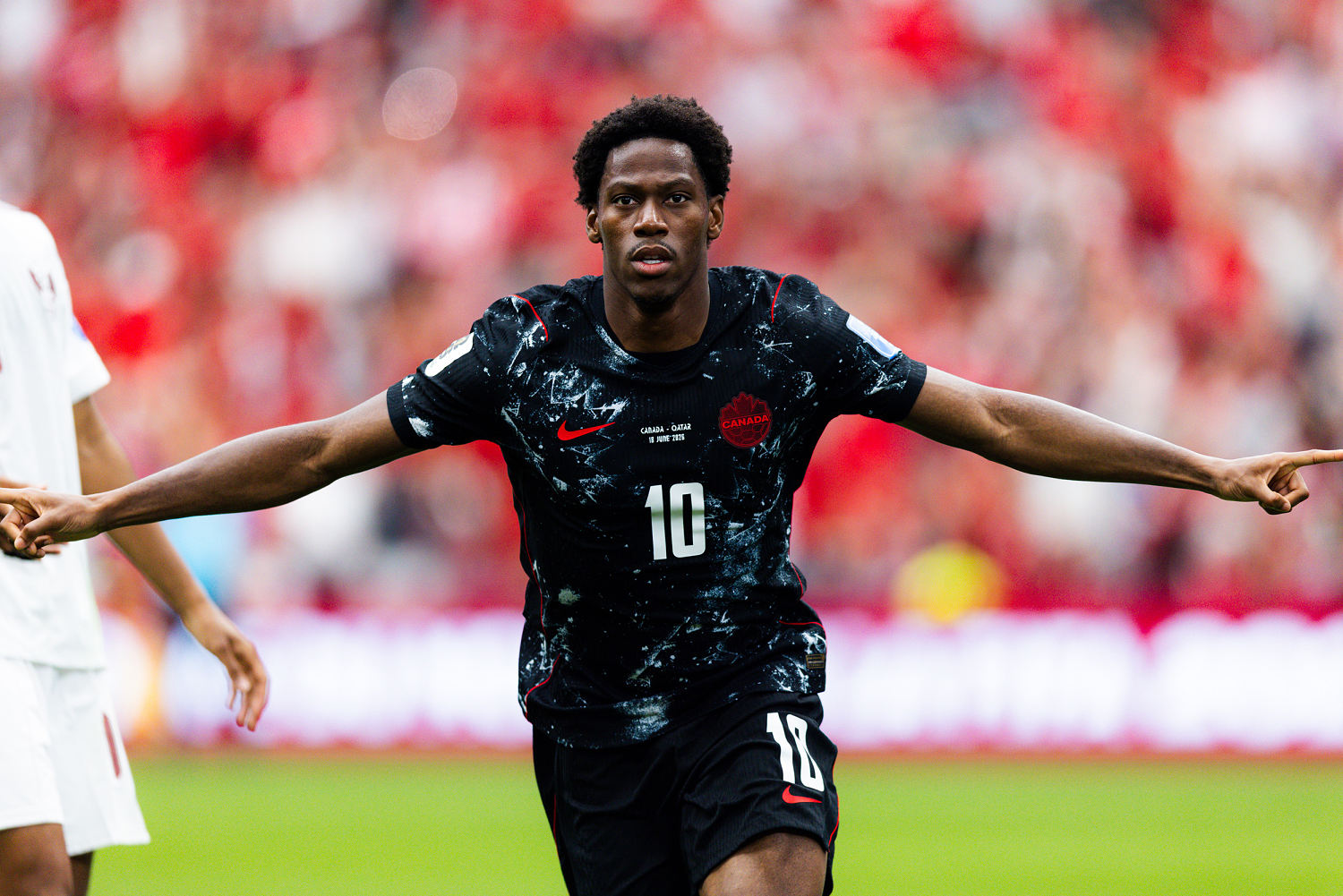
The rain in Toronto didn't feel like a celebration. It felt like heavy, gray iron sliding off the glass of the stadium. Inside the stadium, a kid named Leo was staring at a patch of grass that looked exactly like every other patch of grass he had seen on television. He was eleven. He had a flag draped over his shoulders like a cape, but the fabric was damp and smelled like synthetic polyester and hot dogs. His father had spent two weeks' worth of grocery money on the tickets. For months, the conversation around the dinner table had been a mathematical equation. How many shifts at the plant equaled ninety minutes of watching men chase a leather ball?
Everyone said Canada was just hosting. They said the same about Mexico. They called them co-hosts, a polite bureaucratic term that feels like being invited to a party just so you can help wash the dishes afterward. The real spotlight, the heavy gravity of the tournament, always seemed to pull toward the massive stadiums further south, where the bright lights of American media demanded the world’s attention.
But soccer does not care about media markets. It is a game played by people who possess nothing but a pair of shoes and a willingness to run until their lungs burn.
The Ghost of 1986
To understand why a mid-week match in the group stage mattered so much, you have to go back to the concrete bowl of the Estadio Azteca. Mexico knows what it means to hold the world's gaze. They did it in 1970. They did it again in 1986, when Diego Maradona danced through the English defense like a ghost passing through a brick wall. That was the tournament of historical myth.
But myths are heavy. For decades, Mexican soccer has been trapped by its own history. The fans don't just want a win; they want a resurrection. They want the feeling of that summer afternoon when the smog cleared over Mexico City and the entire planet seemed to rotate around a single black-and-white ball.
Consider what happens next when a country lives in the shadow of its past. Every tournament becomes a trial. The media creates a suffocating pressure. The players walk onto the pitch looking like they are carrying the weight of the Sierra Madre on their jerseys.
This time was different. The pressure shifted. By sharing the burden of the tournament with two neighbors, the air inside the Mexican camp became breathable again.
The opening match in Mexico City wasn't an exorcism. It was a liberation. When the first goal went in, the sound didn't just bounce off the stadium walls. It rattled the windows in Coyoacán, miles away. It was the sound of a country remembering that soccer is supposed to be a joy, not a penance. A fan named Sofia, who had watched the 1986 quarterfinal on a tiny black-and-white television with her grandfather, stood in the upper tier of the Azteca. She wasn't looking at the field. She was looking at her daughter, who was screaming so loud her face had turned the color of a ripe tomato.
That is the hidden currency of these tournaments. It is not the tourism dollars or the corporate sponsorships. It is the sudden, brief alignment of generations.
The Cold Ground of the North
Meanwhile, four thousand miles away, Canada was fighting a completely different kind of ghost. The ghost of irrelevance.
For generations, Canadian soccer was an afterthought, a sport played by kids in suburban parks until the ice froze over and the hockey skates came out. The national team was a collection of brave journeymen who traveled to Central America to play on waterlogged pitches where the home fans blew air horns outside their hotel windows all night. They lost. They lost with dignity, but they lost consistently.
Then came a generation of kids who grew up in the suburbs of Vancouver, Toronto, and Montreal. They were the children of immigrants from Jamaica, Ghana, Scotland, and Portugal. They didn't view soccer as a hobby. They viewed it as a language.
When Canada took the field for their opening match, the stadium didn't sound like a hockey arena. It sounded like the world. The chants were in English and French, but the rhythm was entirely global.
The match itself was ugly. A tight, nervous affair against a European side that looked like they had been chiseled out of granite. The Canadians moved the ball with a frantic, almost desperate energy. They didn't have the tactical elegance of the Mexicans or the brutal efficiency of the Americans. What they had was speed. A raw, terrifying speed that made the opposition look like they were running through wet cement.
When the whistle blew, signaling a narrow, gritty one-zero victory, the stadium didn't erupt in a roar. It erupted in a collective intake of breath. A realization.
They belonged.
The Currency of Belonging
We often treat sports as a series of spreadsheets. We analyze the ticket sales, the television ratings, the structural readiness of the transit systems. We look at the co-hosting agreement as a logistical compromise, a way to spread the massive financial risk of a forty-eight-team tournament across an entire continent.
That view misses the point entirely.
The real value of the tournament is found in the moments when the logistics fail and the humanity breaks through. It is found in the bars along College Street in Toronto, where Italian-Canadians and Korean-Canadians sit shoulder-to-shoulder, screaming at a screen. It is found in the plazas of Guadalajara, where old men sit on iron benches and argue about tactical formations with teenagers who have never seen a game played without a high-definition replay.
The competitor articles wrote about the points in the standings. They noted that both Canada and Mexico had secured their places in the knockout rounds, validating their status as hosts. They used words like "satisfactory" and "successful campaign."
Satisfactory is a word used by accountants. It has nothing to do with the feeling of a stadium seat vibrating beneath your feet.
The true victory for both nations wasn't that they won a game or advanced a round. It was that they redefined what they meant to themselves. Mexico proved that its footballing soul could survive the transition into the modern corporate era without losing its passion. Canada proved that its sporting identity is no longer defined solely by ice and steel.
The Long Shadow
As the tournament moves deeper into the summer, the crowds will get larger and the games will get harder. The co-hosts will eventually face teams that do not care about their home-field advantage or their national pride. They will face the giants of South America and Europe, teams built to destroy dreams with clinical precision.
But the foundation has been laid.
Late that night in Toronto, after the crowds had cleared and the stadium lights were finally turned off, Leo and his father walked toward the subway station. The rain had stopped. The air smelled of damp pavement and wet grass. The kid was quiet, his damp flag tucked under his arm.
His father asked him if he was tired.
The boy shook his head. He looked up at the massive concrete structure of the stadium, silhouetted against the dark sky, then looked down at his own sneakers, wet and covered in mud from the walk across the park. He didn't say anything about the score or the standings. He just started kicking a crushed soda can along the sidewalk, keeping it close to his feet, moving it from left to right with a sudden, sharp rhythm that he hadn't possessed that morning.