The dust in southern Iran does not settle quickly. It hangs in the air, a thick, salty haze blown in from the Persian Gulf, sticking to the skin and stinging the eyes.
For Amin, a forty-two-year-old truck driver, that dust has been his companion for two decades. His route was always the same: haul goods from the bustling docks of Bandar Abbas, cross the concrete transit bridges of the southern Hormozgan province, and head north toward Tehran. It was a grueling, monotonous rhythm. But it was a rhythm that meant his family ate.
Then came the sixth night.
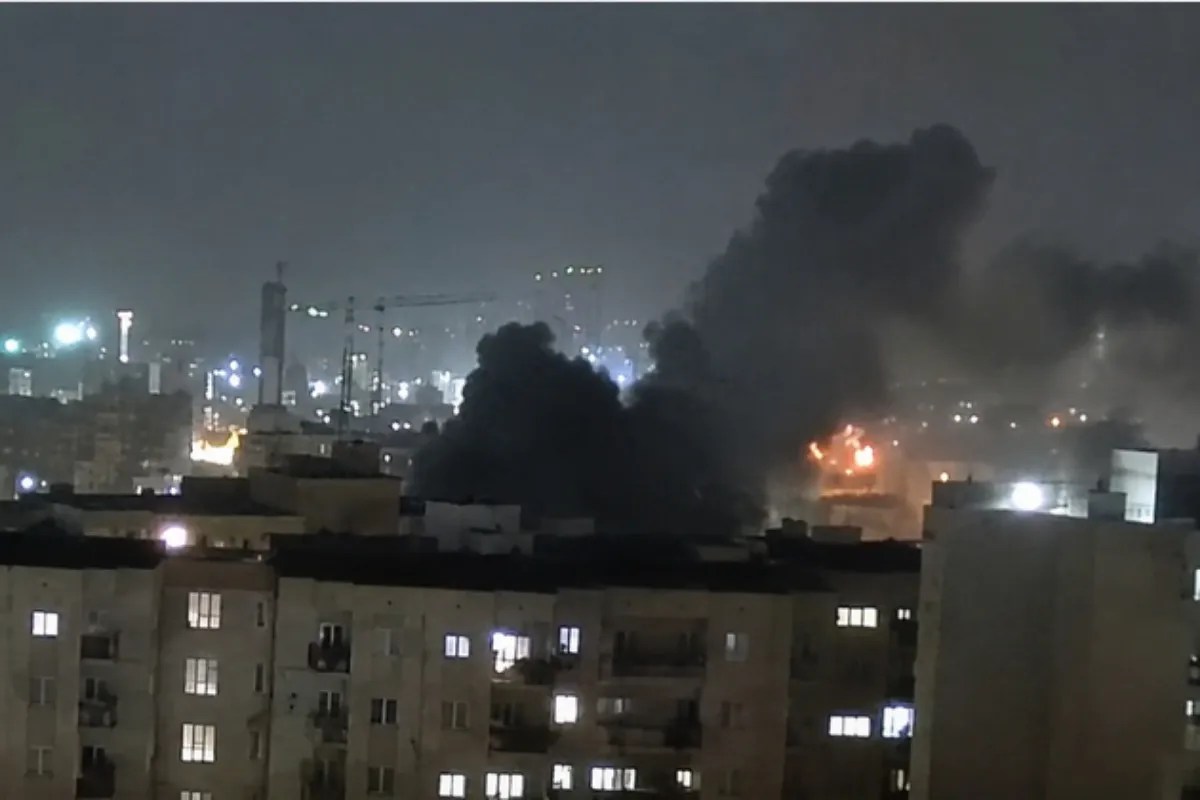
At dawn on Friday, the sky over the coastal city of Bandar Khamir did not wake up to the sun. It woke up to a series of blinding flashes that ripped through the quiet morning. The roar of precision-guided munitions launched by U.S. Central Command tore the air apart.
When the smoke cleared, the vital highway and railway bridges Amin relied on were gone—reduced to jagged teeth of concrete and tangled rebar plunging into the dry earth below. Seven people on or near those bridges did not survive the night.
To the military planners sitting in windowless rooms in Washington, those bridges were not concrete and rebar. They were "logistics infrastructure". They were lines on a map to be severed, a calculated strategic play to choke off the flow of military equipment and isolate Iran’s main port from the rest of the country.
But to ninety million people living inside Iran, those bridges are the arteries of everyday life.
The Friction of a Global Chokepoint
Geopolitics is often discussed in the abstract. We talk of nations as if they are single, thinking organisms. We read about the "Strait of Hormuz" as a statistical anomaly—a narrow stretch of water where one-fifth of the world’s oil supply squeezed through daily.
But what happens when the squeeze becomes a stranglehold?
The current spiral began when Washington and Tehran collided over the management of this vital waterway. The U.S. demanded a twenty percent fee on all cargo transiting the strait. Iran’s military command swiftly rejected the proposal, asserting their historical dominance over the passage. Rhetoric quickly escalated to retaliation. Iranian forces targeted commercial tankers; the U.S. responded with a devastating, multi-day aerial bombardment campaign.
For six consecutive nights, the sky across southern Iran has belonged to American fighter jets and cruise missiles.
Farther east, in the port city of Chabahar, the consequences of this campaign are marked by a new, jagged hole in the skyline. For years, the port’s massive surveillance and commercial traffic tower stood as a symbol of regional cooperation, operating largely with Indian support to connect landlocked Afghanistan to global trade routes.
On Friday morning, that tower collapsed.
To the coalition forces, the tower was a military target, a maritime capability used by the Revolutionary Guard to track ships. To the local dockworkers, it was simply where they logged their hours, drank sweet tea, and watched the ships roll in. Now, the concrete rubble sits in the harbor, a monument to a conflict that the locals had no part in starting, but are forced to endure.
The Tremor and the Shattered Glass
The violence of modern warfare is rarely contained by borders. When the hammer falls on one side of the Gulf, the shockwaves ripple outward instantly.
Consider Qatar.
For days, Qatari diplomats had been working alongside Pakistani officials, trying desperately to broker a ceasefire to reopen the strait. They were the neutral ground, the calm voices in a room full of shouting men.
On Friday, the war came to them anyway.
As Iran retaliated against the U.S.-led offensive, a barrage of missiles was fired toward Gulf nations allied with Washington. In Doha, sirens wailed twice. Residents who had watched the conflict through television screens were suddenly told to seek immediate shelter.
For a family sitting in a quiet Doha suburb, the war was no longer an academic debate on foreign policy. It was the terrifying, metallic thud of air defense systems intercepting a missile overhead. It was the sound of hot, twisted metal debris raining down onto residential streets, wounding a child playing near his home.
In Bahrain, air raid sirens pierced the early morning quiet. In Kuwait, military radars tracked and intercepted incoming hostile drones. From Jordan to the Kurdish region of northern Iraq, the sky has become a crowded, dangerous ceiling of interceptors and incoming fire.
The Broken Link
Back in Bandar Khamir, Amin stands near the edge of the fractured highway. He looks across the gap where the bridge used to be.
Politicians talk of victory, of "winning big," and of degrading the enemy's capabilities. But standing on the dusty tarmac, looking at a severed lifeline, those words feel entirely hollow.
The immediate military objectives may have been met. The towers have fallen, the bridges are broken, and the coastal radars are dark. But the invisible stakes of this war are measured in the quiet desperation of the days to follow. It is measured in the medicine that will not reach the clinics in Tehran, the food rotting in stationary trucks, and the fear of what happens when the sun goes down and the sky begins to hum once more.
The military campaign may have a clear strategy, but for the millions of people caught underneath the flight paths, there is only the terrifying waiting.
Amin turns his truck around. He must find a longer, dirtier, more dangerous road home. Behind him, the smoke from the bridge continues to rise, a dark line smudging the horizon, reminding everyone that in the game of global chess, it is always the ground that gets broken first.