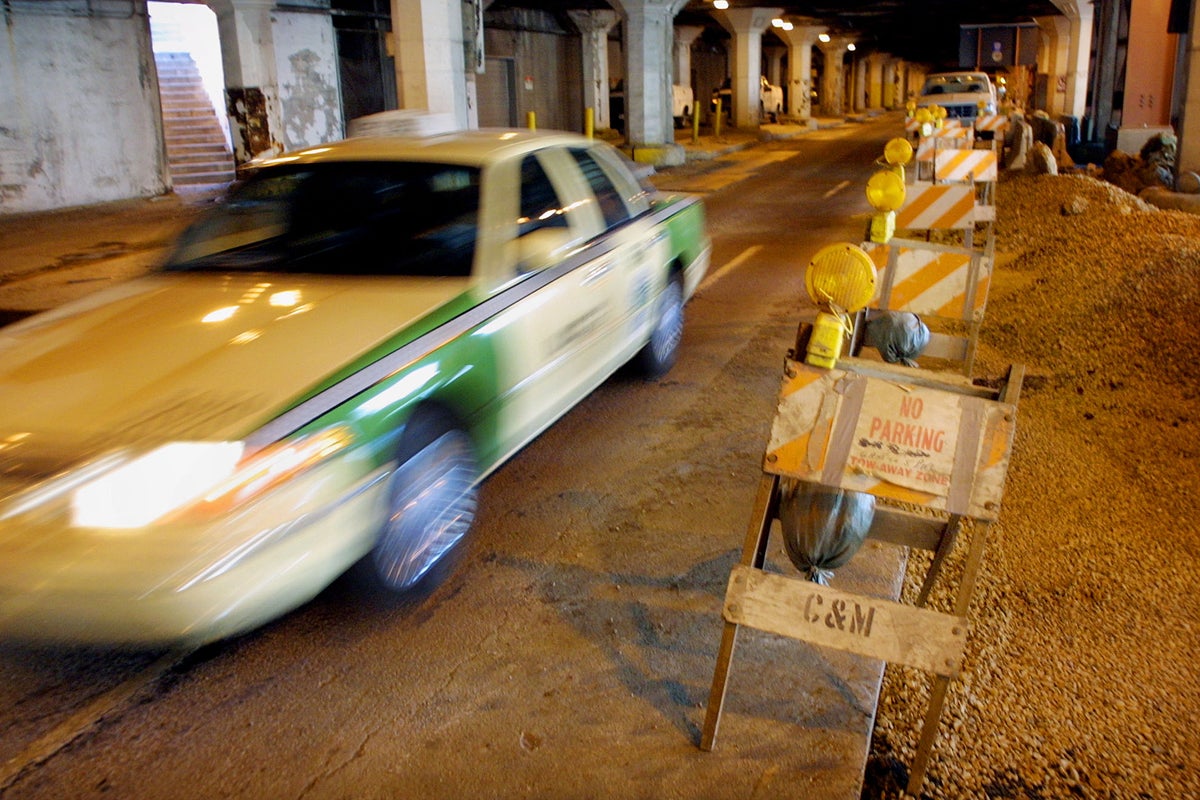
If you flag down a cab in Chicago this week, you are going to pay more before you even clear the curb. The city officially triggered a mandatory taxi fuel surcharge on June 1, 2026, pinning the sudden price hike on skyrocketing gas prices tied directly to the war in Iran.
The decision by the Chicago Department of Business Affairs and Consumer Protection (BACP) rolls out a tiered fee system based on your final meter reading. If your ride is $20 or less, tack on an extra $1. Trips between $20.01 and $40 get a $2 bump, and anything over forty bucks will cost you an extra $3.
But treating this purely as a temporary geopolitical emergency ignores a much larger reality. Chicago gas prices are averaging $5.09 a gallon, and the Institute on Taxation and Economic Policy estimates the ongoing conflict has already drained over $340 from the average American household pump budget this year. Yet, the real story here is not just volatile global crude markets. This fuel surcharge is actually the opening salvo in a massive, systemic overhaul of Chicago's taxi fare structure—the first major rate adjustment the city has forced on riders in over a decade.
The Real Numbers Behind Your Ride
City hall wants you to focus on the global supply chain, but the local fine print is where your money is actually going. This is not a flat fee. It scales based on distance, and drivers are required by law to display the official BACP notice clearly inside the vehicle.
If a driver tries to quote you a flat fuel fee outside of the tiered meter system, they are breaking the law. City regulators have already warned that any unauthorized surcharges will result in steep fines or license revocation.
Here is how the temporary fuel surcharge breaks down by trip cost:
- Meter fares of $20.00 or less add a $1.00 fee.
- Meter fares from $20.01 to $40.00 add a $2.00 fee.
- Meter fares of $40.01 or more add a $3.00 fee.
This sounds straightforward, but it gets complicated when you look at the calendar. The fuel surcharge is technically temporary and tied to AAA gas price monitoring. The moment regional fuel prices dip below a specific threshold, the city claims it will pull the plug on the fee. But do not expect your transit costs to drop when that happens.
The Quiet July Overhaul You Aren't Prepared For
The focus on the Iran war acts as a convenient shield for a much larger, permanent financial hit hitting Chicago commuters next month. On July 1, 2026, a sweeping set of permanent fare increases takes effect across the entire city fleet.
The base distance rate is jumping from 25 cents to 31 cents per one-ninth of a mile. That is a massive percentage leap for a city that hasn't touched its core taxi rates in nearly ten years. Time-based charges during gridlock are climbing too.
On top of the base rate inflation, the city is embedding aggressive peak-hour fees into your daily schedule. Commuters heading home will face a mandatory $2.50 rush-hour fee between 3:30 p.m. and 7 p.m.. Late-night workers and night owls get hit with a $1 overnight surcharge from 8 p.m. to 6 a.m.. Even the infamous "vomit cleanup fee" for messy passengers is doubling from $50 to $100.
When you stack the June fuel surcharge on top of the upcoming July rate structural shifts, a standard ride from O'Hare to the Loop is going to look radically different on your bank statement.
Why Drivers Are Desperate and Why Rideshares Win
I talk to cabbies constantly, and honestly, they are drowning. While rideshare platforms like Uber and Lyft use dynamic pricing algorithms to adjust fares instantly when global oil shocks hit, traditional taxi drivers have been trapped under frozen regulatory caps since the mid-2010s.
With oil hovering well over $100 a barrel and critical maritime choke points like the Strait of Hormuz facing ongoing disruptions, independent operators cannot afford to absorb the cost of a regular shift. Running an 8-hour shift in a combustion-engine vehicle at five dollars a gallon cuts their take-home pay below minimum wage after factoring in medallion leases and maintenance.
The fuel surcharge keeps traditional cabs on the road, but it highlights a massive structural flaw. Taxis are losing the tech war because their pricing mechanisms rely on slow-moving city councils rather than real-time market data. By the time a city authorizes a relief fee, the drivers have already swallowed months of losses.
How to Protect Your Wallet on Chicago Streets
You cannot control global conflict or municipal code decisions, but you can change how you navigate the city. If you rely on point-to-point transit in Chicago, stop blindly hopping into the first vehicle you see.
First, download a taxi-hailing app like Curb to compare metered rates directly against Uber and Lyft before stepping off the curb. During non-rush hours, traditional taxis might still hold a slight edge over rideshare surge pricing, even with the new fuel fee tacked on. But once the July rush-hour and overnight fees lock in, the math tilts heavily back toward public transit or rideshare pooling.
Second, check the physical dashboard. Every legitimate driver must display the official green or blue BACP public vehicle industry notice detailing the exact $1 to $3 pricing tiers. If you do not see it, or if a driver manually adds an arbitrary flat fuel fee to your total, document the medallion number displayed on the partition and file a complaint via Chicago's 311 system immediately.
Keep an eye on the meter before you pay, demand a printed receipt, and look closely at the line-item breakdowns. The cost of moving around the city is shifting permanently, and being a passive passenger is about to get incredibly expensive.