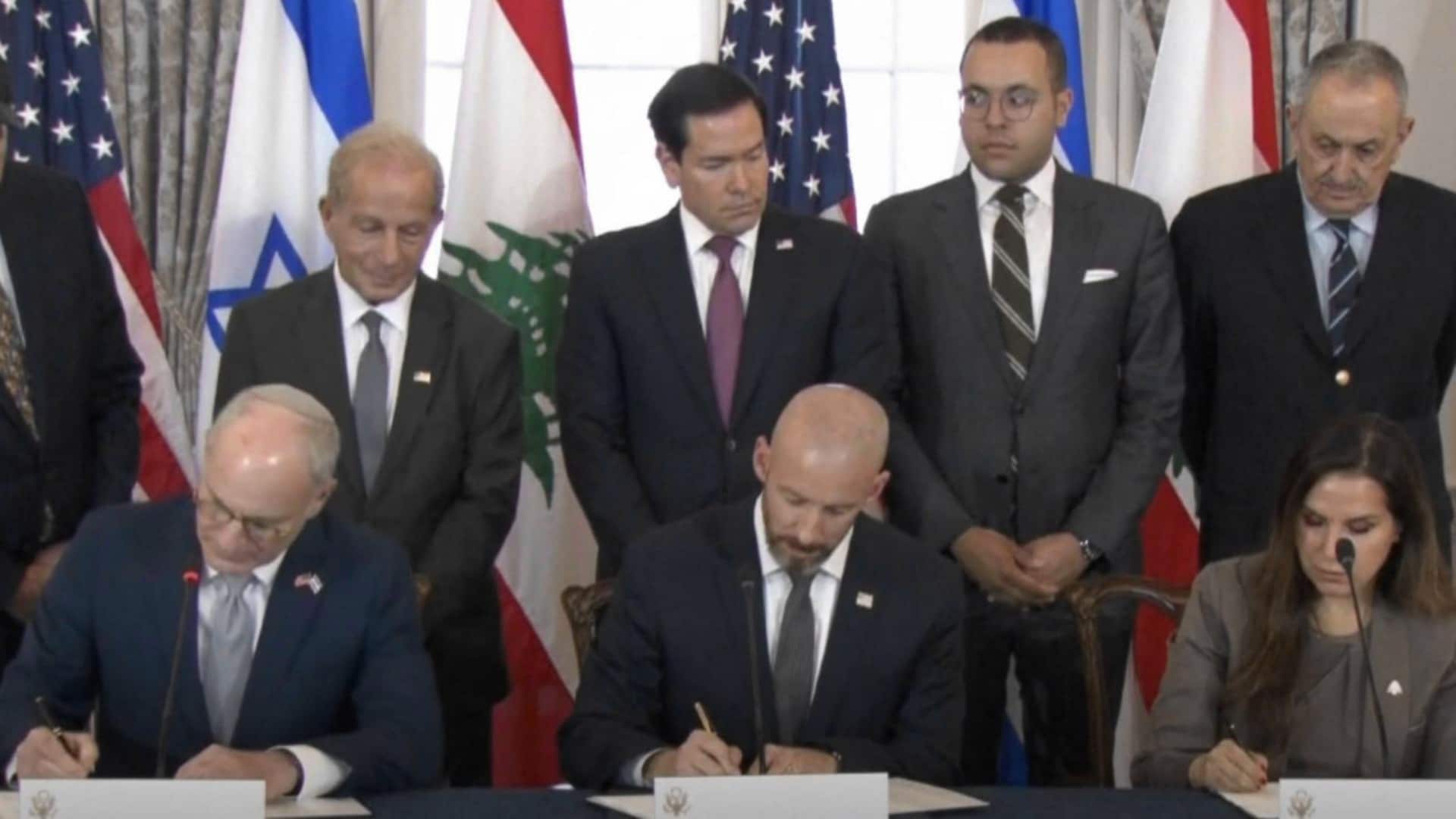
The ink is barely dry on the paperwork signed in Washington, but the celebration surrounding the new trilateral framework agreement between Israel, Lebanon, and the United States feels incredibly detached from the reality on the ground. On June 26, 2026, diplomats smiled for the cameras at the State Department, declaring a historic breakthrough to end decades of hostility. But let’s look at what this deal actually demands and why it might just be a recipe for further internal chaos.
US Secretary of State Marco Rubio framed the deal as a realistic path out of endless conflict. Israeli Ambassador Yechiel Leiter even spoke poetically about a future where Israelis could drive from Tel Aviv to Beirut for lunch. It sounds wonderful. It also sounds completely impossible given the current political balance of power. The core problem is simple: the agreement hinges entirely on disarming a heavily armed, battle-tested group that wasn't even in the room when the deal was made. For a different view, see: this related article.
What the Washington Accord Actually Demands
The framework establishes what the State Department calls a structured process to restore Lebanese sovereignty and protect Israel's northern border. To coordinate this massive undertaking, the US is facilitating a new body called the Military Coordination Group for Lebanon (MCG4L). Washington is also throwing money at the problem, pledging $100 million in immediate humanitarian assistance and more than $30 million to help boost the capabilities of the Lebanese Armed Forces (LAF).
The strategic heart of the deal relies on a staggered, conditional exit strategy centered on two distinct pilot zones in southern Lebanon. Further analysis on this trend has been shared by NPR.
- The Pilot Zones: One zone sits south of the Litani River, and the second sits directly north of it.
- The Transition Strategy: Israeli troops will gradually hand over these territories to the Lebanese military.
- The Condition: This transfer only happens as the Lebanese Armed Forces successfully clear out non-state armed groups and dismantle military infrastructure.
Lebanese Ambassador Nada Hamadeh Moawad defended the decision to sign, calling it a vital first step toward reclaiming territorial integrity and allowing over a million displaced Lebanese citizens to return home. But Israeli Prime Minister Benjamin Netanyahu quickly tempered that optimism in a video message to his own public, explicitly stating that Israeli forces will remain firmly entrenched in their self-declared southern security zone until every trace of the threat is verified as gone.
The Hezbollah Sized Elephant in the Room
You can't talk about Lebanese sovereignty without talking about the reality of who holds the weapons. Hezbollah launched this round of fighting back on March 2 to avenge the killing of Iranian Supreme Leader Ayatollah Ali Khamenei. Since then, the resulting conflict has claimed more than 4,200 lives in Lebanon and displaced massive swathes of the population.
Because Hezbollah answers to its own command structure and its patrons in Tehran, it viewed the Washington talks with absolute hostility. While Lebanese Prime Minister Nawaf Salam tries to frame this as an official state action to extend legal authority, Hezbollah sees it as a betrayal.
Shortly after the signing ceremony, Hezbollah official Hassan Fadlallah delivered a chilling warning, stating flatly that Lebanese authorities won't be able to enforce these terms unless they are willing to drag the country, with American backing, straight into a civil war. Group leader Naim Qassem continues to demand an unconditional, immediate withdrawal of Israeli troops, showing zero intent to voluntarily surrender a single rocket or rifle.
The deal also threatens to complicate broader regional diplomacy. This trilateral framework was negotiated separately from the tentative U.S.-Iran interim agreement signed just last week to halt operations on multiple fronts. By striking a separate deal in Washington, Lebanon's official government sought to escape Iran's shadow. Predictably, Hezbollah has blasted the move as an intentional effort to derail the wider diplomatic process happening elsewhere.
Why the Burden Falls on a Fragile Military
The entire weight of this international framework now rests squarely on the shoulders of the Lebanese Armed Forces. Historically, the Lebanese military is respected inside the country as a neutral, unifying institution. However, it's also chronically underfunded, outgunned by the militias it's being asked to dismantle, and fundamentally designed to defend the nation, not to wage a bloody internal campaign against its own citizens.
Expecting the LAF to march into southern Lebanon and forcefully disarm a dominant political and military force is a massive gamble. If the army pushes too hard, it risks fracturing along sectarian lines, repeating the tragic history of the 1970s. If it fails to act, Israel simply won't leave the pilot zones, rendering the entire Washington framework a dead letter.
For anyone tracking this crisis, look closely at the implementation of the first pilot zone south of the Litani River. Watch whether the newly formed Military Coordination Group can actually establish a timeline for real troop movements, or if the process stalls out immediately over security guarantees. Keep a close eye on how the Lebanese parliament handles the inevitable political backlash from Hezbollah-aligned factions in Beirut, as that domestic political battle will dictate whether this text leads to real peace or just another broken truce.