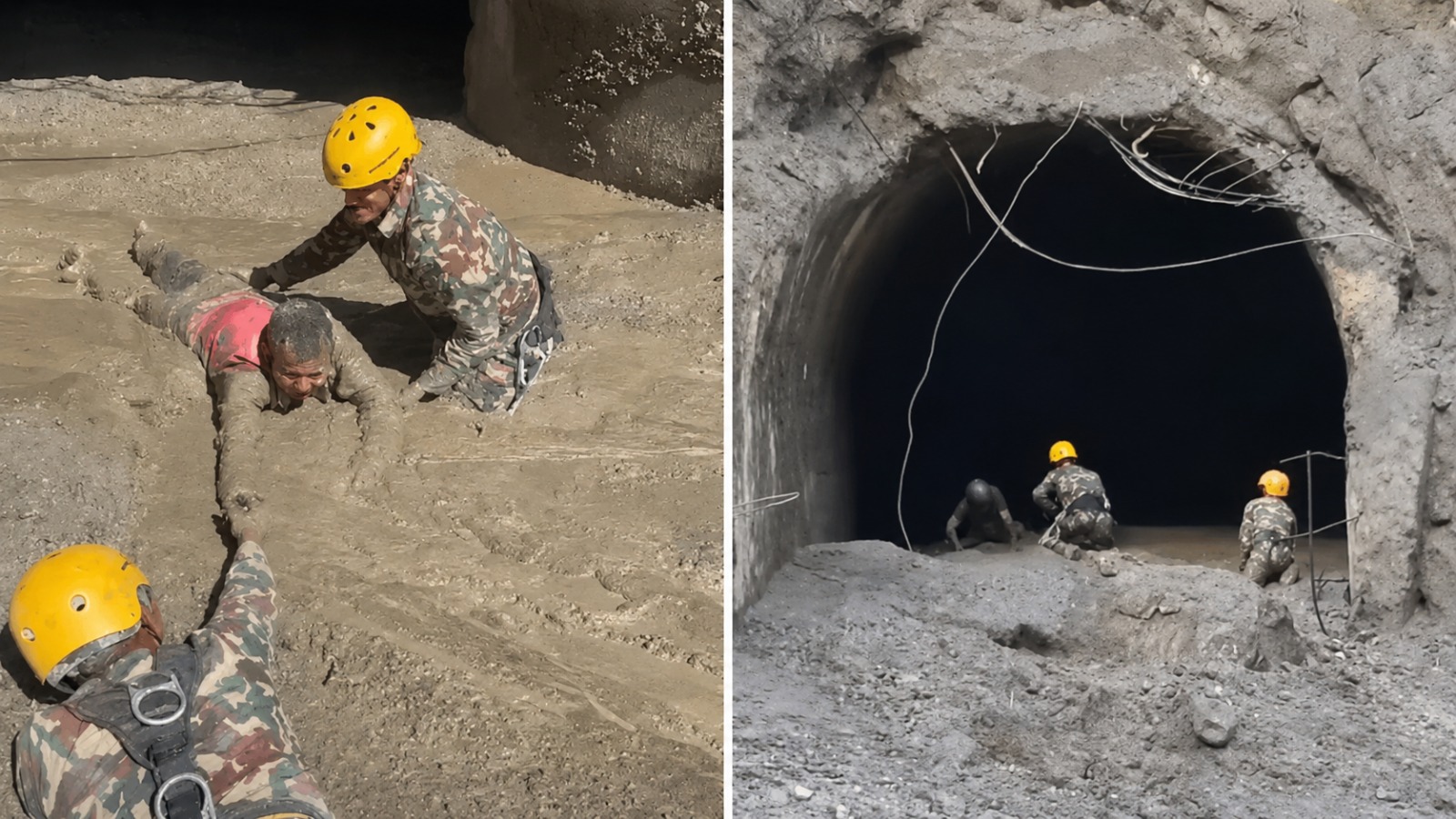
Water does not care about international borders, diplomacy, or diplomatic communiques. When a catastrophic high-altitude ice-rock avalanche triggered a massive flash flood down the Himalayan valleys, communities downstream had less than five minutes of warning. Entire settlements vanished under walls of mud and debris. The disaster left hundreds dead and thousands missing across Nepal and the Tibet region of China, laying bare a brutal reality. Existing cross-border early warning networks simply failed to move fast enough when it mattered most.
The Blind Spots on the Roof of the World
Geography makes Himalayan disaster management a logistical nightmare. The Hindu Kush Himalaya region holds more than 63,700 glaciers, and rising temperatures are turning these frozen peaks into ticking time bombs. Meltpools grow larger, glaciers destabilize, and sudden ice-rock collapses send devastating surges down narrow river basins like the Bhote Kosi.
The core issue isn't just a lack of technology. It is a critical data gap at high elevations. Nepal’s National Disaster Risk Reduction and Management Authority has pointed out a glaring void: the country lacks high-altitude weather stations because trans-boundary data seeding mechanisms do not function properly.
Without upstream sensors sitting directly on the Tibetan Plateau where many of these disasters originate, Nepalese forecasters are operating blind. They have to wait for water levels to hit downstream stations inside their own borders. By that point, the destructive wall of water is often already barrelling toward populated villages.
Diplomacy Meets the Muddy Reality
Months before the catastrophe, officials from Kathmandu and Beijing met to hammer out better agreements on sharing meteorological and hydrological data. Nepal wanted real-time updates every ten minutes to give residents a fighting chance.
While Beijing maintains that its experts share information in a timely manner despite extreme monitoring challenges, the on-the-ground outcome tells a different story. Bureaucratic red tape and technical incompatibilities mean life-saving data gets stuck in transit. When a disaster unfolds in minutes rather than hours, an email sent hours later or a delayed sensor reading is completely useless.
Property losses and infrastructure damage have crippled parts of Nepal's economy, knocking out hydropower capacity and washing away vital bridges. Throwing emergency cash at the aftermath is a bandage on a gaping wound. Both nations need automated, real-time sensor integration that bypasses human delays entirely.
What Actually Needs to Happen Now
If Nepal and China want to prevent an even deadlier repeat of these floods, bilateral cooperation has to move past diplomatic handshakes.
- Automated Sensor Triggers: High-altitude monitors on the Tibetan Plateau must be directly linked to automated siren systems downstream, removing slow bureaucratic middlemen.
- Strategic Station Spacing: River monitoring stations need closer intervals along trans-boundary rivers to measure flow velocity changes instantly rather than waiting for dramatic water height spikes.
- Resilient Infrastructure: Rebuilding washed-out bridges and hydropower plants requires factoring in high-energy ice-rock avalanches, which carry far more destructive force than standard seasonal monsoons.
Communities living in the shadow of the Himalayas deserve real protection, not post-disaster condolences. Until continuous, unfiltered trans-boundary data flows freely across the border, every heavy rainfall will remain an existential threat.