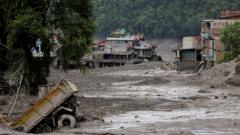
A massive wall of mud and rock roared down the Himalayan border between Nepal and Tibet, leaving hundreds of travelers and locals unaccounted for.
Nepalese authorities report that over 400 people are currently missing following catastrophic flash floods along the border region. Among the missing are 33 UK nationals, alongside citizens from India, the United States, Australia, and Canada. Local police have confirmed at least 95 deaths as rescue operations struggle to reach remote areas cut off by destroyed roads and bridges.
If you are trying to track down family members or planning upcoming treks in the Himalayas, the ground reality requires immediate attention. Here is what is happening on the ground and how authorities are responding.
The Anatomy of the Himalayan Disaster
The sudden deluge struck around 8:30 a.m. local time near the Nepal-China border. Officials indicate that a catastrophic mudslide and structural collapse on the Tibetan side of the Bhote Koshi river triggered the massive surge of water.
Initial reports presented to Nepal's parliament by Foreign Minister Shisir Khanal pointed toward an earthquake-triggered avalanche that destabilized the river flow. Verified footage shows entire sections of riverbanks, homes, and infrastructure being swept away in districts like Rasuwa and Nuwakot.
The timing compounded the tragedy. Thousands of travelers and pilgrims had gathered in the region to mark the sacred Hindu festival of Janai Purnima, heading toward holy sites like Gosaikunda Lake and Mount Kailash.
Foreign Nationals and International Response
The Nepal Tourism Board updated its missing persons registry to 403, noting that 341 of those unaccounted for are foreign nationals from 26 different countries.
- United Kingdom: 33 citizens are listed as missing, including a 13-year-old girl and tourists booked through agencies like Alpine Eco Trek.
- India: 133 pilgrims heading toward Tibetan holy sites are currently unaccounted for.
- United States and Australia: 47 Americans and 34 Australians are among the missing registry.
- Other Nations: Citizens from Canada, South Africa, and South Korea—including workers at local hydropower plants—are missing or stranded.
UK Foreign Secretary Ed Miliband shared deep concern over the disaster, while the British Embassy in Kathmandu issued joint safety advisories alongside European and Commonwealth counterparts. Officials are urging anyone with family in the region to monitor updates closely through official diplomatic channels.
Travel Safety and Immediate Next Steps
Rescue workers using heavy earthmovers are trying to clear blocked mountain passes, but continuous debris and swollen rivers make access nearly impossible in certain sectors.
If you have active travel plans to Nepal, do not ignore local warnings. Authorities have issued strict guidance for anyone currently visiting or planning a trip to the Himalayan nation:
- Postpone all non-essential travel to Rasuwa, Nuwakot, and areas flanking the Bhote Koshi and Trishuli rivers.
- Move immediately to higher ground if local sirens or emergency services signal rising water levels.
- Maintain regular contact with your tour operator, hotel, or embassy if you are currently stranded in a safe zone.