Bringing soil and rock samples back from Mars or distant asteroids sounds like the ultimate scientific triumph. But what happens if something hits a ride back with them?
Right now, space agencies are racing to bring pieces of foreign worlds back to Earth. The OSIRIS-REx mission successfully dropped off an asteroid sample in Utah in 2023, and plans for Mars sample returns are ramping up fast. But a growing group of scientists thinks our current defense plan is deeply flawed. They want a total shift in planetary protection. Instead of flying these pristine, potentially hazardous samples straight to laboratories on Earth, they argue we need to build a secure quarantine facility on the Moon first. You might also find this related coverage insightful: The Structural Economics of Chinese Semiconductor Self Sufficiency.
Basically, the Moon needs to become humanity's first biological firewall.
The Flaw in Bringing Space Samples Straight Home
When NASA brings samples back to Earth, they don't just dump them on a table. They use hyper-advanced clean rooms and maximum-containment setups, much like the Biosafety Level 4 labs used for studying deadly viruses. But Earth-based containment relies on the assumption that our infrastructure will never fail. As reported in latest coverage by CNET, the implications are worth noting.
A new policy paper published in the journal Amio by biodefense specialist Frederick I. Moxley and invasive-species expert Anthony Ricciardi highlights the blind spots in this strategy. No facility on Earth can offer a 100% guarantee of absolute containment if a catastrophic accident happens.
Think about the flight path alone. A capsule screaming through Earth's atmosphere could suffer a parachute failure, just like the Genesis capsule did back in 2004. If a spacecraft carrying unsterilized material from a habitable zone like Mars or Saturn's moon Enceladus crashes onto Earth's surface, the containment is instantly compromised.
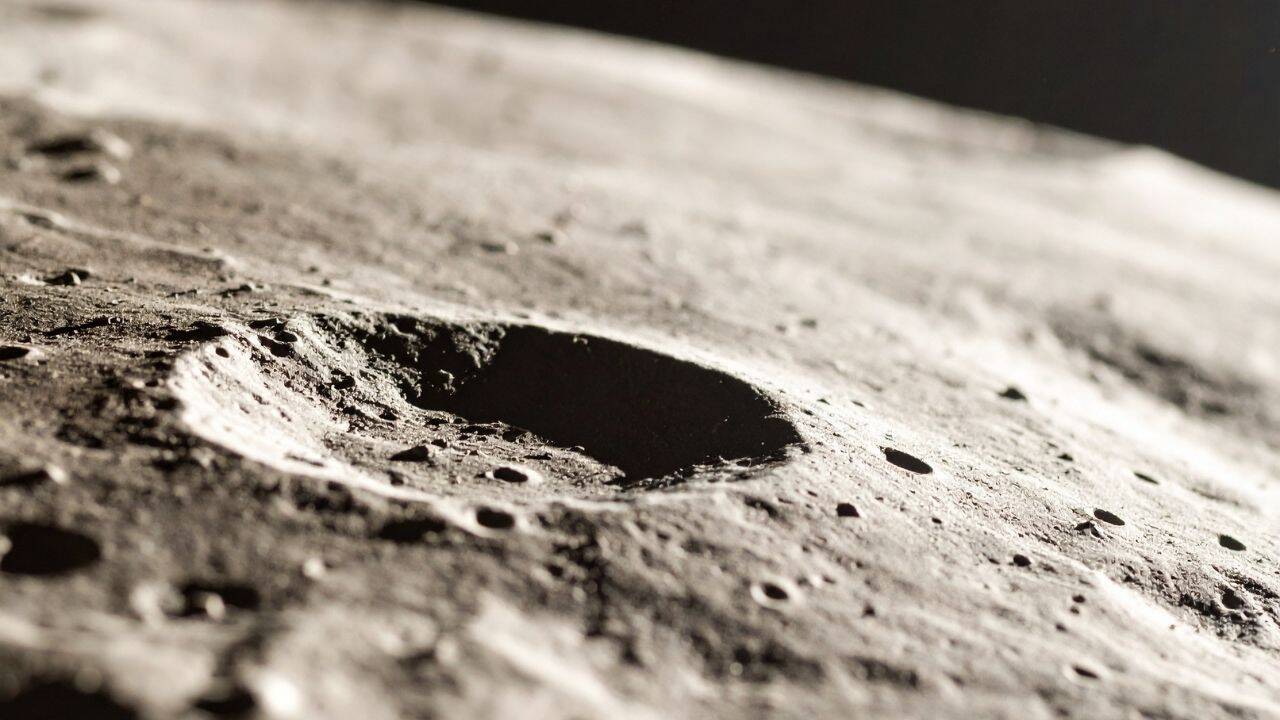
By using the Moon as a screening station, that risk drops to zero. The Moon is close enough for easy data transmission and robotic operations, yet totally isolated from our biosphere. If a capsule crashes on the lunar surface, there's no ecosystem to infect. No atmosphere to carry airborne spores. No waterways to spread a strange pathogen.
The Invisible Threat of Evolutionary Rebound
We don't have any proof that alien life exists. The Moon itself is a barren, lifeless rock. But the danger isn't just about little green microbes from Mars. It includes something scientists call rebound contamination.
Whenever we send rovers or astronauts into space, they carry hitchhikers. Despite intense sterilization before launch, a tiny amount of Earth bacteria always survives on our spacecraft. We've already seen bacteria on the International Space Station mutate and develop drug-resistant traits due to the harsh radiation and microgravity of space.
Imagine Earth microbes surviving on Mars for a few years, mutating under extreme UV radiation, and then getting scooped up by a return mission. If those altered, highly resilient organisms make it back to Earth, our ecosystems might have no natural defense against them. They wouldn't be alien life in the traditional sense, but they'd be entirely new to our biology.
How a Lunar Quarantine Station Would Actually Work
Building a high-tech lab on the lunar surface is an engineering nightmare, but it's increasingly practical as the Artemis program moves forward. NASA is currently eyeing the late 2020s for long-duration crewed missions and building up surface infrastructure. Adding a biosecurity hub into these plans makes a lot of sense.
Here's the blueprint for how this would work in practice
- Robotic Processing Only: Human astronauts wouldn't touch the samples. The entire facility would rely on automated robotic arms and remote handling tools to prevent any human exposure.
- Initial Biohazard Screening: Robots would open the sample canisters inside sealed, negative-pressure chambers to test for signs of active biochemistry, cellular replication, or toxic compounds.
- Targeted Sterilization: If a sample shows zero signs of biological activity, it gets cleared for transport to Earth. If it does contain something unusual, it stays on the Moon for study, or it undergoes intense heat or chemical sterilization before it ever enters Earth's orbit.
This creates a strict buffer zone. It allows scientists to do the heavy lifting of biological testing without risking a planetary emergency.
The Biological Lesson From Our Own History
We don't need to look to outer space to see what happens when an unfamiliar organism enters a new environment. Earth's own history with invasive species is full of disasters.
When cane toads were introduced to Australia, or zebra mussels found their way into the Great Lakes, they didn't just blend in. They multiplied unchecked, wiped out native species, and destabilized entire ecosystems. They did this because they had no natural predators or competitors to keep them in check.
An extraterrestrial microorganism or an evolved space mutant would enter Earth's biosphere with the same exact advantage. It's an unpredictable risk, and treating it as a sci-fi fantasy is a dangerous mistake.
The Geopolitical Race for Space Safety
This isn't just a theoretical debate for NASA. Right now, there's a fierce geopolitical race to establish permanent moon bases. The United States is pushing forward with its Artemis infrastructure, while China and Russia are actively planning the International Lunar Research Station.
The problem is that none of these competing nations have laid out a clear, cooperative framework for off-world planetary protection. Whoever builds the first major lunar infrastructure will likely set the rules for how space samples are handled for the next fifty years. If one nation or private aerospace company cuts corners to speed up their research, everyone pays the price.
Space agencies need to stop looking at planetary protection as a bureaucratic hurdle to clear before launch. It needs to be built directly into the physical infrastructure of our moving off-world footprint.
The next step requires international space coalitions to pause the rush for immediate Earth delivery. We need to standardize sample-return flight paths to target lunar orbit or lunar landing zones by default. Space tracking networks must be updated to handle automated routing to the Moon, and engineers need to prioritize building modular, robotic clean rooms as part of the early Artemis base camp designs. If we're smart enough to bring pieces of the solar system home, we need to be smart enough to build the firewall first.