The U.S. Navy isn't taking any chances with its surface fleet, and a massive new defense deal proves it. Raytheon, an RTX business, landed a $1.8 billion contract extension to produce and sustain its SPY-6 radar family. If the Navy exercises all its options, that price tag jumps to $3.3 billion.
This isn't just routine military spending. It's a foundational upgrade for naval power.
For years, aging radar architecture struggled under the weight of emerging modern threats—namely hypersonic missiles, swarming drones, and low-observable aircraft. Legacy systems worked fine for their time, but they lacked the modular adaptability required for today's high-threat maritime environments. The SPY-6 radar family changes that equation by giving commanders a unified, highly sensitive tracking shield.
Why the SPY-6 Radar Family Is a Game Changer for Naval Defense
What makes the SPY-6 radar family so valuable? It comes down to modularity and scale.
Instead of building completely custom radar units from scratch for every ship type, Raytheon built SPY-6 around individual building blocks called Radar Modular Assemblies (RMAs). Each RMA is essentially a self-contained radar box measuring roughly two feet by two feet by two feet. Defense engineers can stack these modules together like industrial Legos to construct custom arrays tailored to specific vessel sizes.
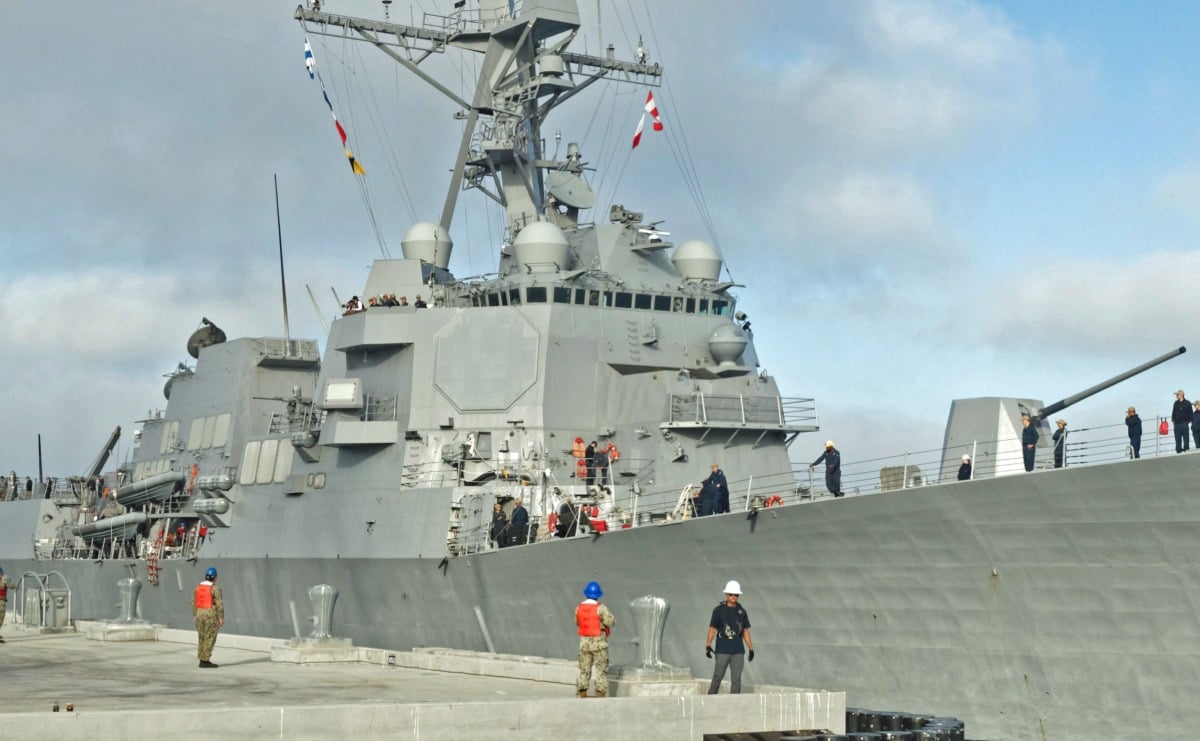
- Flight III Destroyers (SPY-6(V)1): Uses 37 RMAs per array face to give deep-ocean surface combatants unmatched long-range detection against ballistic missiles and air threats.
- Aircraft Carriers and Amphibious Assault Ships (SPY-6(V)2 & (V)3): Uses smaller, rotating or fixed 9-RMA arrays tailored for self-defense and air traffic coordination.
- Flight IIA Destroyers (SPY-6(V)4): Scaled down slightly to retrofit existing hull structures without requiring massive hull redesigns.
Because every variant shares identical core hardware and operational software, the Navy saves billions on long-term maintenance, spare parts, and crew training.
Ramping Production at Andover
Raytheon didn't win this $1.8 billion extension by accident. The defense giant laid the groundwork years ago, pouring over $800 million of its own money into modernizing its flagship radar manufacturing facilities.
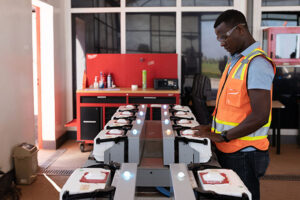
Most of this activity centers in Andover, Massachusetts. Raytheon built automated advanced manufacturing lines that drastically cut assembly times while keeping strict precision tolerances. Thanks to these facility overhauls, the company says it's positioned to double its SPY-6 production capacity by 2028.
That manufacturing speed is vital. Right now, SPY-6 hardware is installed on 13 Navy vessels—two fully commissioned and 11 undergoing sea testing. Over the next decade, the U.S. Navy plans to outfit more than 50 ships with SPY-6 variants. Without heavily automated factories, meeting that timeline would be impossible.
Raytheon is also expanding its Andover engineering workforce to keep the production momentum going. They're hiring aggressively across radar software engineering, hardware testing, and supply chain logistics.
What You Should Do Next
If you're tracking defense technology trends, supply chain developments, or defense contractors, keep these practical takeaways in mind:
- Watch the Option Triggers: Keep an eye on Navy budget releases over the next 12 to 24 months. If the Navy exercises the full $3.3 billion contract option, it Signals accelerated hull retrofits for older Arleigh Burke-class destroyers.
- Track the Andover Supply Chain: Defense subcontractors specializing in Gallium Nitride (GaN) semiconductors, microwave electronics, and specialized thermal management systems stand to gain significant orders as Raytheon ramps toward its 2028 output doubling goal.
- Monitor Overseas Sales Potential: Foreign military sales usually follow U.S. Navy procurement standardization. Watch for allied navies operating Aegis-capable combat systems to evaluate scaled SPY-6 variants for their own fleet modernizations.