The romanticized notion that whales migrate to specific, secret trenches in the Indian Ocean to peacefully meet their demise is a comforting fairy tale. It sells nature documentaries. It populates travel brochures for eco-tourists seeking a profound connection with the cosmos.
It is also completely wrong.
For years, the lazy consensus among casual marine observers and pop-science writers has been that a specific graveyard exists near the Cocos (Keeling) Islands, where thousands of ancient cetaceans have supposedly gathered for five million years to die. The narrative frames it as an intentional, almost spiritual ritual.
Let's dismantle that. Whales do not have retirement homes, and they do not plan their funerals. What the romanticists call a "graveyard" is actually a violent, accidental collection point driven by deep-sea topography and fluid dynamics. By focusing on the poetry of a whale cemetery, we are completely missing the terrifying, brilliant reality of how ocean ecosystems actually recycle energy.
The Physics of the So-Called Graveyard
The idea of a deliberate whale graveyard collapses the moment you look at a bathymetric map. The Indian Ocean floor is not a flat desert; it is a jagged landscape of underwater mountain ranges, tectonic fractures, and steep trenches.
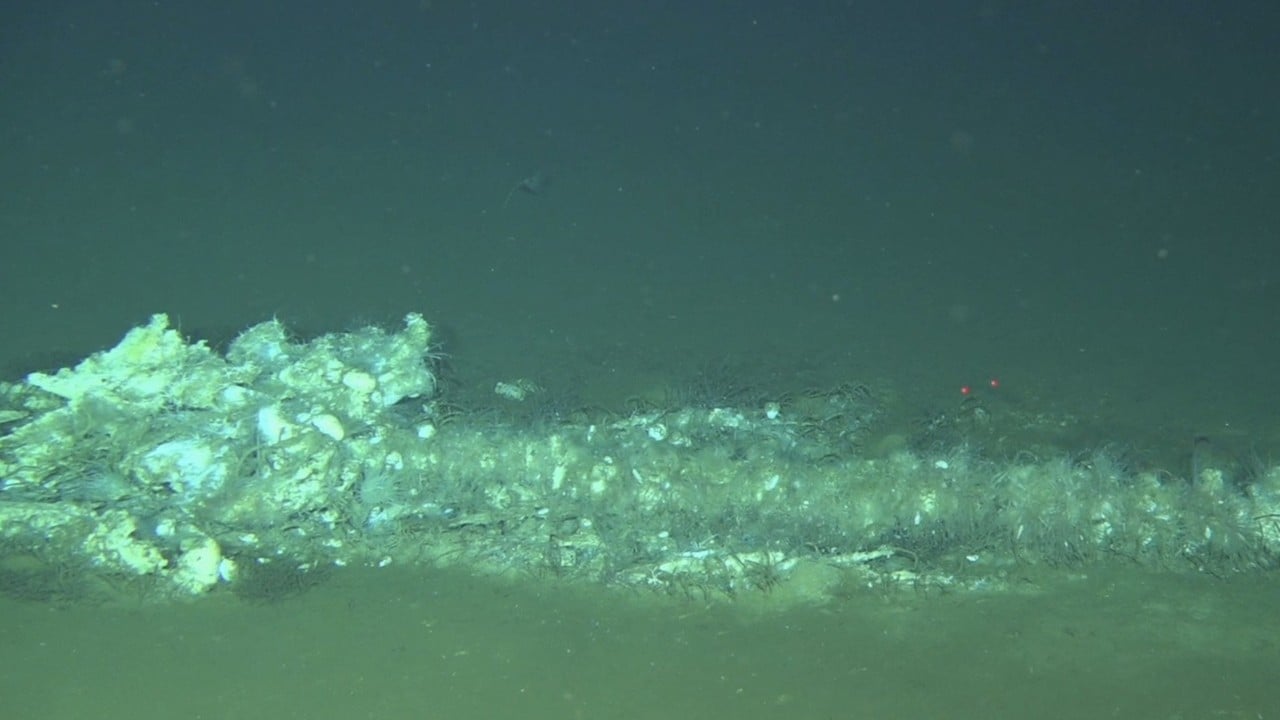
When a whale dies, one of two things happens. If it retains enough gas, it floats (a "bloater") and drifts with the surface currents until scavengers pop the carcass. If it loses buoyancy, it sinks. This is known as a whale fall.
Once a carcass begins its descent through kilometers of water, it is entirely at the mercy of thermohaline circulation. The area near the Cocos Islands happens to be a convergence zone where deep, cold Antarctic bottom water collides with warmer, shallower currents.
[Surface Current] ----> \
                         \ ---> [Tectonic Trench Accumulation Zone]
[Antarctic Deep Flow] -> /
This creates an underwater conveyor belt. Carcasses drifting across hundreds of square miles of the eastern Indian Ocean are funneled by pure physics into the same underwater valleys. It is not a sanctuary chosen by the dying. It is a biological drainage ditch created by gravity and fluid dynamics.
Calling this a deliberate graveyard is like looking at a pile of leaves in the corner of a fenced yard and concluding that the leaves chose to gather there to reflect on their lives. They were blown there by the wind.
The Shark Tooth Hoax
A major piece of evidence cited by the "graveyard" crowd is the massive deposit of fossilized shark teeth and whale bones dredged up from these sites. The logic goes: if there are thousands of teeth from ancient predators like the Megalodon alongside whale skeletons, it must have been a historic hunting ground or a final resting place.
This completely misinterprets how fossilization and deep-sea sedimentation work.
In the deep ocean, sediment accumulates at an excruciatingly slow rate—often less than a millimeter every thousand years. A single layer of seabed a few inches thick can represent millions of years of time. When a research vessel dredges up a bucket of sediment containing a mix of modern whale bone and a three-million-year-old shark tooth, they are not looking at a single event. They are looking at a compressed timeline.
The sharks did not necessarily kill the whales there. The whales did not die there simultaneously. The ocean floor simply lacks the sediment volume to bury them separately, creating a optical illusion of a mass grave.
Why the Romantic Narrative Is Dangerous For Conservation
This is not just a pedantic argument over semantics. The myth of the whale graveyard actively harms how we approach marine conservation and deep-sea mining.
When you tell the public that whales go to a specific, remote zone to die, you centralize the value of the ocean. You make it seem like as long as we protect that one specific "sacred" patch of the Indian Ocean, the whales will be fine.
The reality is far more inconvenient. Whales are dying everywhere, constantly, and their deaths are vital to the entire oceanic biome.
A single whale fall provides a massive influx of organic carbon to the food-deprived deep sea. One carcass can sustain a localized ecosystem of hagfish, sleeper sharks, bone-eating worms (Osedax), and microbes for up to a century.
- Phase 1: The Mobile Scavenger Phase (Months) – Sharks and crabs strip the soft tissue.
- Phase 2: The Opportunistic Phase (Years) – Small crustaceans and worms colonize the enriched sediment.
- Phase 3: The Sulfophilic Phase (Decades) – Bacteria break down the lipids inside the bones, emitting hydrogen sulfide that fuels chemosynthetic life.
If we pretend that whales only die in specific "graveyards," we ignore the fact that commercial shipping lanes, plastic pollution, and sonar testing are disrupting whale falls globally. Every time a whale dies prematurely due to a ship strike and decomposes in a shallow coastal zone instead of sinking into the deep ocean, a deep-sea ecosystem miles away is starved of nutrients.
Dismantling the "People Also Ask" Delusions
If you look at public forums and search queries regarding marine biology, the premises are fundamentally flawed.
Do whales know when they are going to die?
No. Whales possess advanced cognitive abilities and deep social bonds, but there is zero evidence they possess a concept of mortality that drives them to isolate themselves in a geographical location. When a whale is sick or injured, it falls behind the pod because it cannot keep up with the grueling pace of migration. It drifts. It sinks. It does not embark on a final pilgrimage.
Why do we find so many bones in the Indian Ocean?
Because the Indian Ocean features massive areas with extremely low oxygen levels at the seafloor. Low oxygen means fewer scavengers and slower decomposition rates. The bones aren't there because more whales died there; they are there because the environment is uniquely suited to preserving them for millennia. It is a preservation zone, not a selection zone.
The Hard Truth About Deep-Sea Exploration
I have spent years analyzing oceanographic data, and if there is one thing the data shows, it is that humans desperately want to project human psychology onto animals. We want to see ritual where there is only biology. We want to see choice where there is only physics.
The contrarian truth is that the ocean is a brutal, efficient recycling machine. The "graveyard" in the Indian Ocean is a monument to scavengers and currents, not a sacred monument built by cetaceans.
Stop looking at the ocean floor as a cemetery. It is a factory. And until we understand that the distribution of these skeletons is governed by physical oceanography rather than animal sentimentality, our attempts to map, manage, and protect the oceans will remain hopelessly stuck in the realm of mythology.