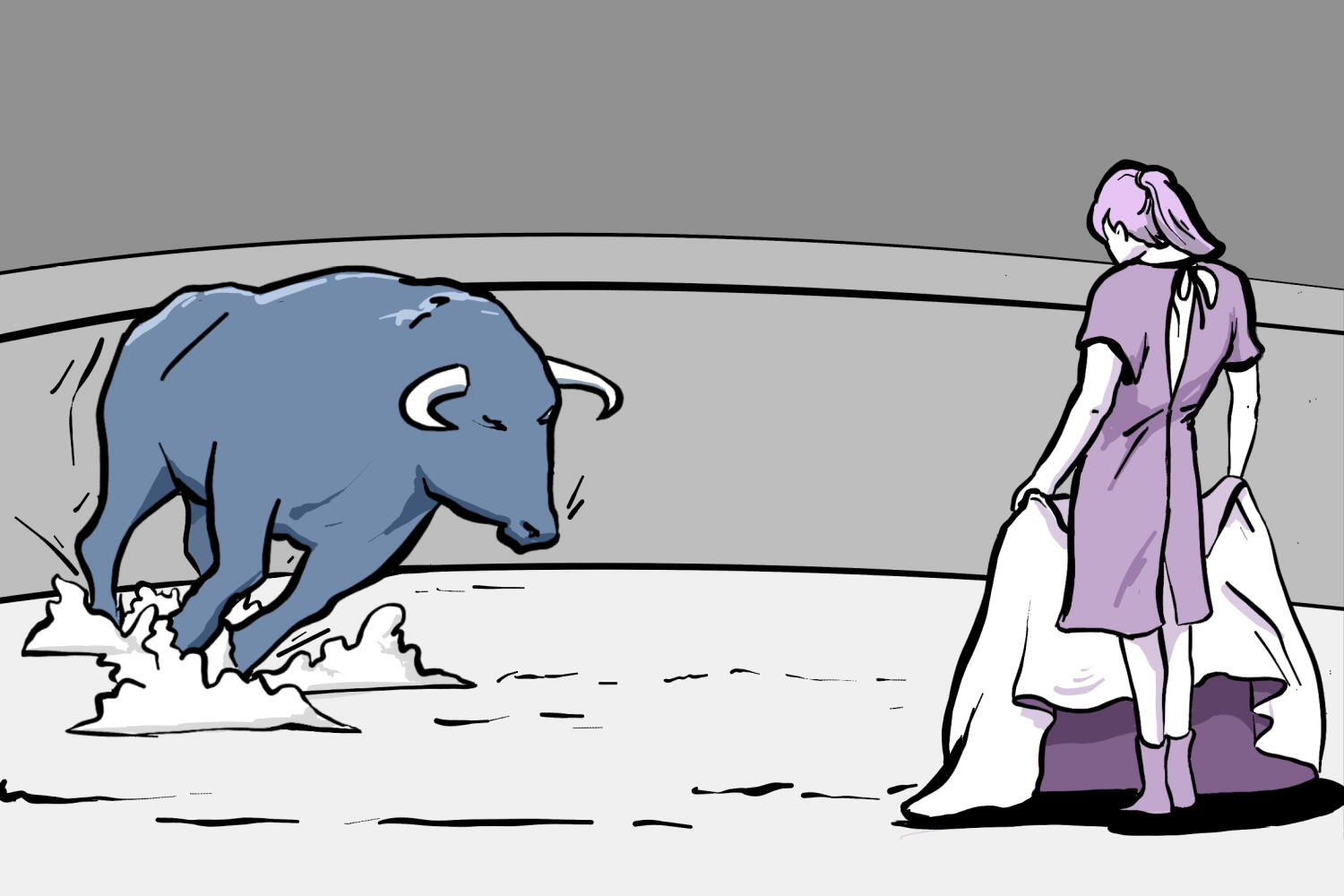
For over a decade, the medical community has peddled a comforting, self-congratulatory bedtime story. You have read the viral essays. You have seen the op-comics. The premise is always the same: doctors refuse heroic, invasive end-of-life care because they possess secret, insider knowledge about the brutality of the intensive care unit, while the rest of us—ignorant, terrified laypeople—blindly demand ventilators, feeding tubes, and chest compressions until the bitter end.
It is a neat narrative. It flatters the physician as a enlightened realist and casts the general public as medically illiterate. There is only one problem with this lazy consensus. Recently making waves in this space: The Economics and Clinical Reality of Pediatric Medical Repatriation.
The data does not back it up.
When you strip away the romanticized anecdotes popularized by Ken Murray’s famous 2011 essay "How Doctors Die" and examine actual, large-scale empirical studies, the myth collapses. Doctors do not die in serene, low-intervention bliss while the public dies in ICU chaos. When facing terminal illness, physicians get admitted to intensive care units at nearly the exact same rates as non-physicians. They undergo chemotherapy in the final weeks of life at similar frequencies. They die in hospitals far more often than the folklore suggests. Further information on this are explored by National Institutes of Health.
The gap between what doctors say they want in hypothetical surveys and what they actually do when staring down their own mortality exposes a massive blind spot in modern healthcare.
The Anatomy of a Medical Urban Legend
To understand why this myth persists, you have to look at how it was built. It relies almost entirely on stated-preference surveys rather than revealed-preference data.
Ask a healthy 45-year-old oncologist at a dinner party if they want CPR or mechanical ventilation if they develop metastatic pancreatic cancer. They will look you dead in the eye and say, "Put me on morphine and let me go home." Put that same response into a peer-reviewed survey, and you get headlines claiming 88 percent of doctors want "no-code" orders at the end of life.
Now, track what happens ten years later when that oncologist actually gets the diagnosis.
A landmark study published in JAMA by researchers including Dr. Joel Weissman and colleagues analyzed Medicare data to compare end-of-life care between physicians and non-physicians. The results were a cold shower for the "doctors die differently" crowd. Physicians were slightly less likely to die in a hospital than the general population—38.3 percent versus 40.4 percent. A two-percentage-point difference is hardly a cultural revolution. Even more telling, physicians actually used more hospice care, yet their rates of ICU admission in the last six months of life were virtually indistinguishable from those of everyday patients.
Another major study in the Journal of Clinical Oncology examined end-of-life care among physicians with cancer. The researchers found that doctors received aggressive care—including chemotherapy in the last 14 days of life and multiple hospitalizations—at rates that mirrored the general population.
The comic strips and personal essays mistake a hypothetical preference for an actual clinical reality. It is easy to be a minimalist when death is an abstract concept discussed over coffee. It is entirely different when the tumor is in your own body, your spouse is begging you to try one more clinical trial, and your entire professional identity has been forged around fighting pathology.
Why Physicians Fall Into the Same Trap
Why do people who know every gruesome detail of a failed resuscitation still end up intubated in the ICU? Because medical training does not cure human psychology. In many ways, it makes it worse.
The Sunk Cost Fallacy of Clinical Knowledge
Laypeople fear death because it is unknown. Doctors fear death because they view it as a technical failure. From the first day of medical school, the entire apparatus of clinical education is oriented toward intervention. You diagnose, you treat, you stabilize, you fix.
When a physician becomes a patient, they do not turn off their diagnostic brain. Instead, they hyper-fixate on marginal probabilities. A layperson hears "a 5 percent chance of remission" and might decide the odds aren't worth the toxicity. A physician hears "a 5 percent chance" and immediately starts calculating how they can optimize their physiology to be in that 5 percent. They know the mechanisms of the drugs. They know the researchers running the Phase II trials. That insider knowledge doesn't make them walk away; it gives them a thousand sophisticated rationalizations to keep fighting.
The Illusion of Control
In clinical practice, doctors are the ones holding the clipboard, ordering the labs, and dictating the protocol. Becoming a patient strips away that agency overnight. To reclaim a shred of control, physician-patients frequently micromanage their own care, pushing for second opinions, off-label therapies, and aggressive interventions that they would quietly advise their own patients to skip.
I have watched veteran surgeons—men and women who spent thirty years telling families that further surgery was futile—demand radical, high-risk resections for themselves when faced with an aggressive malignancy. They knew the morbidity statistics better than anyone on the planet. They simply believed, deep down, that the statistics applied to everyone else.
Family Pressure is Universal
The popular narrative pretends that doctors make end-of-life decisions in a vacuum. They don't. They have spouses, children, and parents who are just as terrified of losing them as anyone else's family. When a dying physician looks at their partner and sees sheer panic, the impulse to "do everything" isn't driven by medical ignorance. It is driven by love and guilt. Refusing treatment can feel like abandoning the people you care about. Doctors succumb to that emotional gravity just as easily as an accountant or a schoolteacher.
The Real Difference Isn't What You Think
If doctors don't actually opt out of aggressive care at the rates the viral essays claim, why does the myth feel so true to the people working inside hospitals?
Because there is a difference, just not the one the op-comics depict. The real divergence isn't between "doctors who refuse care" and "patients who demand it." The divergence is in how the medical system treats its own.
When a physician is admitted to the hospital, the dynamic on the ward shifts instantly.
- Unfiltered Truth: Doctors rarely sugarcoat prognoses for other doctors. When speaking to a lay family, clinicians often hedge, using soft, euphemistic language like "things aren't moving in the right direction" or "we're seeing some multi-organ strain." When speaking to a colleague, the euphemisms vanish. They say, "Your kidneys are shutting down, the pressors are maxed out, and you are dying."
- Accelerated Timelines: Because the communication is blunt, physician-patients reach the tipping point faster. They might still go to the ICU, and they might still try the aggressive therapy, but once it fails, they pivot to comfort care days or weeks earlier than a lay patient who is still trying to decode vague clinical updates.
- Permission to Stop: The medical establishment implicitly grants doctors permission to refuse care without judgment. When a layperson says, "I don't want chemotherapy," they are often met with subtle resistance, repeated consultations, and a lingering sense that they are "giving up." When a doctor says it, the team nods in immediate, respectful solidarity.
The viral narrative gets the causality completely backward. Doctors don't die better because they are wiser; they die with slightly less prolonged suffering because the system actually tells them the truth and respects their autonomy when they say "enough."
Dismantling the Wrong Questions
If you search online for how doctors handle the end of life, you run into the same repetitive questions, all built on the flawed premise that physicians hold a secret playbook.
"Do doctors sign Do Not Resuscitate (DNR) orders more than regular people?"
In surveys, yes. In practice, they sign them at roughly the same time in the disease trajectory—often very late. A DNR order is not a magic shield against the ICU. You can have a DNR order and still receive high-flow oxygen, intravenous antibiotics, dialysis, and aggressive surgical interventions. Most people confuse "DNR" with "do not treat," and the popular articles about doctors dying quietly deliberately blur that line to make a better story.
"Why do doctors refuse chemotherapy?"
They don't. This is perhaps the most persistent lie in the entire genre, usually traced back to a misinterpretation of a 1991 survey of oncologists at the McGill Cancer Center. In that study, doctors were asked if they would take a specific, highly toxic, largely ineffective chemotherapy regimen for a hypothetical case of non-small cell lung cancer. Most said no. Over the decades, internet telephone mutated that specific, dated survey into "75 percent of doctors refuse all chemotherapy." Modern data shows that oncologists and other physicians take chemotherapy for treatable—and even incurable—cancers at rates that closely mirror their patients.
"What do doctors know about CPR that the public doesn't?"
They know the actual survival rates. Television dramas portray CPR as a miracle procedure that works 70 percent of the time, with the patient waking up twenty minutes later to deliver a monologue. In reality, for hospitalized patients with chronic, advanced illness, the rate of survival to hospital discharge after in-hospital CPR is often below 15 percent, and a massive fraction of those survivors suffer permanent neurological damage from hypoxia. Doctors know that chest compressions break ribs, bruise the heart, and rarely restore a meaningful quality of life in a frail body. Yet, knowing the mechanics of a sternal fracture still doesn't stop many physicians from leaving their code status as "Full Code" until the final days of their lives.
The Downside of the "Minimalist" Dogma
There is a dark, unspoken side to glorifying the "doctors refuse treatment" trope. When the medical establishment repeatedly broadcasts the idea that smart, informed people refuse aggressive care, it subtly shifts the moral burden onto the patient.
Imagine a scenario where a working-class patient with stage IV lung cancer is offered a new immunotherapy regimen. They have read the viral articles. They have seen the comics about how doctors choose to die peacefully at home without tubes or machines. Suddenly, wanting to fight for six more months to see a grandchild graduate feels unsophisticated, almost shameful—like a failure to grasp the enlightened medical consensus.
Worse, this narrative gives healthcare systems a convenient excuse for poor end-of-life communication. If the prevailing wisdom is that "the public just demands too much care," hospitals don't have to examine why their doctors are so bad at having honest, timely conversations about prognosis. It blames the victim for asking for a ventilator while ignoring the clinician who offered it as a viable option without explaining what life on that ventilator actually looks like.
To be clear, overtreatment at the end of life is a massive, documented problem in Western medicine. Millions of people spend their final weeks tethered to machines in sterile rooms, subjected to painful procedures that offer zero statistical chance of recovery, simply because nobody had the courage to tell them they were dying. Highlighting the brutality of futile ICU care is necessary.
The mistake is pretending that holding a medical degree immunizes you against the terror of non-existence.
How to Actually Get the Care You Want (Without an M.D.)
You do not need four years of medical school and a residency to avoid a prolonged, painful death in an intensive care unit. You just need to bypass the linguistic traps that keep laypeople in the dark while doctors get the unvarnished facts.
If you want the same clarity that physicians receive when they are in the hospital bed, stop asking open-ended questions and start forcing specific clinical trade-offs.
- Ban the word "treatable" from your vocabulary. Almost anything in medicine is "treatable." You can treat an infection in a terminal cancer patient; you can treat low blood pressure in a dying heart. "Treatable" does not mean "curable," and it does not mean "recoverable." Instead, ask: "If we do this intervention, what will my daily life look like three months from now?"
- Force the binary choice. When a doctor proposes an aggressive intervention—a feeding tube, a ventilator, a third-line chemotherapy—do not ask, "What are the risks?" They will list side effects like nausea or infection. Ask: "Are we doing this to cure the disease, or are we doing this to prolong the dying process?" Watch their body language when you ask that question. It forces them out of clinical autopilot immediately.
- Appoint a ruthless healthcare proxy. An advance directive sitting in a filing cabinet is useless in an emergency room. By the time paramedics arrive, the default setting of the entire medical system is maximal intervention. You need a designated decision-maker who knows your exact boundaries and has the emotional spine to look a doctor in the eye and say, "We are not escalating care," even when other relatives are crying in the hallway.
- Demand the "colleague" prognosis. Tell your physician explicitly: "I don't want the optimistic version. Give me the exact prognosis you would give to another doctor sitting in this chair." Once you strip away the polite hedging, the real options become painfully obvious.
Stop Romanticizing the White Coat
The next time you see an infographic or an op-comic explaining how doctors calmly reject modern medicine to die peacefully in their own beds, recognize it for what it is: professional myth-making.
Doctors are not Stoic philosophers who have conquered the fear of death through superior anatomical knowledge. They are human beings who panic, bargain, cling to improbable odds, and struggle to let go of the people they love. When the monitors start alarming and the oxygen levels drop, the white coat offers zero protection against the primal urge to survive.
Stop looking to physicians for a secret code on how to die well. They are fumbling in the dark just like everybody else.


