Nostalgia is a drug that makes sports critics functionally blind.
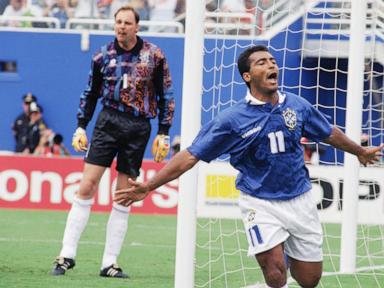
Ever since FIFA confirmed that the 2026 World Cup across the United States, Mexico, and Canada would expand to a monstrous 48 teams and 104 matches, the football purists have been in an endless cycle of mourning. They look back at the 1994 World Cup—the last time the United States hosted the tournament solo, with its lean, mean 24-team format—as some sort of holy grail of competitive integrity.
They argue that the modern game is bloated, cheapened, and over-commercialized. They complain that letting 48 teams in dilutes the product and makes the group stage an irrelevant formality. They look at soaring ticket prices and dynamic pricing structures and weep for the days when you could catch a match at the Rose Bowl for forty bucks.
They are completely wrong.
The lazy consensus among sports journalists is that "smaller equals purer." It is a fundamental misunderstanding of how global sport actually operates. The 1994 World Cup was an administrative compromise played in retrofitted NFL stadiums with narrow pitches and melting daytime heat designed exclusively for European television broadcasts. The 2026 World Cup is a hyper-optimized, brutalist spectacle of absolute athletic meritocracy and unmatched infrastructure.
Stop romanticizing a past that was structurally broken. Bigger isn't just better; it is a truer reflection of global football.
The Dilution Fallacy: Why More Teams Means Higher Stakes
The most frequent complaint hurled at the 12-groups-of-four format is that expanding to a Round of 32—where eight of the best third-placed teams advance—kills the stakes. Critics claim that the heavy hitters can coast through the group stage with their eyes closed, reducing the opening weeks to meaningless exhibition matches.
This argument crumbles the second you look at the math and the tactical reality of modern international football.
In a 24-team or 32-team tournament, the margin for error was small, but it favored conservative, defensive block football. Teams could park the bus, scrape together a 1-0 win and a boring 0-0 draw, and comfortably march into the knockouts. The traditional powerhouse nations knew exactly how many points they needed to survive.
With 48 teams, the mathematical landscape shifts completely. Because eight third-place teams advance, goal differential and total goals scored become hyper-critical metrics across all twelve groups. A single collapse or an unexpected 3-0 thumping by an underdog doesn't just hurt your standing; it throws your entire tournament into a multi-variable tie-breaking calculus. Analysts modeling the 2026 probabilities note that there are 495 different combinations for how those best third-placed teams can qualify.
This introduces pure, unadulterated chaos.
Instead of elite teams resting their stars in the third group match, they are forced to hunt for goals to secure a favorable seeding in the massive 32-team single-elimination bracket. The group stage transforms from a predictable chess match into a frantic, high-scoring sprint where one counter-attack can alter the trajectory of four different groups simultaneously.
Furthermore, the gap between traditional powerhouses and the global middle class has evaporated over the last thirty years. The assumption that teams qualifying out of the expanded slots are "minnows" who will get slaughtered is an outdated, Eurocentric bias.
Consider the depth of talent globally today compared to 1994. The physical preparation, tactical data analysis, and scouting networks available to nations in Africa, Asia, and North America mean that even lower-ranked teams can field squads composed entirely of players competing in top-flight European leagues.
The 1994 tournament featured iconic collapses and low-tempo matches because teams were physically spent by the third matchday. In 2026, the sheer depth of squads and advanced sports science ensures a relentless, high-pressing tempo from start to finish. The tournament isn't diluted; it is democratized.
The Stadium Delusion: Nostalgia vs. Architectural Reality
Sports romanticists love to wax poetic about the venues of 1994. They speak of the Rose Bowl, Giants Stadium, and the Pontiac Silverdome with a reverence reserved for ancient cathedrals.
Let's look at the actual reality of those venues through the lens of elite soccer. I have spoken with stadium operators who spent millions trying to band-aid those facilities for FIFA compliance, and the truth is ugly.
The 1994 World Cup was a logistical nightmare forced into stadiums designed for American football. Stadium operators were routinely granted exceptions to retain narrower field dimensions because the concrete walls of NFL stadiums physically could not accommodate a standard 68 by 105-meter international pitch. Players were taking corner kicks with their backs pressed against stadium walls or running into exposed concrete paths.
The Pontiac Silverdome made history as the first indoor World Cup venue, but it was an aesthetic and athletic disaster. Growing natural grass indoors over artificial turf in 1994 was an experimental failure. The turf was uneven, it shifted during play, and it tore up the players' joints. That same Silverdome roof later collapsed under heavy snow before the building was eventually demolished.
Now look at the 2026 venues.
Venues like AT&T Stadium in Dallas, SoFi Stadium in Los Angeles, and MetLife Stadium in New York are not just larger; they are engineered marvels. For the 2026 tournament, host cities didn't ask for exceptions—they tore out thousands of seats and spent millions in structural renovations just to ensure uniform, flawless pitch dimensions across the board.
The turf technology alone makes 1994 look like the stone age. Modern venues use highly sophisticated, climate-controlled vacuum and irrigation systems built beneath the sod to keep natural grass alive and consistent, regardless of whether a roof is open or closed.
Yes, the 1994 Rose Bowl had history. But it also had narrow concourses, brutal mid-day heat waves with zero shade, and lines for concessions that lasted an entire halftime. The 2026 stadiums are built around the concept of massive event optimization. Giant 4K video boards, multi-level hospitality infrastructure, and high-speed transit links mean these buildings can move 80,000 people efficiently while generating the kind of atmosphere that an open-air concrete bowl from the 1920s simply cannot replicate.
The Broken Economic Narrative
The most valid criticism aimed at 2026 is the price of admission. When ticket prices for first-round games scale all the way up to four figures and a seat at the final clears $10,000 under dynamic pricing models, it is easy to claim FIFA has completely lost its soul. Critics point back to 1994, when a ticket to the final maxed out at $475, as proof of a fairer era.
But this argument ignores how the global sports economy actually functions. The ticket prices in 1994 weren't low out of the goodness of Joao Havelange’s heart. They were low because soccer was a fringe sport in North America, and FIFA was terrified of empty stadiums. They had to price tickets cheaply just to convince the average American sports fan to show up.
Today, the World Cup is the undisputed king of global entertainment. To demand that a 2026 ticket cost the inflation-adjusted equivalent of a 1994 ticket is to ignore the basic law of supply and demand. If FIFA didn't price those tickets at market value, scalpers and secondary ticketing platforms would—and the money would flow entirely into the pockets of unregulated brokers rather than back into the federation to fund global football development.
The downside to my contrarian view is obvious: the working-class fan is effectively priced out of the stadium. It is a harsh, brutal reality of modern sports. But the idea that this ruinously breaks the tournament experience is a fallacy.
The modern fan experience does not live or die by who is sitting in the luxury boxes at MetLife Stadium. It lives in the public squares, the fan zones, and the digital ecosystems connecting billions of people simultaneously. The 1994 tournament was a localized event; if you weren't in the city or watching the scheduled television broadcast, you missed it. The 2026 tournament is an omnipresent global broadcast event where the stadium crowd acts as a live studio audience for a multi-platform broadcast reaching four billion people.
1994 vs. 2026: The Hard Metrics
| Feature | 1994 World Cup | 2026 World Cup |
|---|---|---|
| Total Teams | 24 | 48 |
| Total Matches | 52 | 104 |
| Pitch Dimensions | Non-standard, narrow compromises | Uniform 68m x 105m across all venues |
| Knockout Bracket | Round of 16 (16 teams) | Round of 32 (32 teams) |
| Max Matches for Champion | 7 | 8 |
| Stadium Tech | Open-air concrete bowls, early indoor grass experiments | Retractable roofs, climate control, advanced sub-pitch turf systems |
Dismantling the "Player Fatigue" Excuse
The final defense of the purist is player welfare. The cry goes out that playing eight matches to win a tournament instead of seven will break the world’s best players, who are already exhausted from a grueling European club season.
This is the softest argument of them all.
The players of 1994 were subjected to conditions that would be classified as athletic malpractice today. Because FIFA catered blindly to European television networks, matches in 1994 were routinely kicked off at noon or 3:00 PM in the suffocating summer heat of Dallas, Orlando, and Pasadena. Players were losing up to ten pounds of water weight per match, running on fields that felt like concrete ovens, with little to no scientific recovery protocols post-match.
Compare that to the sports science apparatus of today. Squads travel with hyperbaric chambers, cryotherapy units, custom nutrition plans, and real-time biometric tracking that monitors every single muscle contraction.
Furthermore, the expansion to 48 teams allows managers to rotate their rosters with far more flexibility during the group stage. The physical load is managed to the millisecond. A modern elite player is infinitely better equipped to handle eight matches in climate-controlled, technologically optimized 2026 venues than a 1994 player was handling seven matches in 100-degree heat on a narrow, patched-together gridiron field.
Stop looking at the 1994 World Cup through a haze of childhood nostalgia. It was a prototype. It was a necessary stepping stone that proved North America could move crowds for soccer. But it was flawed, restricted, and physically punishing for the wrong reasons.
The 2026 World Cup is the finished product. It is vast, it is expensive, and it is unapologetically massive. It forces the elite nations to earn their way through a chaotic 32-team bracket while giving the rest of the world a legitimate seat at the table.
Accept the scale. Enjoy the chaos. The era of the exclusive, boutique 24-team tournament is dead, and football is better off for it.