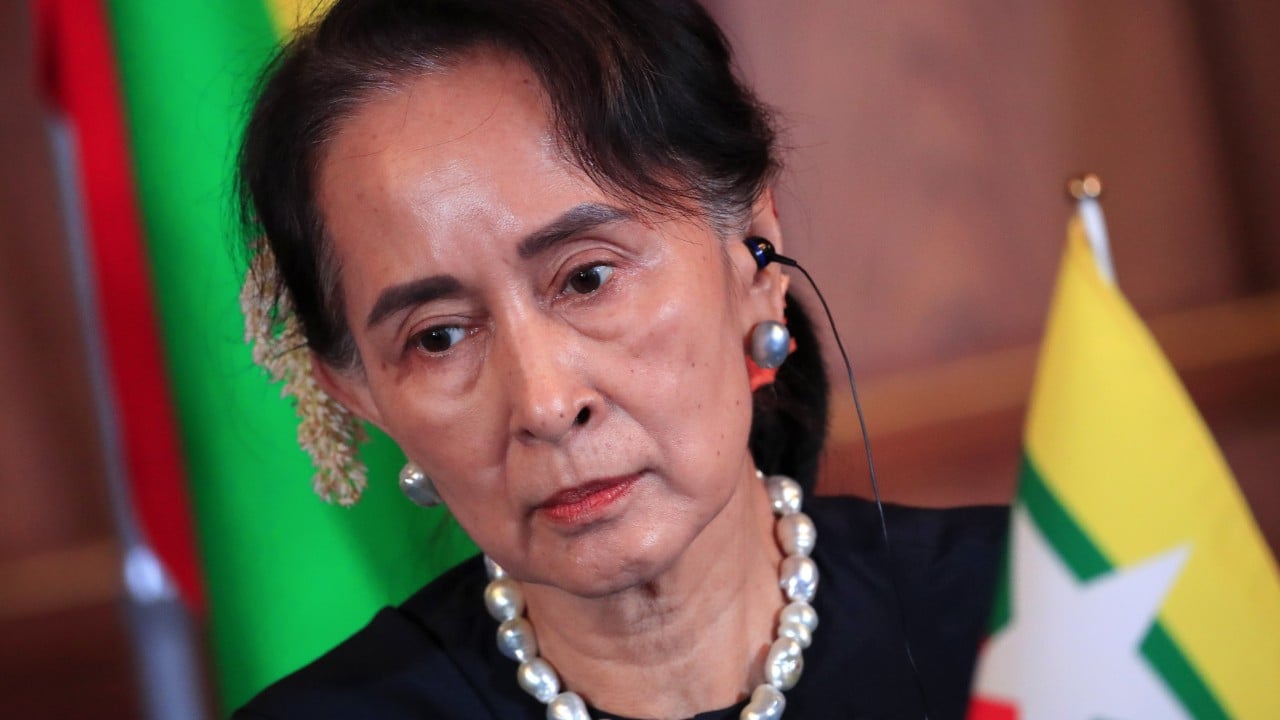
Myanmar’s military junta just handed out a massive round of amnesties, but don't let the headlines fool you. While former President Win Myint is technically free and Aung San Suu Kyi had years shaved off her sentence, the reality on the ground remains as grim as ever. This isn't a pivot toward democracy. It’s a calculated PR stunt from a regime that’s feeling the walls close in.
The State Administration Council (SAC) announced these pardons to mark a Buddhist holiday, a common tactic in Myanmar’s political history. They’ve released thousands of prisoners. Yet, the people who actually matter for the country's future are either still behind bars or under house arrest. Aung San Suu Kyi, the face of the resistance, still faces decades of imprisonment even after this "lenient" reduction.
The hollow victory of the latest amnesty deal
Win Myint was the first to be fully pardoned in this specific wave. He’s been a loyal ally to Suu Kyi and a thorn in the side of the generals since the 2021 coup. His release sounds like a win. In a vacuum, it is. But when you look at the broader picture, he’s being released into a country that’s been decimated by civil war. He isn't returning to a political office; he’s returning to a landscape where the junta still holds the guns.
Suu Kyi’s situation is even more complex. The military reduced her sentence by several years, but she’s still looking at a lifetime of detention based on trumped-up charges ranging from corruption to violating state secrets. The junta likes to use her as a bargaining chip. They dangle the idea of her release whenever international pressure gets too high or when they need to signal to ASEAN that they’re "cooperating." They aren't.
Why the junta is playing the mercy card now
The timing isn't accidental. The military is losing. Over the last year, ethnic armed organizations and the People’s Defense Forces (PDF) have captured significant territory in the north and east. The junta’s grip on the economy is slipping. Inflation is through the roof. The kyat is worthless.
By releasing prisoners and reducing sentences for high-profile figures, the generals are trying to buy breathing room. They want the international community to ease sanctions. They want to look like they’re open to a "political exit."
- Internal Pressure: The military is stretched thin. They can't fight on every front simultaneously.
- Diplomatic Isolation: Even their "friends" in the region are getting tired of the instability.
- Economic Collapse: They need trade to resume, and trade doesn't happen in a pariah state.
Honestly, it’s a tired playbook. We’ve seen this during previous military regimes in the 90s and 2000s. Release a few dissidents, wait for the headlines to fade, then arrest a dozen more. It’s a cycle of repression disguised as reform.
What this means for the National Unity Government
The National Unity Government (NUG), which operates in exile and in the shadows, hasn't been moved by this gesture. They know that as long as the 2008 Constitution remains the framework, the military will always hold the veto power. The NUG’s goal is simple: a federal democracy where the military is under civilian control. A few pardons don't get them closer to that goal.
The resistance forces on the ground aren't laying down their arms because Win Myint got a pardon. If anything, it emboldens them. It shows the junta is desperate. It shows that the pressure is working. When a dictator starts playing "nice," it’s usually because they don't have many other cards left to play.
The international community needs to stop falling for it
Foreign governments often jump at these moments to "engage." That’s a mistake. Every time the West or ASEAN treats these amnesties as a sign of progress, it gives the SAC legitimacy they haven't earned.
The reality is that thousands of political prisoners remain in horrific conditions. Torture is rampant in Myanmar’s prisons. The legal system is a farce. If the junta were serious about peace, they’d stop the airstrikes on villages. They’d allow humanitarian aid to reach the millions of displaced people. They’d step down.
Instead, they’re playing a shell game. They move a few high-profile names around and hope the world forgets about the villages being burned in Sagaing or the young activists being executed in Insein Prison.
Why this amnesty doesn't end the civil war
You can't fix a broken country with a piece of paper signed by a general. The conflict in Myanmar has evolved past the point where the release of two leaders solves the problem. The youth of Myanmar, the "Generation Z" that took to the streets in 2021, have moved beyond just wanting Suu Kyi back. They want a total overhaul of the system.
They’ve seen their friends killed. They’ve spent years in the jungle training to fight. They aren't going back to the status quo.
The junta’s attempt to split the opposition by showing "mercy" to the older generation of leaders likely won't work. There’s a massive gap between the traditional politics of the NLD and the radical revolutionary goals of the current resistance. The military is betting on a divide that might not exist in the way they think it does.
Real steps to monitor the situation
Don't look at the number of people released. Look at who they are. Most of those freed in these mass amnesties are petty criminals or people who were about to finish their sentences anyway.
If you want to know if things are actually changing, watch these indicators:
- Are political prisoners allowed to speak to the media after release?
- Does the military stop using heavy artillery in civilian areas?
- Is there any movement toward allowing the NUG a seat at the table?
Until those things happen, these pardons are just ink on paper. The generals are still in charge, the prisons are still full, and the war continues. Keep your eyes on the border regions and the local resistance groups. That’s where the real story of Myanmar is being written, not in a junta-controlled courtroom in Naypyidaw. The struggle isn't over just because the cell door opened for a few. It’s only getting started.