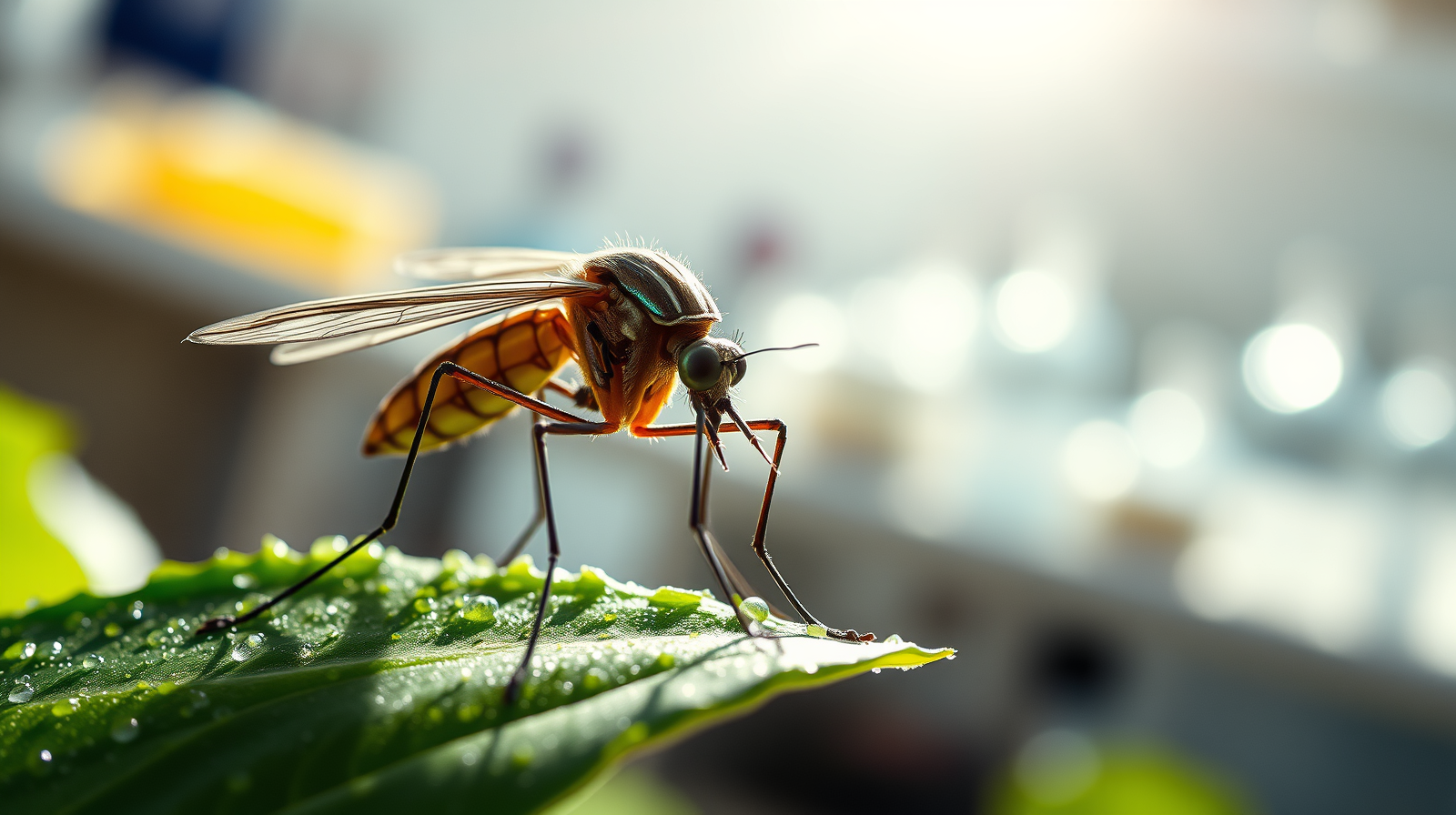
Brazil faces a public health emergency that standard medical interventions can no longer contain, with dengue fever cases surging past historic highs and pushing municipal hospitals to absolute collapse. In response, local governments are turning to biotechnology, releasing hundreds of millions of genetically modified mosquitoes into the wild to suppress disease-carrying populations. The strategy sounds like science fiction turned savior. Yet, a closer look into the corporate biology and the reality of Brazilian urban infrastructure reveals that these high-tech insects are an expensive, temporary bandage masking a deeper failure of basic sanitation, municipal water security, and public health policy.
Biological interventions cannot fix a crisis rooted in crumbling concrete and open sewers. The math of the outbreak is staggering. Brazil alone has shouldered roughly half of the millions of dengue cases reported across the Americas during recent peak transmission cycles. In cities like Rio de Janeiro and São Paulo, emergency decrees have become the standard administrative response to seasonal rains. As climate change expands the geographical and seasonal windows for the Aedes aegypti mosquito to thrive, the desperation among health ministers has turned into a lucrative market for private biotechnology firms. For another look, see: this related article.
The Economics of Engineered Breeding
The primary corporate entity driving this genetic strategy is Oxitec, a British biotechnology firm that has spent years testing and commercializing its proprietary insect strains across Latin America. The mechanics of their technology rest on a lethal genetic loop. Scientists engineer male Aedes aegypti mosquitoes to carry a self-limiting gene. When these lab-bred males are released into the wild, they mate with wild female mosquitoes, which are the sole vectors of the dengue virus since only females bite for blood meals.
The resulting female offspring inherit this specific trait and die before reaching reproductive maturity. In theory, the local population of the pest collapses within a few generations. Related reporting on this trend has been provided by World Health Organization.
The company deploys these insects via specialized, water-activated egg boxes placed in high-risk neighborhoods. Once municipal workers add water, the larvae hatch, mature into adult males, and fly out to seek wild mates. Company data points to local population reductions of up to 90 percent in tightly controlled field trials.
But field trials do not equal long-term public health victory. The business model requires continuous, unending releases to maintain the population suppression. If a municipality stops buying the boxes, the wild population rebounds rapidly from dormant eggs hidden in dry containers around the city. This creates a perpetual subscription model for public health, tying city budgets to private biotech firms indefinitely. For cash-strapped municipalities in Brazil’s northeast or the peripheral favelas of Rio, this is an unsustainable financial commitment.
The Environmental Countercurrents and Tetracycline Exploitation
Independent biologists and environmental watchdogs have raised persistent concerns regarding the biological fail-safes built into these transgenic insects. The self-limiting gene relies on a genetic switch that is kept inactive in the laboratory using the antibiotic tetracycline. In the presence of this chemical, the lethal mechanism is suppressed, allowing the insects to survive and breed inside the biofactory. When released into the wild, where tetracycline is presumably absent, the female offspring die.
The flaw in this design lies in modern agricultural and pharmaceutical runoff.
Tetracycline is one of the most widely used antibiotics in livestock farming and human medicine. It passes through biological systems without fully breaking down, leaking into domestic wastewater and agricultural streams. Critics on Brazil’s National Biosafety Technical Commission have argued that even low concentrations of environmental tetracycline could inadvertently act as an antidote. If a wild transgenic female encounters this antibiotic in a polluted puddle or a drainage ditch, she might survive long enough to lay eggs, potentially introducing altered genetics permanently into the wild pool.
Furthermore, the focus on a single mosquito species ignores competitive ecological displacement. The eradication of Aedes aegypti in a specific neighborhood leaves a vacant ecological niche. Often, this niche is quickly occupied by Aedes albopictus, the Asian tiger mosquito, which is an equally capable vector for dengue, Zika, and chikungunya. By spending millions to suppress one insect, cities may simply be opening the door for its evolutionary cousin.
The Clash of Competing Biotech Protocols
Oxitec is not the only player using insects as weapons, and the divergence in scientific methodologies highlights a deeper split within international public health policy. The World Mosquito Program, working alongside Brazil's prominent Fiocruz Institute, utilizes a radically different approach centered on a naturally occurring bacterium called Wolbachia.
Instead of editing the insect’s DNA to cause death, the Wolbachia method infects mosquitoes with a bacterium that blocks the dengue virus from replicating inside the insect’s gut. If the virus cannot multiply, the mosquito cannot transmit it to a human. Crucially, when Wolbachia-carrying mosquitoes mate, they pass the bacteria to their offspring.
[Oxitec Method]     -> Releases modified males -> Offspring die -> Requires constant re-purchase
[Wolbachia Method]  -> Releases infected pairs  -> Offspring live -> System becomes self-sustaining
The data from early trial cities like Niterói shows a drop in dengue incidence of nearly 90 percent over several years without the need for weekly commercial replenishment. The building of a massive new biofactory in Curitiba aims to scale this bacterial method nationwide.
The competition between these two strategies has triggered a lobbying war for municipal health budgets. Private biotechnology pushes for quick-deployment boxes that yield immediate, localized results, which politicians love during an election year. The bacterial method requires a longer runway and deep community trust, as health workers must convince skeptical residents to allow billions of live, biting mosquitoes to be released into their neighborhoods.
The Failure of Concrete Over Genetic Coding
The obsession with engineering a better insect obscures the systemic structural failures that drive dengue outbreaks in the first place. Mosquitoes do not create epidemics in a vacuum; they exploit the absence of basic municipal services.
Walk through any periphery neighborhood in São Paulo state during the dry season, and you will find residents storing water in open blue plastic drums. They do this because municipal water access is intermittent and unpredictable. When the rains arrive, the lack of covered stormwater drainage creates thousands of micro-breeding grounds in stagnant puddles, blocked gutters, and uncollected trash.
An engineered mosquito cannot clean an open sewer ditch. It cannot mend a broken water pipe or provide a reliable municipal water supply that eliminates the need for open storage containers.
Biotechnology has become a convenient political shield. It allows mayors and governors to hold press conferences featuring high-tech egg boxes, shifting the narrative toward scientific innovation and away from their historic failure to provide clean water and sanitation to millions of citizens. A single biofactory costs millions of dollars to build and maintain, capital that is diverted away from long-term civil engineering projects that would permanently reduce insect breeding sites.
The narrative of the high-tech fix is tempting because it promises a shortcut. It suggests that human societies can outsmart their own infrastructural negligence with a few genetic tweaks. But until the structural realities of Brazil’s urban peripheries are addressed, no volume of lab-grown insects will be enough to stop the fever. The wild population will always find a way to breed in the gaps left by the state. Cities must begin investing heavily in the tedious, expensive work of laying water pipes and managing waste, or they will remain locked in a permanent, costly dependency on corporate biofactories that treat the symptom while the disease festers in the soil.