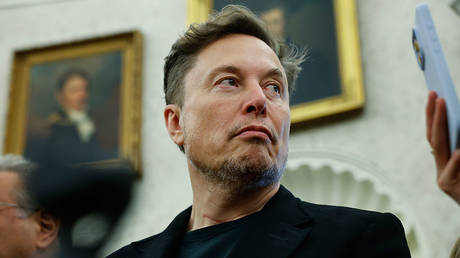
Musk is building an industrial super-cluster where rockets, AI, and electric vehicles stop acting like separate companies. If you've watched his ventures over the last couple of years, you can see the seams disappearing. SpaceX absorbed xAI in early 2026, went public in June 2026 in a massive debut that valued the combined space-and-AI group around $1.78 trillion to $1.9 trillion, and now reports point to merger talks with Tesla—worth roughly $1.5 trillion—that could be announced as soon as December or early 2027.
Honestly, calling it a "corporate constellation" captures the scale, yet it misses the mechanical reality. A constellation is points of light scattered across the sky. What Musk is assembling looks more like a single supply chain stretching from factory floors in Texas to low Earth orbit. Don't forget to check out our recent article on this related article.
How Musk's Ventures Actually Fit Together
Most people still think of Musk's companies as quirky side quests spun off from one guy's attention span. That view made more sense back when SpaceX was just landing boosters and Tesla was fighting to scale Model 3 production. It feels dated now. To read more about the background of this, Ars Technica offers an informative summary.
Following the xAI merger in February 2026 and the rebrand toward SpaceXAI, the core pieces no longer sit in neat silos:
- SpaceX and Starlink: Launch infrastructure, heavy-lift Starship ambitions, defense work, and a satellite internet business serving over 13 million subscribers.
- AI and X: Grok models, large compute clusters, and the X social network feeding real-time data and distribution into the ecosystem.
- Tesla: Electric vehicles, grid-scale battery storage, autonomy software, Cybercab plans, and Optimus humanoid robotics.
- Smaller moonshots: Neuralink and The Boring Company still exist as separate, earlier-stage bets on brain-computer interfaces and underground transit.
What makes this moment different is the hardware overlap. Musk recently noted at the DealBook Summit that Tesla and SpaceX would probably be better together, pointing to advances in AI, robotics, and chip design while pushing back on the idea that a merger alone should trigger Tesla stock-option awards for him.
Why Terafab Is the Real Clue
If you want to understand why these companies are moving closer, look at Terafab in Texas. Announced in March 2026 with first-phase plans involving more than $16 billion in Texas and ambitions reaching far higher over time, Terafab is meant to pull chip fabrication, memory, and packaging closer to home.
Think about who needs that silicon. Tesla wants edge chips for Optimus robots and autonomous vehicles. SpaceX—now carrying AI ambitions under its roof—has talked about high-power chips and orbital data-center satellites like AI1. Even Musk has called the Terafab schedule aggressive and slapped "big error bars" on it, which is refreshing candor for a project trying to rival established foundries.
Where the Synergies Make Sense—and Where They Don't
There's a real engineering logic here. Both sides burn huge amounts of capital on compute, power electronics, robotics, and high-rate manufacturing. Sharing chip roadmaps, manufacturing learnings, and AI infrastructure can cut duplicate effort.
Still, I'm skeptical that slapping everything under one corporate roof solves every bottleneck. Rockets aren't cars. Launch cadence, aerospace certification, and orbital payload mass have tolerances that make automotive assembly look forgiving by comparison.
Governance and Geopolitics Create Friction
Combining a roughly $1.9 trillion space-and-AI company with a roughly $1.5 trillion automaker wouldn't just create a ~$3.4 trillion giant—it would create tangled governance and geopolitical headaches.
- Voting control: Musk holds a smaller equity slice of Tesla (around 20% in recent reporting) than his super-voting grip on SpaceX, where he controls over 80% of the votes. Swapping shares or folding one into the other forces shareholders to weigh how much power they're willing to concentrate.
- China vs. US defense: Tesla has deep manufacturing and market ties in China, while SpaceX leans heavily into U.S. government and defense contracts. Ring-fencing those two worlds inside one company is no small legal trick.
- Capital intensity: AI clusters and orbital hardware eat cash fast. Even with SpaceX's IPO proceeds and Starlink cash flow, massive capital spending has to turn into durable profits rather than big promises.
What Smart Observers Should Do Next
Whether a formal Tesla-SpaceX deal lands in December or slips into 2027, don't trade on headlines alone. Read the filings, watch the special board committees, and pay attention to hard milestones like Terafab test-chip dates, Starship flight progress, and actual AI and robotics margins. If you invest in either stock, separate the story of shared hardware from the reality of voting rights, regulatory pushback, and execution risk.