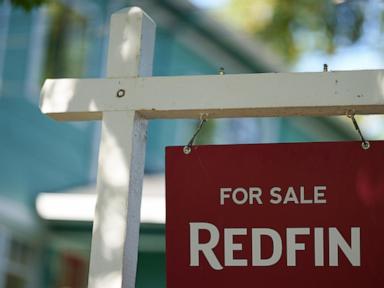
The recent slide in long-term mortgage rates to 6.36% is being framed as a reprieve for the American homebuyer. It is not. While this figure marks the first decline in nearly a month, it remains a shallow victory in a market defined by deep structural rot. For a family looking at a median-priced home, a fractional drop in interest does little to offset the reality of inflated valuations and a persistent inventory drought. The math simply does not move the needle for the millions of people currently priced out of their own lives.
Wall Street and real estate trade groups are quick to celebrate these dips. They want to maintain the momentum of transactions. But if you look behind the curtain of the weekly Freddie Mac data, you see a more cynical picture. Rates are not falling because the economy is suddenly healthy or because inflation is a solved problem. They are fluctuating because the bond market is erratic, reacting to every whisper of labor market weakness and every cautious pivot from the Federal Reserve. If you enjoyed this post, you should look at: this related article.
The Bond Market Puppet Strings
To understand why your monthly payment is so high, you have to stop looking at the Fed and start looking at the 10-year Treasury yield. Mortgage lenders price their products based on the spread over that yield. When investors get nervous about a potential recession, they rush into bonds, yields drop, and mortgage rates follow suit.
The current 6.36% average is a symptom of uncertainty, not a sign of stability. We are seeing a "bad news is good news" cycle where signs of a slowing economy are the only thing keeping rates from surging back toward 8%. This creates a paradox for the consumer. You want lower rates to afford a home, but those lower rates only arrive when the broader economic outlook is grim enough to threaten your job security. For another perspective on this event, check out the latest update from MarketWatch.
The Spread Problem
Lenders are currently playing it safe. Historically, the gap between the 10-year Treasury yield and the 30-year fixed mortgage rate is about 170 basis points. Right now, that spread is significantly wider. Banks are terrified of volatility and the risk that borrowers will refinance the moment rates drop further. They are padding their margins at the expense of the borrower. Even if the Treasury yield falls, banks are slow to pass those savings on to you because they are bracing for a turbulent secondary market.
The Inventory Lockdown Effect
Lower rates are supposed to stimulate the market. In a normal world, that is how it works. But the United States housing market hasn't been normal since 2019. We are currently trapped in a "lock-in" effect that a 6.36% rate does nothing to break.
Roughly 80% of current mortgage holders have a rate below 5%. About 60% are below 4%. When the prevailing market rate drops from 6.8% to 6.3%, it sounds like a win. However, if you are a homeowner sitting on a 3% rate, you are still looking at doubling your interest costs if you decide to move. This has effectively paralyzed the resale market. People aren't moving because they can’t afford to trade their current "cheap" debt for "expensive" debt.
Without those existing homes hitting the market, supply remains at historic lows. This scarcity keeps prices artificially high. We are in a stalemate where even a significant drop in rates could backfire by triggering a fresh wave of buyer demand that further spikes home prices, neutralizing any savings on the interest side.
The Myth of the Refinance Boom
There is a narrative circulating that this dip will spark a wave of refinancing. That is largely a fantasy. Unless a homeowner bought at the absolute peak of the 2023-2024 rate hikes, there is no financial incentive to refinance at 6.36%.
The closing costs alone—typically 2% to 5% of the loan amount—mean a borrower needs a substantial drop in rates to break even within a reasonable timeframe. A homeowner who took out a loan at 7.2% might see some benefit, but for the vast majority of Americans, this current "drop" is a statistical noise. It is a headline designed to generate clicks and mortgage applications, not to provide genuine financial relief.
The Hidden Cost of Credit Scars
We also need to talk about who actually gets that 6.36% rate. That is an average for prime borrowers with stellar credit and substantial down payments. For the average American with a credit score in the 600s or someone trying to navigate an FHA loan with minimal cash down, the "real" rate is often much higher. Add in the soaring costs of homeowners insurance and property taxes, and the 6.36% figure starts to look like a marketing gimmick rather than a reflection of the cost of living.
Construction is Not the Cavalry
If the resale market is frozen, new construction should be the answer. It isn't. Builders are facing their own set of demons. The cost of materials has stabilized, but the cost of land and labor remains at record highs. To move inventory, builders are increasingly relying on "rate buy-downs."
Imagine a builder offering a 4.99% rate for the first two years of a loan. This isn't charity. They are baking that cost into the price of the home. They are essentially subsidizing the mortgage to keep the sticker price high. This creates a distorted market where the "value" of the home is tied to a temporary financial maneuver rather than the actual worth of the bricks and mortar. When those buy-downs expire, or when those buyers try to sell in five years, they may find themselves underwater in a market that can no longer support those inflated prices.
The Regional Divergence
National averages hide the carnage. While rates are uniform across the country, the impact is not. In the Sun Belt, where supply has increased due to a building boom, prices are starting to soften. But in the Northeast and the Midwest, where inventory is non-existent, the 6.36% rate is met with a shrug.
In markets like Boston or Seattle, a slight dip in interest rates just means twenty people show up to an open house instead of fifteen. It leads to bidding wars that far exceed the monthly savings provided by the lower rate. You might save $100 a month on your mortgage payment, but you’ll pay $50,000 more for the house because of the competition.
The Institutional Shadow
We cannot ignore the role of institutional investors. While their share of the market is often debated, their influence on the "floor" of home prices is undeniable. When rates dip, these firms have the liquidity to move faster than any family. They aren't looking for a home; they are looking for a yield-producing asset. Every time the market "eases," it provides a window for corporate buyers to snap up entry-level properties, further depleting the stock available to first-time human buyers.
The Real Cost of Waiting
Many prospective buyers are sitting on the sidelines, waiting for rates to return to the 3% or 4% range. This is a dangerous gamble. The era of ultra-cheap money was an anomaly, a decade-long experiment by central banks that is unlikely to be repeated unless the global economy collapses.
If you are waiting for 3% rates, you might be waiting for the rest of your life. The danger is that while you wait for interest rates to drop another percentage point, home prices may rise another 10%. The "affordability" you are chasing is a moving target that is moving faster than you are.
A Strategy for a Broken Market
For those who must buy now, the focus should not be on the weekly fluctuations of the Freddie Mac average. Instead, the focus must be on the total cost of ownership and the long-term viability of the debt.
- Ignore the headlines. A 0.2% drop is not a signal to rush the market.
- Scrutinize the "points." Many lenders are advertising low rates but charging thousands in upfront points to get there. Calculate the "break-even" point before you pay for a lower rate.
- Look for stagnant inventory. The best deals aren't found when rates drop; they are found when a house has been on the market for 60 days and the seller is getting desperate.
- Factor in the "un-mortgageable" costs. Insurance premiums in states like Florida and California are rising faster than mortgage interest. A lower rate means nothing if your insurance bill doubles.
The 6.36% rate is a distraction. It is a tiny ripple in a very turbulent ocean. Until the underlying issues of supply and the massive gap between current and legacy rates are addressed, the American dream of homeownership will remain a high-interest nightmare for those on the outside looking in.
Stop checking the daily rate trackers. Start checking your local inventory and your own debt-to-income ratio. The market isn't coming to save you.