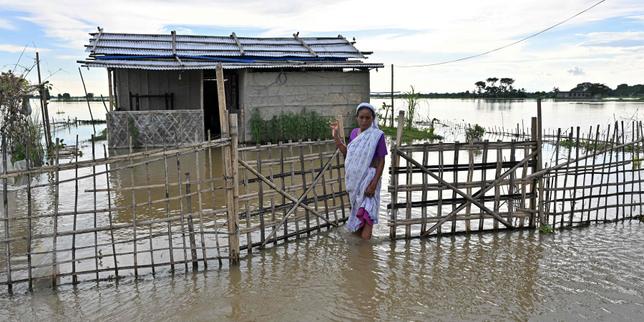
More than one hundred lives vanished across India in a relentless series of floods and catastrophic landslides since July, exposing the dangerous friction between aggressive commercial expansion and volatile weather patterns. Heavy rains battering the subcontinent are not merely meteorological anomalies. They represent a recurring, predictable failure of urban planning, infrastructure resilience, and ecological preservation. Water follows gravity. When concrete covers ancient drainage paths and slopes are stripped of root systems, disaster becomes an engineering certainty rather than an act of God.
Journalists reporting on disaster zones often focus on the immediate human toll, counting bodies while water levels recede. That approach misses the deeper story. The true catastrophe lies in the decades of unchecked deforestation, illegal mining, and unregulated hillside construction that convert seasonal monsoons into rolling avalanches of mud and debris. For another view, check out: this related article.
The Physics of the Slide
Understanding why a hillside fails requires looking beneath the surface. Soil stability relies heavily on root cohesion and natural drainage channels. When developers clear vegetation to build tourist resorts, roads, or housing colonies in vulnerable mountainous regions like Himachal Pradesh, Uttarakhand, and parts of the Western Ghats, they alter the load-bearing capacity of the earth.
Rain acts as a lubricant and an added weight. As precipitation infiltrates the soil, pore water pressure increases. This internal pressure pushes soil particles apart, reducing friction until the sheer weight of the saturated earth overcomes gravity. Related reporting on the subject has been shared by The Washington Post.
[ Heavy Rainfall ]
       │
       ▼
[ Vegetation Cleared ] ──► [ Loss of Root Cohesion ]
       │
       ▼
[ Soil Saturation ] ─────► [ High Pore Water Pressure ]
       │
       ▼
[ Slope Failure ] ───────► [ Catastrophic Landslide ]
Standard infrastructure projects in these high-risk zones rarely account for extreme saturation events. Drainage culverts are routinely undersized, calculated against historical rainfall averages that no longer apply in an era of rapid climate shifts. When a storm drops a month's worth of rain in forty-eight hours, these narrow conduits choke on silt and debris. Water overflows, undercuts roadbeds, and triggers massive slope failures.
Urban Chokepoints and Concrete Canals
Cities fare no better. Metropolitan areas designed during colonial eras or expanded haphazardly through the late twentieth century lack the hydrological capacity to manage modern weather extremes. Natural wetlands, lakes, and floodplains have been paved over to accommodate surging urban populations.
Water needs space. When cities eliminate retention basins and pave over permeable ground, runoff velocity increases exponentially. Streets turn into raging torrents within minutes of a cloudburst.
- Encroached Drains: Natural streams and stormwater channels are frequently narrowed by illegal construction and choked with municipal waste.
- Impervious Surfaces: Asphalt and concrete prevent groundwater recharge, forcing total volume into surface drainage networks.
- Absent Maintenance: Desilting operations typically occur too late, leaving critical drainage arteries blocked when the monsoon hits its peak.
Municipal authorities routinely blame unprecedented rainfall for urban inundation. That excuse wears thin after decades of identical crises. Weather data demonstrates that storm intensity is rising, but municipal drainage investment has failed to scale accordingly. Fixing urban floods requires tearing up bad designs, not just clearing clogged gutters after the damage is done.
The Policy Blind Spot
India's disaster management framework is heavily weighted toward post-crisis response rather than preventative adaptation. National and state disaster response forces deploy swiftly when tragedy strikes, rescuing survivors and distributing relief supplies. This logistical capability is impressive. Yet, prevention receives a fraction of the attention and budget allocated to rescue operations.
Environmental impact assessments for infrastructure projects in fragile ecologies are frequently treated as bureaucratic hurdles rather than scientific safeguards. Clearance committees approve highway expansions, tunnel drillings, and hydroelectric dams in ecologically sensitive zones with minimal oversight. When local communities raise alarms about destabilized slopes or blocked water channels, their warnings are sidelined in favor of economic growth narratives.
The political economy of disaster relief creates perverse incentives. Handing out compensation checks after a village washes away is visible, immediate, and politically potent. Investing in subterranean micro-drainage networks, slope stabilization engineering, and strict land-use zoning is expensive, invisible to voters, and yields no immediate ribbon-cutting ceremonies.
Shifting From Response to Resilience
Protecting vulnerable populations from future monsoon disasters demands a fundamental pivot in how land and water are managed across the subcontinent.
Governments must enforce strict moratoriums on construction along natural watercourses and high-angle slopes. Zoning laws should treat ecological boundaries as non-negotiable safety perimeters rather than flexible guidelines subject to commercial lobbying.
Retrofitting existing infrastructure requires massive capital infusion. Cities need decentralized water retention systems, permeable pavements, and restored wetlands to absorb excess runoff before it overwhelms municipal grids. Mountainous regions require bio-engineering solutions, including deep-root vegetation planting, gabion walls, and advanced slope-monitoring sensors that can provide early warnings before earth gives way.
Ignoring these structural realities guarantees that next year's monsoon will bring the exact same body counts, the exact same political finger-pointing, and the exact same cycle of grief. The water is already rising, and the blueprints for prevention are gathering dust.