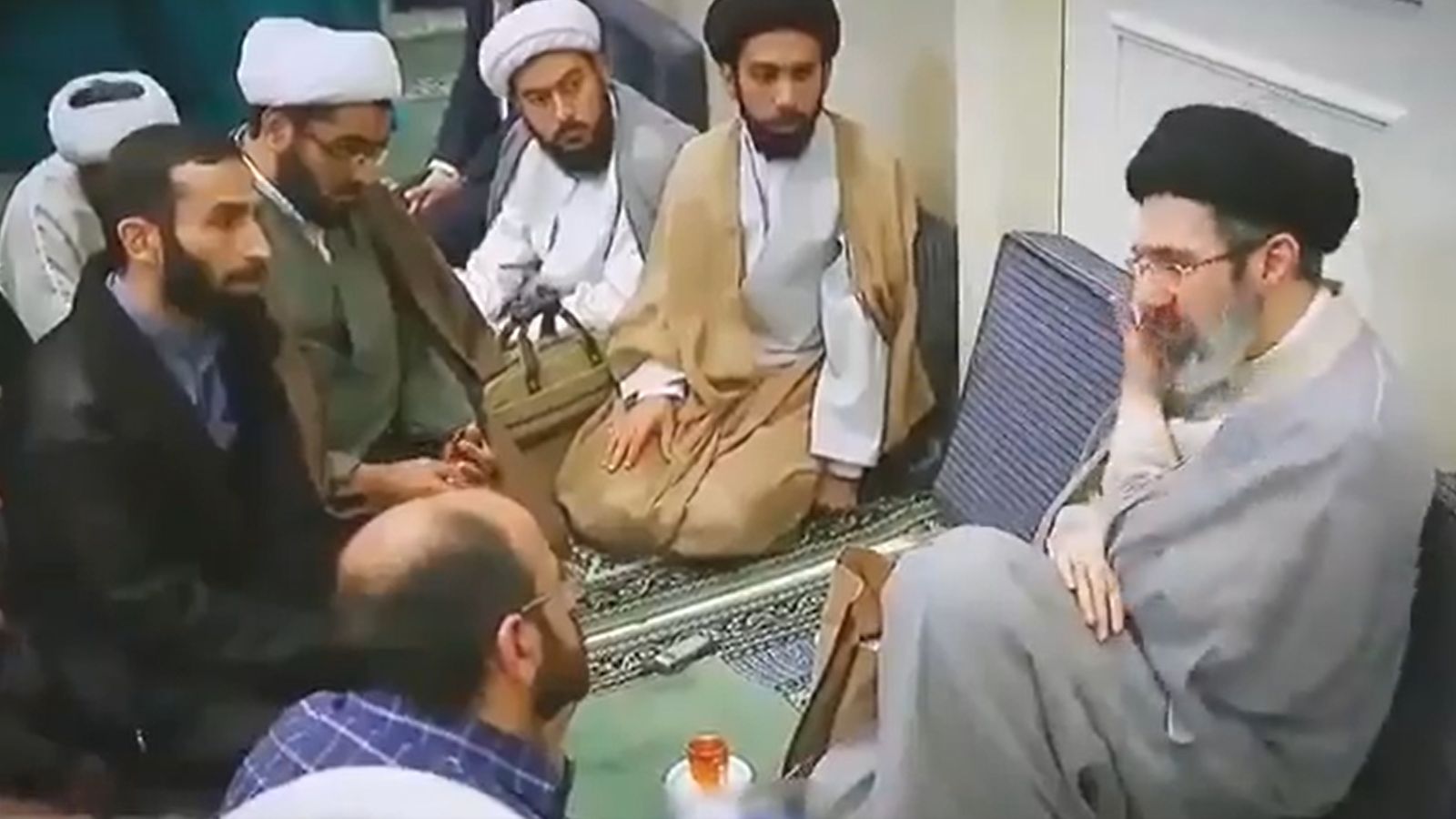
Rumours can dictate global politics faster than actual military movements. When state-backed media in Tehran drops a sudden 12-second clip of Mojtaba Khamenei, people pay attention. You see, the newly minted Iranian Supreme Leader hasn't made a single live public appearance since taking power. That kind of prolonged absence invites wild speculation.
Foreign outlets, particularly in Israel, spent the last week claiming he was hospitalized in critical condition. Some reports even suggested he could pass away within days. Enter the Mehr News Agency. They published a brief, undated video showing Khamenei talking with advisors. It is a classic information-warfare move. Tehran wants to kill the rumors without actually exposing their leader to live television or press scrutiny.
The Anatomy of a Forced Disappearance
Let us look at the facts. Mojtaba Khamenei stepped into the role of Supreme Leader under extreme duress. His father, Ayatollah Ali Khamenei, died during the opening US-Israeli military strikes on February 28. Those initial blasts didn't just target the regime's infrastructure; they hit close to home, wiping out immediate family members.
Early state briefings dropped hints that Mojtaba was wounded in the chaos. After that? Silence. He skipped his father's public funeral entirely, leaving his brothers to attend while he remained entirely out of sight. Since then, state media has relied exclusively on written statements and occasional audio messages to project authority.
When President Masoud Pezeshkian admitted in a state television interview that direct communication with the Supreme Leader had become "very difficult," the rumor mill went into overdrive. Insiders talking to outlets like IranWire claimed Khamenei hadn't met with cabinet ministers face-to-face since the war began. Opposition groups and international intelligence watchers started preparing for a sudden succession crisis.
Why the New Video Raises More Questions Than Answers
The 12-second clip shared by Mehr is intentionally vague. It shows a calm, seemingly healthy 56-year-old cleric interacting with officials. But notice what is missing. There is no timestamp. There is no background audio confirming current events. There is no way to verify if this footage was recorded yesterday or three months ago.
Authoritarian regimes use pre-recorded media strategically. When leaders vanish during high-stakes geopolitical standoffs—like the ongoing friction over the Strait of Hormuz—panic spreads through markets and military ranks. Releasing a short video acts as a temporary pressure valve. It gives state loyalists something to point to while keeping the leader safely hidden behind layers of security and intermediaries.
Foreign governments aren't easily convinced by 12 seconds of silent B-roll. US officials have offered mixed signals, with figures like Donald Trump noting in recent podcast appearances that Khamenei remains active behind the scenes in Washington-Tehran backchannels. Yet, external intelligence agencies still treat the regime's internal stability as a massive question mark.
Reading Between the Lines of Regional Propaganda
You have to understand how information travels out of Tehran right now. It is filtered through layers of state security, regional proxy narratives, and external intelligence leaks.
- State Media Objective: Project total control, dismiss foreign reports as psychological warfare, and maintain domestic calm.
- Israeli and Opposition Sources: Highlight elite fractures, emphasize physical vulnerability, and frame the leadership as unstable.
- Reality on the Ground: A ruling circle operating under deep paranoia, prioritizing bunker security over public optics.
Until Mojtaba Khamenei steps out for an unscripted, live public address, these digital breadcrumbs are all observers get. The 12-second clip might prove he is alive today, but it changes very little about the opaque, volatile nature of Iran's current political landscape. Keep your eyes on diplomatic channels rather than state-edited clips if you want to know what is actually happening behind closed doors in Tehran.


