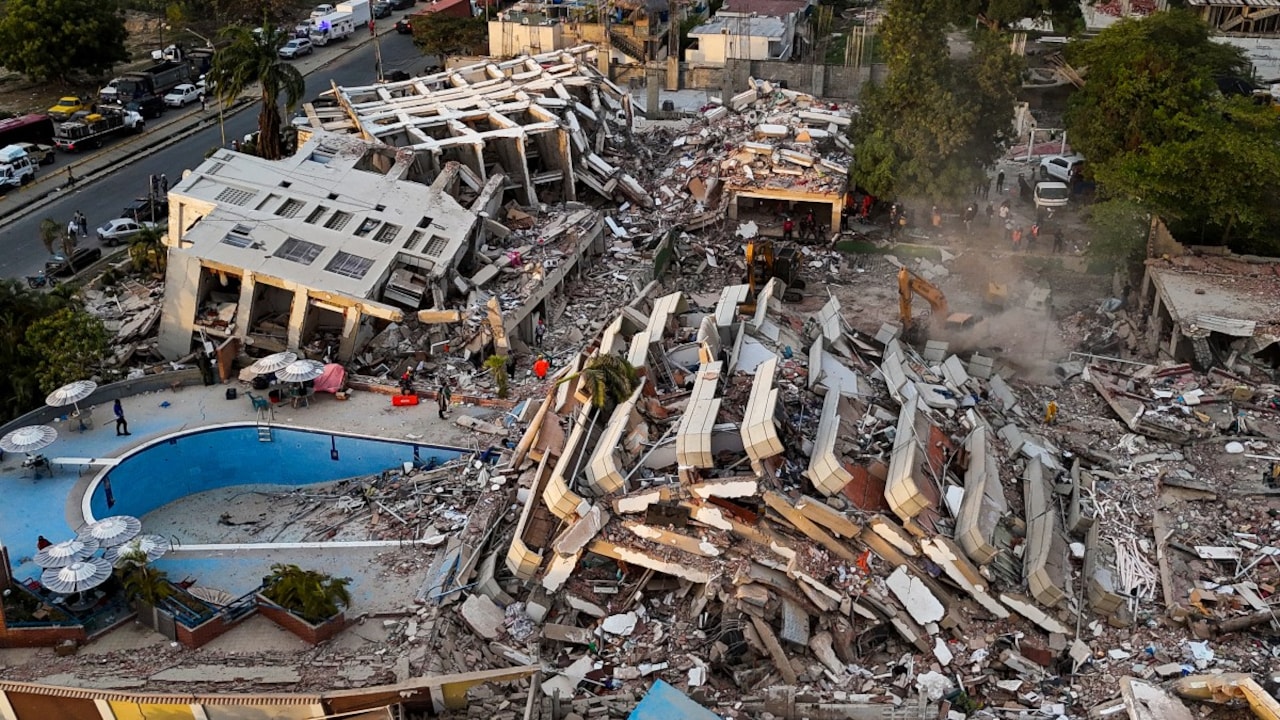
When the ground starts violently shaking, logic usually flies out the window. Panic takes over. But for 23-year-old Andrea Canonico, survival didn't come from screaming or clawing at concrete. It came from a deliberate choice to close her eyes and tune out the chaos.
Lying under six meters of crushed building material in Venezuela, she told herself a simple phrase.
"I'm going to sleep."
It sounds counterintuitive. It sounds like giving up. But in reality, deciding to rest was the tactical choice that kept her alive for nearly 48 hours. When twin earthquakes measuring 7.2 and 7.5 magnitudes ripped through Venezuela, they left thousands dead and transformed entire blocks of La Guaira into dust. Underneath that dust, the clock starts ticking instantly. Understanding the mechanics of crush survival reveals why a calm mind beats panic every single time.
The Physical Price of Panic Under the Rubble
When you're trapped in a confined space, your biggest enemy isn't just the weight of the concrete. It's your own nervous system.
Hyperventilating is a quick way to shorten your survival window. Heavy breathing burns through oxygen fast and fills a tiny, enclosed pocket with carbon dioxide. Worse, inhaling dust and toxic debris in a collapsed space causes immediate airway inflammation. Andrea Canonico realized this early on. Up to her elbows in bandages after her rescue, she noted that she consciously chose not to get worked up about the breathing issue.
By telling herself she was going to sleep, she lowered her heart rate. She preserved what little clean air she had.
Panic also accelerates dehydration. You sweat more when you're terrified. In a hot, humid environment like coastal Venezuela, losing fluid can turn critical within a day. Canonico managed to sit up despite the tons of debris above her, using her phone to track time and maintain a sense of reality. Keeping her mind occupied kept the primal fear from taking over.
How Crush Syndrome Changes the Rescue Strategy
Rescuing someone from a collapsed structure isn't just about pulling them out as fast as possible. In fact, doing it wrong can kill the victim instantly.
Urban search and rescue teams have to watch out for crush syndrome. When a heavy object pins a limb for hours, blood flow cuts off. The muscle tissue begins to die, releasing dangerous amounts of potassium, myoglobin, and toxins into the isolated limb.
If a rescuer abruptly lifts that piece of concrete without medical prep, those toxins rush straight to the heart and kidneys. It causes immediate cardiac arrest or kidney failure. This is why emergency workers often administer IV fluids and specific medications before they even lift the debris off a victim's legs.
In Canonico's case, she found a small opening above her that connected to a tunnel rescuers were digging. She actively climbed up to meet them, avoiding the prolonged crushing forces that often turn fatal for others.
The Reality of Volunteer Driven Rescue Efforts
While heavy machinery and international teams get the news coverage, the immediate aftermath of a structural collapse relies on local grit.
Take Moises Faramaya, a 26-year-old former gold miner known locally as "the mole." He didn't have high-tech thermal imaging or acoustic listening devices. He used a pickaxe, a shovel, and the instincts he developed during six years in the mines of El Callao. Faramaya has pulled 16 living people from the ruins of La Guaira simply by listening for the sound of hands scratching against walls.
The official 72-hour window is the gold standard for survival. After that, the odds of finding anyone alive drop off a cliff. But people like Faramaya keep digging long after that window shuts, breathing in toxic dust and working through extreme sleep deprivation.
If you ever find yourself facing a structural collapse, the immediate steps you take determine your survival odds before a rescue team even arrives on the scene.
- Protect your airway immediately. Cover your nose and mouth with your shirt or any cloth to filter out dust.
- Do not shout continuously. Only yell when you hear rescuers nearby. Shouting drains your hydration and fills your lungs with airborne concrete dust.
- Tap on pipes or walls. Sound travels better through solid structures than through the air. Use a rock or piece of metal to tap in patterns of three.
- Control your rhythm. Force your breathing into slow, deliberate patterns. If you feel panic rising, focus on a repetitive mental task or, like Canonico, tell your brain it's time to rest.
Andrea Canonico survived because she managed her environment and her mind. While she's safe, the tragedy hits close to home—she's still waiting for news on her missing brother and aunt. The recovery in Venezuela will take months, but the lessons from those who made it out alive remain entirely clear. Keeping your head is your best tool for survival.
This footage from the disaster zone shows the exact moment rescue teams pulled a survivor from the rubble in La Guaira, showcasing the immense difficulty and emotional weight of the operations described above.