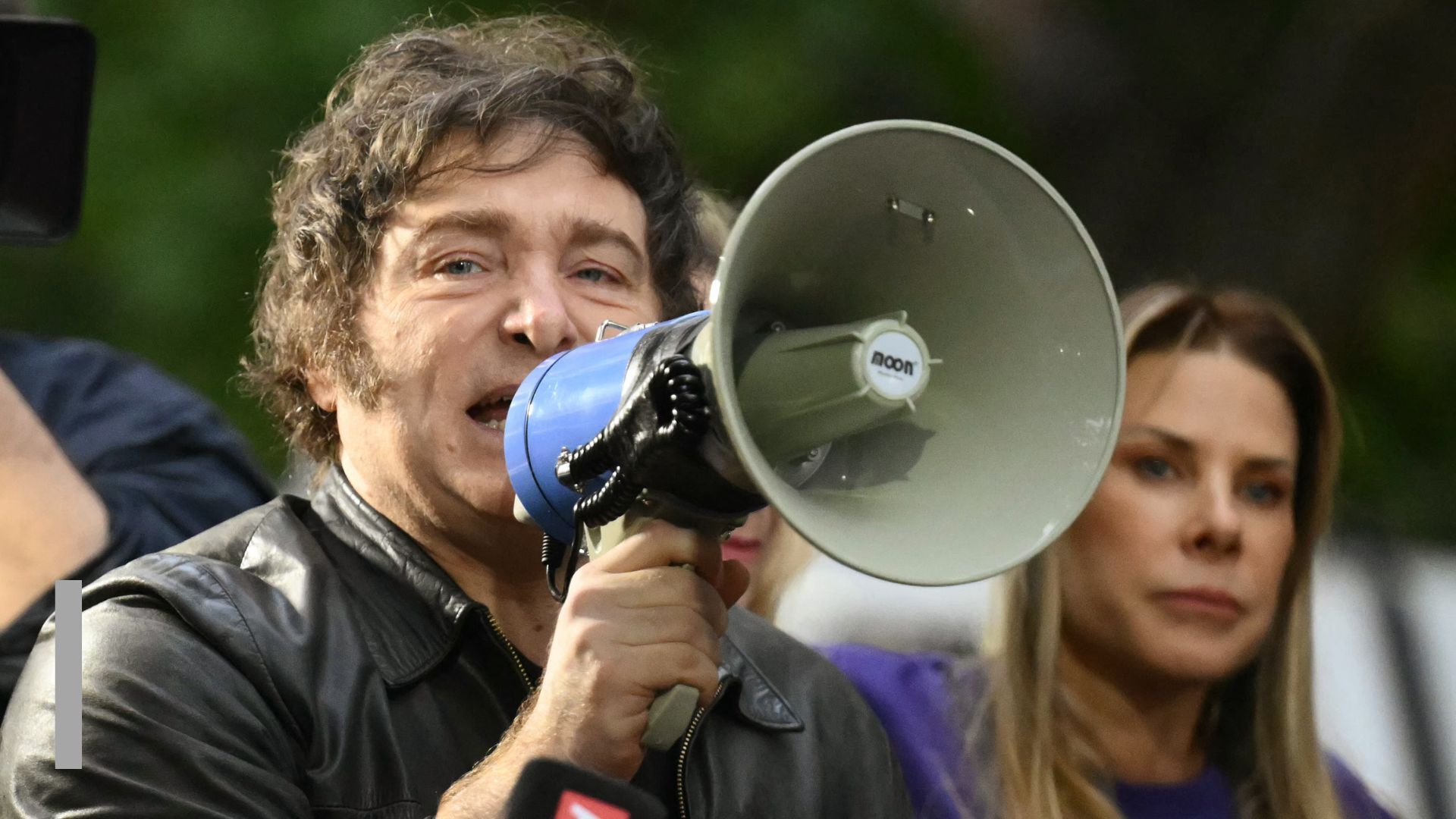
Javier Milei does not do subtlety. When the Argentine President took the stage at the Luna Park stadium in Buenos Aires to celebrate the 76th anniversary of Israel’s independence, he didn't just give a speech. He sang. He chanted. He brandished a torch. For an observer casual to the tectonic shifts in South American geopolitics, it looked like a standard display of populist fervor. For those tracking the capital flows and security alliances of the Southern Cone, it was a signal that Argentina is undergoing the most radical foreign policy realignment in half a century.
Milei is tethering the fate of his presidency—and the economic recovery of a fractured nation—to a hardline pro-Western, pro-Israel axis. This isn't merely about personal faith or a private interest in the Torah. It is a calculated gamble to position Argentina as the primary strategic partner for Israel and the United States in a region that has spent the last decade drifting toward Beijing and Tehran.
The End of Neutrality
Argentina has historically balanced its diplomatic books. For decades, the Casa Rosada maintained a cautious distance from Middle Eastern entanglements, punctuated only by the horrific 1990s bombings of the Israeli embassy and the AMIA Jewish center in Buenos Aires. Those scars remain open. Milei, however, has abandoned the traditional posture of "equidistance." By positioning himself as a "lion" for the Israeli cause, he is signaling to the global markets that the old Argentina—the one that flirted with the BRICS and signed murky memorandums with Iran—is dead.
The move is risky. Argentina is home to the largest Jewish population in Latin America, but it also hosts a significant and influential Arab-descendent community. By leaning so heavily into one side of a global fissure, Milei is inviting the kind of external scrutiny—and potential security risks—that his predecessors worked desperately to avoid. He is betting that the benefits of becoming a "security partner" to the West will outweigh the risks of being targeted by the West's enemies.
Economic Salvation Through Ideology
Money moves where it feels safe. Milei’s vocal support for Israel is a dog whistle to the private equity firms and hedge funds of New York and Tel Aviv. He knows that to fix a country with triple-digit inflation, he needs more than just domestic austerity. He needs massive, immediate foreign direct investment.
There is a specific focus here on technology and defense. Israel is a global leader in cybersecurity, agricultural tech, and water management—three sectors where Argentina is either desperately behind or holds massive untapped potential. By lighting that torch at Luna Park, Milei was effectively pitching Argentina as a "sandbox" for Israeli innovation. He wants the "Startup Nation" to find a second home in the pampas.
We are seeing the beginnings of a trade-off. Argentina offers vast lithium reserves, fertile land, and a desperate need for infrastructure. Israel offers the high-tech security and industrial "know-how" that can modernize a stagnant economy. It’s a bilateral marriage of convenience masked in the language of spiritual brotherhood.
The Security Apparatus Rebuild
Behind the singing and the public displays of affection lies a more pragmatic shift in the nation’s intelligence and military frameworks. For years, the Argentine intelligence services have been criticized for being porous, politicized, and ineffective. Milei’s administration has already begun a quiet overhaul of these systems, seeking closer cooperation with the Mossad and the CIA.
This isn't just about catching criminals. It's about regional dominance. As Brazil under Lula da Silva takes a more critical stance toward Israeli military actions in Gaza, Milei sees a vacuum. He wants Argentina to be the reliable adult in the room for Western interests. If Brazil won't host the joint training exercises or share the intelligence data, Argentina will.
The Cost of Conviction
Critics argue that Milei is playing with fire. The 1992 and 1994 attacks proved that Argentina is vulnerable to international terrorism when it steps onto the global stage. By moving the Argentine embassy to Jerusalem—a promise he reiterated during his visit—Milei is crossing a red line that most G20 nations refuse to touch.
There is also the domestic political cost. While Milei’s base loves the "shaking of the status quo," the middle class is more concerned with the price of milk than the location of an embassy. If the promised "investments of the soul" don't translate into lower grocery bills within the next eighteen months, the religious and ideological fervor will lose its luster. The public's patience with theatricality is finite.
A New Southern Cone Order
The geopolitics of South America are being rewritten in real-time. We are witnessing the emergence of a "Cold War" dynamic on the continent. On one side, you have the "Bolivarian" remnants and the cautious pragmatism of Lula’s Brazil, leaning toward a multipolar world where China is the dominant buyer. On the other, you have Milei’s Argentina, aggressively reclaiming its spot in the "Atlanticist" camp.
This ideological clarity is rare in Latin American politics, which usually favors the murky middle. Milei’s clarity is his greatest strength and his most glaring weakness. He has made it impossible for the world to ignore Argentina, but he has also made it impossible for Argentina to hide if things go south.
The torch he lit at Luna Park was not just a symbol of independence for a foreign nation. It was a flare sent up to the West, a signal that the doors to the Southern Cone are open for business, provided you share his particular brand of fire.
The real test won't be found in the lyrics of a song or the warmth of a stage light. It will be found in the ledger books of the Central Bank and the security briefings on the borders. Milei has tied his legacy to a specific vision of Western civilization; now he has to see if that civilization is actually interested in saving him.