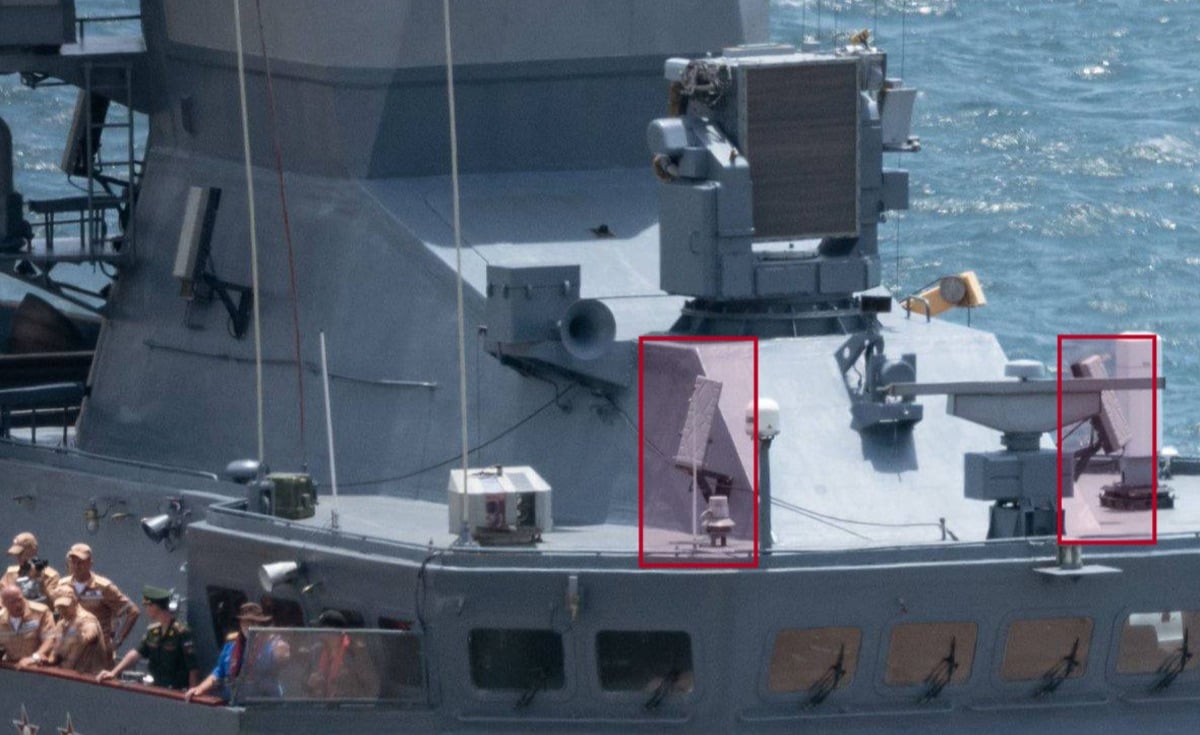
The operational reality of modern naval warfare has inverted. The deployment of low-cost, asymmetrical assets by Ukrainian forces has effectively neutralized Russia’s capital ship advantage in the Black Sea region. This structural shift has compelled the Russian Ministry of Defense to transition from a strategy of power projection to one of hyper-localized naval denial. By analyzing the physical and digital architecture of Russia's defense modifications at Novorossiysk, Sevastopol, and the Sea of Azov, we can map the exact engineering and tactical constraints governing this modern siege.
The Three Pillars of Asymmetric Naval Defense
To mitigate the persistent threat of Uncrewed Surface Vehicles (USVs) and One-Way Attack Uncrewed Aerial Vehicles (OWA-UAVs), the Russian navy relies on three defensive vectors:
- Physical Layer Exclusion: The deployment of multi-layered floating boom defenses, anti-torpedo netting, and heavy steel anti-drone cages (copes) over exposed vessel infrastructure.
- Electromagnetic Degradation: The integration of electronic warfare (EW) umbrellas designed to sever Global Navigation Satellite System (GNSS) links and cellular/satellite relay signals (such as Starlink terminals) utilized by terminal-phase drones.
- Geographic Displacement: The structural retreat of capital assets from forward logistics hubs like Sevastopol to eastern redoubts like Novorossiysk, and the subsequent restriction of commercial pathways in the Sea of Azov.
The Cost Function of Geometric Confinement
The physical containment of the Russian Black Sea Fleet introduces severe operational bottlenecks.
The Harbor Entrance Bottleneck
The deployment of multi-tiered boom defenses at Novorossiysk creates a rigid operational trade-off. While these physical barriers restrict the ingress vectors available to Ukrainian Sea Baby and Magura V5 USVs, they simultaneously restrict the egress velocity of Russian surface combatants. A fleet confined behind narrow physical gates cannot execute rapid sorties, effectively turning protective harbors into tactical choke points.
The Subsurface Vulnerability Complex
The installation of overhead anti-drone cages on Kilo-class diesel-electric submarines while berthed reveals an asymmetry in kinetic protection. These cages are designed to detonate small, top-attack FPV drones prematurely, preventing hull breaches. The systemic vulnerability stems from the fact that these submarines must remain stationary at designated piers to recharge systems and reload Kalibr cruise missiles. The structural addition of cages increases top-heaviness and complicates rapid diving procedures, trading open-sea agility for static survivability.
[Threat Vector: OWA-UAV / USV]
       │
       ▼
┌───────────────────────────────┐
│  Anti-Drone Cage Detonation   │  <-- Absorb primary kinetic energy
└──────────────┬────────────────┘
               │
               ▼
┌───────────────────────────────┐
│   Static Pier Vulnerability   │  <-- Bottleneck: Vessel must remain
└───────────────────────────────┘      stationary to reload/recharge
The Logistics Collapse in the Sea of Azov
The expansion of the conflict into the Sea of Azov highlights the limits of localized naval defense. The highly coordinated drone campaigns launched against the Russian "shadow fleet" of oil tankers and commercial cargo ships demonstrate that economic logistics lines are now structural targets.
The suspension of commercial navigation through the Kerch Strait and the Don-Azov Canal represents a severe operational defeat under the guise of defensive caution. By halting the movement of agricultural products and fuel shipments, the Russian military admits an inability to scale its electromagnetic and physical defense umbrellas across wide commercial transit corridors. The economic cost function here is direct: every day of suspended transit creates a cargo backlog, drives up global maritime insurance premiums, and starves the Crimean logistics hub of military fuel supplies.
Technical Limitations of the Defense Paradigm
The strategies employed by the Russian Navy suffer from structural decay over time.
First, physical barriers like booms and nets degrade rapidly in high-energy marine environments, requiring continuous maintenance and assets to guard the barriers themselves. Second, the reliance on high-powered electronic warfare creates a dense radio-frequency environment that frequently disrupts domestic radar, civilian infrastructure, and friendly naval communications.
Finally, the geographic retreat to Novorossiysk has failed to deliver sanctuary. The deployment of long-range reconnaissance drones featuring autonomous AI-driven route mapping means that even deep inland bays are subject to high-precision saturation strikes.
The final strategic play for naval command structures facing highly adaptive, low-cost drone swarms is clear: static, reactive defense architectures offer nothing more than a temporary delay of kinetic attrition. True maritime control in modern conflict zones requires absolute supremacy in autonomous counter-UAS platforms, continuous open-sea hunting, and rapid-fire automated kinetic intercept systems capable of defeating saturation attacks before they reach the harbor gates.