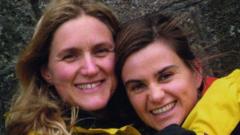
A decade is a long time in politics, but it's an eternity in the memory of a grieving family. Exactly ten years ago, Labour MP Jo Cox was shot and stabbed outside a library in Birstall, West Yorkshire. She was murdered by a neo-Nazi named Thomas Mair during the height of the hyper-polarized Brexit referendum campaign. In her maiden speech in Parliament just a year prior, she uttered words that would define her legacy: "We are far more united and have far more in common with each other than things that divide us."
Now, a full decade later, her sister Kim Leadbeater has issued a blunt warning. The consensus around a "kinder, gentler politics" that briefly emerged after the tragedy didn't stick. In fact, things are worse. If you liked this post, you should read: this related article.
If you look around today, the political temperature hasn't dropped. It has boiled over. From social media algorithms optimized for rage to literal riots on British streets, the weaponization of division has become standard operating procedure for political gain. We didn't learn the lesson of 2016. Instead, we doubled down on the hostility that killed Jo Cox.
The Warning from Spen Valley
Kim Leadbeater didn't want to get into politics. She was a fitness instructor and lecturer. But the vacuum left by her sister's murder pulled her in, and she now serves as the Labour MP for Spen Valley, the successor seat to her sister's constituency. Speaking ahead of the 10th anniversary, Leadbeater admitted that it would have been incredibly easy to use her anger to sow further division. She chose not to. For another perspective on this event, see the recent coverage from NBC News.
Instead, she's watching a political culture that seems intent on destroying itself. Leadbeater recently pointed out that the Brexit debate pushed people into rigid camps, turning political opponents into enemies. That tribalism never went away. It mutated.
Look at the evidence from the last few years. We've seen far-right unrest targeting asylum hotels, homes set on fire in Belfast, and politicians routinely using words like "invaders" or "traitors" to describe human beings. When public figures weaponize fear, they create an environment where unstable individuals feel justified taking violent action. Language shapes culture. Culture shapes behavior. It's a straight line from toxic rhetoric to political violence.
Why Intolerance Won the Decade
The immediate aftermath of the 2016 murder saw calls for unity from across the political spectrum. David Cameron called to drive out intolerance. Jeremy Corbyn pleaded for gentler discourse. But that truce lasted weeks, if not days.
Political scientists note that the shift toward absolute identity politics has made compromise look like cowardice. Economic arguments can be settled with a budget compromise. Value-based, identity-driven arguments cannot. When you view politics as a battle between good and evil, there is no centrist position on prejudice.
Consider the timing of the murder itself. Hours before Jo Cox was killed, the infamous "breaking point" poster was unveiled, showing Syrian refugees lined up at a European border. It was a masterclass in scapegoating. Today, that exact strategy is standard. We see tech billionaires clashing with governments over the role of social media in stoking race riots, and mainstream politicians telling the public to feel "pure, cold rage" about systemic failures.
Rage is a powerful political currency. It sells clicks, wins votes, and builds personal brands. But it ruins societies.
The Danger of the Isolated Act Myth
The biggest mistake we can make is treating the murder of Jo Cox as an isolated incident, a fluke event carried out by a single madman. If you reduce her death to a random act of violence, you learn absolutely nothing.
It wasn't a fluke. It was the predictable outcome of an ecosystem that feeds on anger. When public services fail, when housing is scarce, and when the economy stalls, people want someone to blame. The political class is happy to provide targets.
- The young blame the old.
- The old blame the young.
- Rural communities blame the cities.
- Everyone blames migrants.
This constant finger-pointing makes us forget our shared humanity. Leadbeater noted that her sister worked in some of the most dangerous war zones on the planet, including Bosnia and Syria, during her fifteen years as a humanitarian worker. She survived those battlefields only to be assassinated ten minutes from her family home in Yorkshire while doing her democratic duty.
What You Can Do Right Now
Changing a toxic political culture feels impossible, but waiting for politicians to fix it is a losing strategy. They profit from the chaos. De-escalating the public square requires individual action.
First, stop feeding the algorithms. When you see a post designed to make you furious, don't share it, don't comment on it, and don't quote-tweet it. Outrage is oxygen for bad behavior. If you deny it engagement, it dies.
Second, separate the person from the policy. You can disagree vehemently with someone's views on immigration, taxation, or public spending without treating them as an existential threat to the nation. The moment you label an opponent an enemy, you eliminate the possibility of a solution.
Finally, show up in your local community. Jo Cox was deeply committed to tackling loneliness, a project her family continued through the Jo Cox Foundation. Loneliness makes people vulnerable to radicalization and extremist echo chambers online. Rebuilding physical, real-world connections is the only effective shield against digital tribalism.
We can choose to live in a society defined by constant suspicion, or we can choose to remember that we actually belong to one another. The greatest tribute to Jo Cox isn't putting her words on a plaque. It's living them out when it's hardest to do so.