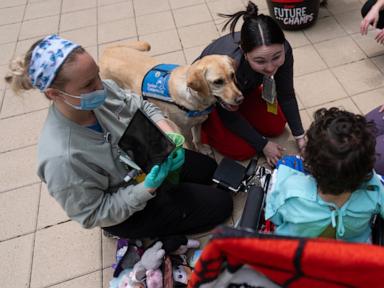
The rhythm of a modern hospital is defined by steel and glass, the sterile hum of fluorescent lights, and the relentless, syncopated beeping of biometric monitors. It is a sensory landscape designed for maximum efficiency and clinical precision. Yet, for someone confined to a thin mattress in the middle of a long recovery, that exact environment can begin to feel like a psychological cage.
Human bodies do not heal by medicine alone. The mind must want to stay present.
Consider a hypothetical patient named Arthur. At seventy-two, following a complex cardiac procedure, Arthur had withdrawn into a silent, stubborn despondency. He ate only when coerced. He stared at the neutral-toned wall, ignoring the gentle prompts of physical therapists. His clinical markers were stable, but his spirit was flatlining. The staff recognized the pattern; it is a profound, unquantifiable isolation that often settles over long-term patients.
Then the doorway framed something entirely un-clinical.
It was a golden retriever named Barnaby. He didn’t look at Arthur’s charts. He didn’t adjust an IV drip. He simply trotted over with the calm assurance of an old friend, rested his heavy, warm chin directly onto the edge of the stiff white sheets, and let out a soft, contented sigh.
Arthur’s hand, motionless for days, trembled as his fingers sank into the thick fur. He wept. It was the first real breakthrough in his recovery.
The Biology of a Cold Nose
What happened to Arthur looks like magic. It feels like a beautiful, sentimental vignette designed to warm hearts on social media. But beneath the emotional surface lies a matrix of hard neurochemical data. Animal-assisted intervention is no longer viewed by progressive medical institutions as a mere novelty or a distraction for pediatric wards. It is targeted, measurable therapy.
When a human interacts with a calm, familiar animal—specifically a dog trained to navigate high-stress environments—the brain undergoes an immediate chemical shift. Clinical studies tracking patient biomarkers during canine visits consistently demonstrate a sharp drop in serum cortisol, the body’s primary stress hormone. Simultaneously, there is a measurable surge in oxytocin, the hormone responsible for bonding, empathy, and social connection, alongside notable increases in dopamine and endorphins.
The physical ramifications of this neurochemical cascade are immediate:
- Cardiovascular deceleration: Systolic and diastolic blood pressure drops within minutes of tactile contact.
- Respiratory stabilization: Erratic, anxiety-driven breathing patterns synchronize with the steady, rhythmic respiration of the animal.
- Endogenous pain management: The flood of endorphins alters pain perception, frequently allowing patients to reduce their reliance on breakthrough analgesic medications.
In an era where healthcare systems struggle with the soaring costs of pharmacological intervention and the complex side effects of heavy sedatives, a canine practitioner offers a biological reset with zero pharmaceutical footprint.
The Rigorous Path to the Wards
There is a common misconception that therapy work is simply about a well-behaved family pet walking through a hospital corridor. It is not. The environment of an intensive care unit or a rehabilitation wing is chaotic, loud, and unpredictable. Alarms blare suddenly. Heavy meal carts rattle down hallways. Smells are sharp and chemical. Strangers exhibit erratic physical movements or emotional outbursts.
An average dog would find this terrifying. A therapy dog must find it unremarkable.
The selection process begins with temperament assessment long before a dog ever sets a paw inside a medical facility. Organizations like Alliance of Therapy Dogs or Therapy Dogs International subject candidates to rigorous testing. A candidate must demonstrate an innate lack of aggression, a high threshold for startle responses, and a deep, intrinsic desire for human contact.
Training involves desensitization to medical equipment. A dog must learn to walk calmly alongside IV poles, ignore the metallic clatter of dropped trays, and remain unfazed by the sight of wheelchairs, crutches, and oxygen masks. They must master the "leave it" command with absolute precision—an essential skill in an environment where dropped pills or biohazardous material could be fatal to the animal.
Furthermore, the hygiene protocols are exhaustive. Before a single shift, these animals undergo meticulous grooming, teeth brushing, and claw filing to ensure they pose no infection risk to immunocompromised patients. They are, in every sense, clinical professionals with fur.
Rewiring the Psychology of Confinement
The true power of these visits, however, moves beyond the measurable metrics of blood pressure and hormone levels. It touches the deep psychological erosion that accompanies severe illness.
Hospitals stripped individuals of their autonomy. You wear a gown that opens at the back. You eat what you are given, when you are given it. You are poked, prodded, scanned, and evaluated on a schedule entirely outside your control. You become a collection of symptoms, a room number, a case study.
A dog does not care about your diagnosis.
To Barnaby, Arthur was not a cardiac patient with a guarded prognosis; he was simply a human who possessed excellent scratching spots behind the ears. This total absence of judgment creates a safe harbor. In the presence of a dog, a patient is allowed to step out of their medical identity and return to themselves, if only for fifteen minutes.
Consider the impact on the hospital staff as well. The phenomenon of compassion fatigue among nurses, physicians, and support staff is an ongoing crisis in global healthcare. The emotional weight of managing chronic suffering takes a heavy toll. When a therapy dog enters a nursing station, the collective posture of the room shifts. Shoulders drop. Voices soften. Brief, shared moments of laughter break the tension of a twelve-hour shift. The animal becomes a conduit for communal healing, binding the caregivers and the cared-for in a brief moment of shared humanity.
Beyond the Red Tape
Despite the overwhelming volume of peer-reviewed data supporting the efficacy of animal-assisted therapy, integration remains an uphill battle against institutional inertia. Bureaucracy is naturally risk-averse. Risk management departments frequently raise concerns regarding zoonotic diseases, allergies, and liability.
These fears, while understandable on paper, rarely align with reality when proper protocols are maintained. The risk of disease transmission from a strictly vetted, thoroughly groomed therapy dog is statistically negligible compared to the routine pathogens carried on human hands and cell phones. Progressive hospitals that have embraced comprehensive canine programs have found that the measurable benefits—shorter hospital stays, reduced pain medication usage, and higher patient satisfaction scores—vastly outweigh the administrative hurdle of establishing safety guidelines.
We have spent centuries refining the mechanics of medicine, building cleaner machines, synthesizing stronger compounds, and mapping the minutiae of the human genome. Yet, in our pursuit of technological perfection, we occasionally risk decoupling the science of healing from the art of care.
The afternoon sun began to tilt through the window of Arthur’s room, casting long shadows across the linoleum floor. Barnaby’s handler gave a subtle hand signal, indicating it was time to move on to the next ward.
Barnaby stood up, stretched languidly, and gave Arthur’s hand one final, damp nudge. Arthur looked up at the handler, his eyes clear for the first time in a week.
"When does he come back?" Arthur asked.
The physical therapist standing in the doorway quietly made a note on her clipboard. Tomorrow, they would try walking down the hallway again. This time, Arthur would be ready.