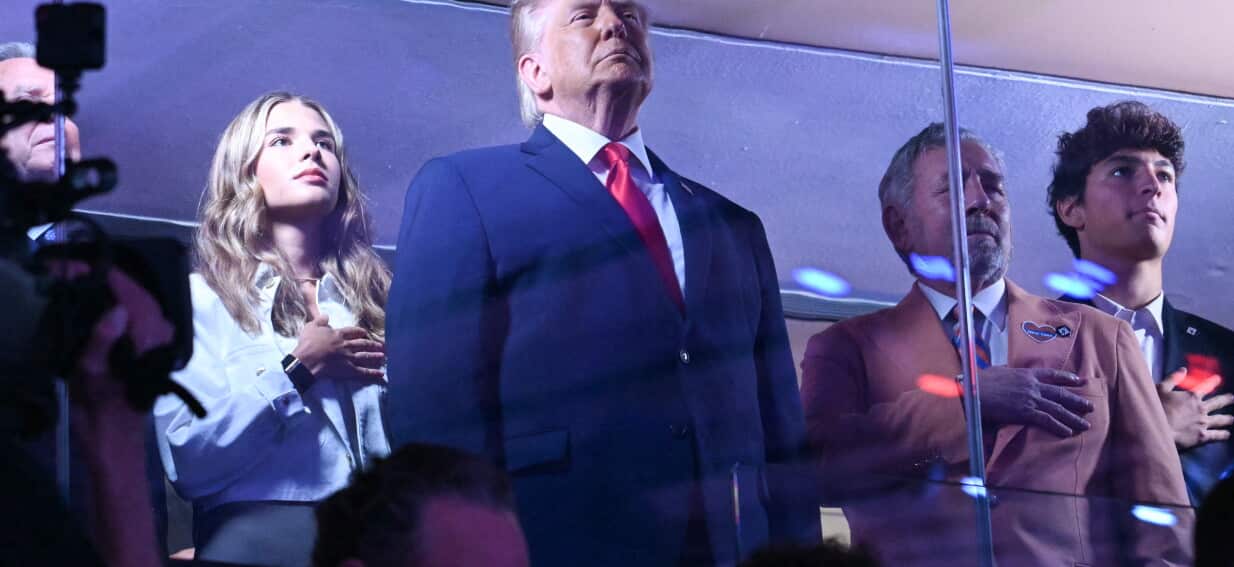
The mainstream sports press loves a lazy, predictable narrative. For years, the consensus surrounding FIFA President Gianni Infantino’s relationship with Donald Trump has been painted with a simplistic brush: a desperate sports bureaucrat groveling to an unpredictable American president to protect the 2026 World Cup. Journalists look at the dinners at Mar-a-Lago, the frequent White House visits during Trump’s first term, and the public flattery, and they see a classic sycophant.
They are completely misreading the board.
Infantino’s yearslong courtship of Trump was not an act of desperation. It was a masterclass in institutional realpolitik. The media operates under the naive assumption that international sports organizations should remain pure, detached from the messy realities of populist politics. But in the real world, billions of dollars, visa entry requirements, tax exemptions, and federal security guarantees hang in the balance. Infantino did not woo Trump because he was scared; he did it because he understood that the United States government is the ultimate gatekeeper for FIFA's most lucrative cash cow in history.
To view FIFA’s political maneuvering as transactional weakness misses the entire point of how modern global sports empires operate.
The Myth of the Subservient Sports Bureaucrat
The prevailing narrative suggests that Infantino compromised FIFA's dignity by aligning so closely with Trump. Critics point to the 2018 White House meeting where Infantino handed Trump a red and yellow card, joking about how Trump could use them on the media. The press cringed. They called it embarrassing.
But let's dissect the actual mechanics of that interaction.
FIFA is an entity with a Swiss zip code but a global footprint that rivals the United Nations. When the United Bid (United States, Canada, and Mexico) won the rights to host the 2026 World Cup in June 2018, FIFA faced an unprecedented operational nightmare. For the first time, the tournament would feature 48 teams instead of 32, requiring massive logistics across three sovereign nations with vastly different immigration, tax, and legal frameworks.
Imagine a scenario where a host country suddenly decides to ban citizens of certain participating nations from entering the country right before the tournament opens. That is not a hypothetical headache; it was a distinct possibility given the political climate of the late 2010s.
Infantino knew that standard diplomatic channels would fail in an administration that openly despised traditional international institutions. The standard bureaucratic playbook—sending memos to the Department of State or scheduling meetings with mid-level bureaucrats—was a fast track to irrelevance. Infantino bypassed the entire apparatus by appealing directly to the executive ego.
By treating Trump as the sole proprietor of the American node of the 2026 tournament, Infantino secured ironclad commitments that no lower-level diplomat could ever guarantee. It was transactional, yes, but FIFA held the cards that mattered: the prestige of hosting the biggest sporting event on earth during a highly charged political era.
Why the White House Needed FIFA More Than FIFA Needed the White House
People frequently ask: Why did FIFA risk its reputation by getting so close to a polarizing American president?
The question itself is flawed. It assumes FIFA has a pristine reputation left to lose, and it drastically underestimates the leverage of the World Cup.
The United States government needed this tournament far more than Gianni Infantino needed Washington’s approval. To understand why, you have to look at the hard economics of modern sports infrastructure and national branding.
| Metric | The 1994 World Cup (US) | The 2026 World Cup (North America) |
|---|---|---|
| Number of Teams | 24 | 48 |
| Total Matches | 52 | 104 |
| Projected Revenue | $500 Million | $11+ Billion |
| Stadium Infrastructure | Repurposed venues | State-of-the-art NFL monoliths |
The American market is the final frontier for soccer’s total commercial dominance. FIFA already commands Europe, South America, and Africa. The 2026 tournament is explicitly designed to lock in corporate America’s checkbooks for the next half-century. Infantino wasn't begging for entry; he was opening the door to an eleven-billion-dollar economic engine that American cities were starving for.
When Trump was in office, his administration was obsessed with showcasing American economic dominance. A World Cup on US soil—secured under his watch—was the ultimate validation of that narrative. Infantino understood this psychological leverage perfectly. He didn't approach the White House as a petitioner; he approached it as a CEO offering a joint venture.
Dismantling the Independent Sports Illusion
I have spent decades watching corporate entities and sports governing bodies navigate federal regulations. The most dangerous mistake an executive can make is believing their own marketing. If FIFA genuinely believed it was a neutral, independent governing body above the fray of national politics, the 2026 World Cup would be a logistical trainwreck right now.
Let's look at the brutal realities of what it takes to stage a modern mega-event in the United States:
- Tax Exemptions: FIFA demands massive tax concessions from host cities and federal governments. We are talking about hundreds of millions of dollars in waived corporate, sales, and income taxes for FIFA and its sponsors. Bypassing local tax laws requires immense federal pressure.
- Security Infrastructure: The World Cup is designated as a National Special Security Event (NSSE) in the United States, placing the FBI, Secret Service, and Department of Homeland Security in charge. Securing this designation requires direct executive authorization.
- Vast Visa Overhauls: Keeping the tournament running smoothly means thousands of players, coaches, staff, sponsors, and millions of fans must clear immigration without friction.
If Infantino had played the aloof, politically neutral Swiss executive, these issues would have stalled in congressional subcommittees for years. By building a direct pipeline to the Oval Office, Infantino ensured that when FIFA ran into a bureaucratic wall in Washington, a single phone call could clear the path.
Is there a downside to this approach? Absolutely. It alienates factions of the fan base who believe sports should be a sanctuary from geopolitics. It invites intense scrutiny and accusations of hypocrisy, especially when FIFA punishes certain nations for political interference while actively courting it in others. But Infantino operates on a different plane of accountability. He doesn't answer to Twitter commentators; he answers to the 211 member associations of FIFA who demand maximized revenues and flawless execution.
The Misconception of the Fawning Executive
Commentators love to highlight Infantino’s relocation to Miami as further proof of his capitulation to American interests and his desire to be close to the Trump orbit. This is another superficial reading of a calculated corporate restructuring.
Moving significant operational chunks of FIFA to Miami has nothing to do with personal politics and everything to do with a hostile European regulatory environment.
For decades, Switzerland was a safe haven for international sports federations, offering lax oversight and immense privacy. That era is dead. Swiss authorities have spent the last ten years raiding FIFA headquarters, launching criminal investigations, and making life miserable for soccer’s ruling elite.
Miami offers a far more hospitable climate for a multi-billion-dollar sports entertainment conglomerate. It is the gateway to Latin America, the home of CONCACAF (the regional governing body), and sits in a state with highly favorable corporate laws and zero state income tax. Calling the move an effort to "woo Trump" ignores the massive structural advantages that Florida provides to an organization trying to escape the prying eyes of European prosecutors.
Stop Asking If It Was Right, Start Asking If It Worked
The media will continue to write post-mortems on the Infantino-Trump relationship, dissecting every handshake and seating assignment at state dinners. They will frame it as a cautionary tale of institutional compromise.
They are asking the wrong questions because they are playing by an outdated rulebook.
The modern sports landscape is not governed by ethics; it is governed by scale. Infantino recognized early on that the traditional boundaries between sports, entertainment, and geopolitical power had completely dissolved. You cannot run a global empire by pretending the rulers of the world's largest economy do not exist, or by treating them with passive-aggressive distance.
Infantino’s strategy was cynical, aggressive, and entirely effective. He neutralized potential political disruptions, secured unprecedented federal cooperation, and positioned FIFA to extract maximum financial value from the North American market.
You do not have to like the tactics, but you have to respect the precision of the execution. While the press was busy laughing at the red cards and the awkward photos, Infantino was quietly locking down the legal and financial foundations of the most profitable tournament in human history. He didn't get played by the White House. He used it.