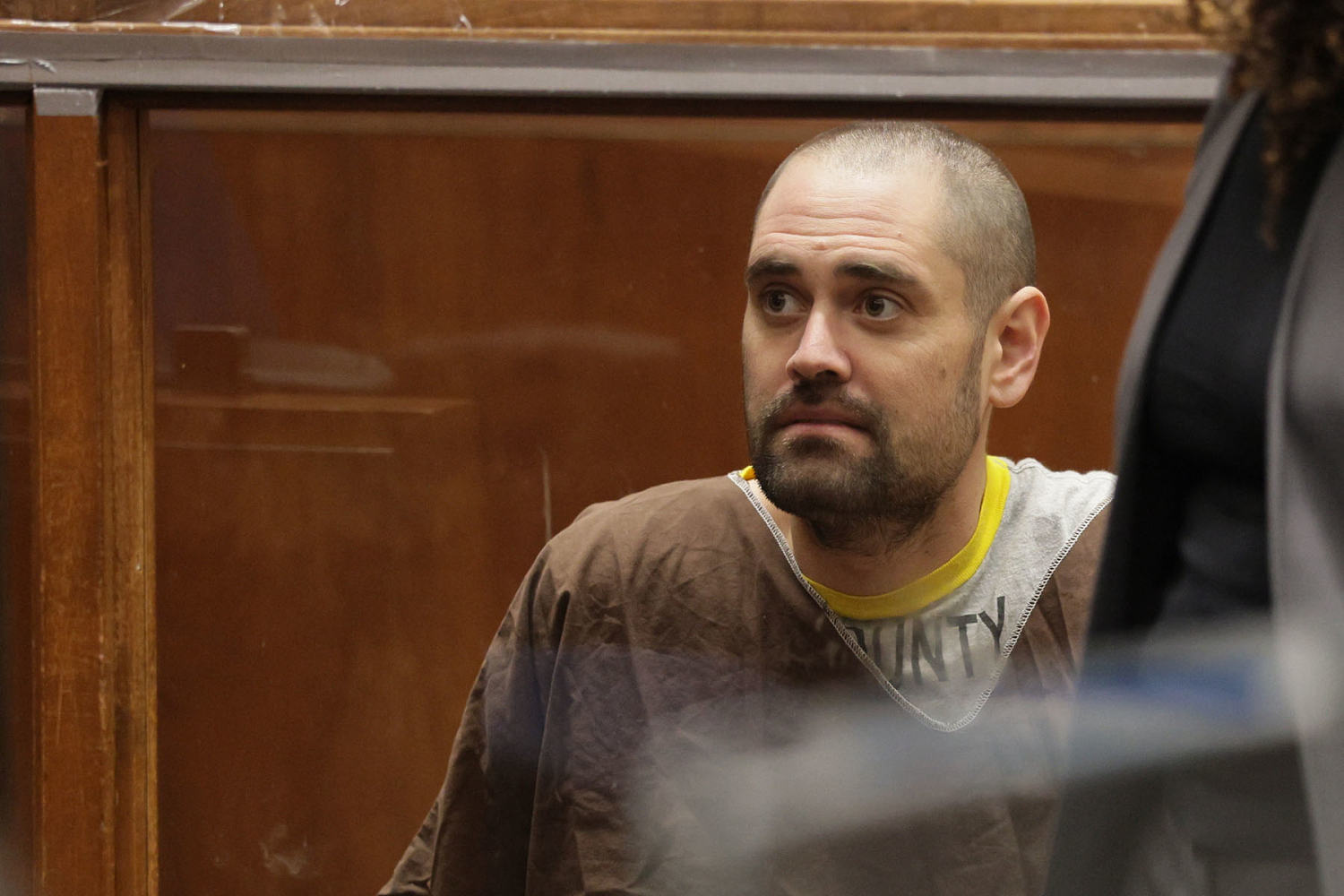
The headlines are predictable, bloodless, and designed for maximum outrage. Nick Reiner pleads not guilty. The public gasps. Commentators on cable news shake their heads, invoke the tragic legacy of Rob Reiner, and offer tired, surface-level diagnoses about family dysfunction, mental health stigma, or the rot of Hollywood privilege. Everyone wants a simple narrative. Everyone wants a clear villain, a definitive motive, and a neat moral lesson to tuck into bed at night.
I have spent years watching high-profile legal disasters unfold from the inside, and I am here to tell you that the public conversation is entirely backward.
The lazy consensus treats this tragedy as a unique anomaly born of wealth and fame. It assumes that extreme violence within a famous family is somehow different from extreme violence anywhere else, warped only by red carpets and syndication checks. That perspective is not just lazy; it is dangerous. It blinds us to the mechanical realities of how criminal cases of this magnitude are built, how public sympathy is weaponized, and how the legal machinery grinds forward regardless of the human wreckage left behind.
Stop looking at the celebrity status. Start looking at the mechanics of the plea.
The Plea Of Not Guilty Is Not A Claim Of Innocence
Let us clear up the basic legal illiteracy poisoning every discussion thread online right now. A plea of not guilty is not a moral declaration. It is a procedural demand. It is defense counsel standing up in a courtroom and telling the state, prove it.
When a defendant facing capital or severe felony charges enters a not guilty plea, armchair critics act as though an insult has been hurled at the victims' memories. This is childish. In an American courtroom, the state bears the burden of proof. Every single time a lawyer advises a client to plead not guilty, they are utilizing the foundational brake pedal of the judicial system.
To expect anything else is to wish away due process because the names on the police report are recognizable. If we discard the presumption of innocence and the mechanical necessity of a not guilty plea just because a crime shakes Hollywood, we have dismantled the Constitution for a tabloid headline.
"A not guilty plea is not a denial of reality; it is a declaration that the state must meet its constitutional burden before the state takes a human life or liberty."
We need to talk about why the public reacts with such personal betrayal whenever an accused person forces the government to do its job. The parasocial relationship we build with public figures—even behind-the-scenes creators like Rob and Michele Reiner—makes their brutal end feel like a personal assault on our own safety. When Nick Reiner entered his plea, the public took it as an affront. That is an emotional trap. The legal system does not care about your feelings, and neither does the defense strategy.
The Myth Of The Hollywood Curse
Every time a tragedy strikes a prominent family in the entertainment industry, the commentators wheel out the tired tropes about the dark side of fame. Wealth poisons the soul. Hollywood corrupts the youth. Pressure cookers of success breed monsters.
This is lazy psychoanalysis masquerading as insight.
I have seen families shatter in rural trailer parks, suburban subdivisions, and inner-city walk-ups under the exact same psychological pressures. The chemistry of severe mental illness, substance abuse, and familial enmeshment does not check your bank account or look at your IMDb credits before it destroys a household.
By framing this case as a uniquely Hollywood horror story, we let society off the hook. We tell ourselves that as long as we do not live in Brentwood or direct classic coming-of-age films, our children are safe from the abyss. That is a comforting lie.
Imagine a scenario where Nick Reiner shared DNA with an accountant in Ohio instead of a legendary director. The local news would run a three-minute segment, the neighbors would whisper for a week, and the case would grind through an overworked public defender's office with zero national fanfare. The underlying tragedy—a parent dead at the hands of their child—remains identical. The only variable is the amplification.
When we obsess over the fame, we miss the structural failures that precede every parricide in America: the complete breakdown of institutional mental healthcare, the stigma of forced intervention, and the legal limbo families face when an adult child is in crisis but refuses help.
What The Pundits Get Wrong About Motive
The media wants a motive because a narrative without a clean 'why' feels like an open wound. Was it money? Was it resentment? Was it Hollywood neglect?
The uncomfortable truth is that severe psychiatric breaks and deep-seated familial violence often do not have neat, logical motives that translate into a soundbite. Trying to reverse-engineer a rational explanation for irrational violence is a fool's errand.
When a person commits an act of this magnitude, the search for motive frequently eclipses the more vital question: How did the warning signs go unaddressed for years?
In wealthy households, there is a distinct curse of optionality. Resources can sometimes fund enabling rather than healing. You can hire private therapists, secure private facilities, and insulate a troubled individual from natural consequences far longer than a middle-class family ever could. That insulation does not cure the pathology; it pressure-cooks it.
I have watched affluent families throw millions of dollars at high-end wellness ranches and concierge psychiatrists, treating chronic behavioral disasters like a bad PR problem that money can scrub away. They manage the optics while the pathology metastasizes. By the time the legal system is forced to step in, the room for intervention has vanished, replaced by a crime scene.
The Unspoken Downside Of High-Profile Prosecutions
There is a dark incentive structure at play when a high-profile case hits the docket. District attorneys and defense teams are human, and they operate inside an ecosystem driven by media oxygen.
When the victims are cultural royalty, the pressure on the prosecution to secure a maximum-penalty outcome is astronomical. Conversely, the defense faces a mountain of prejudicial media coverage that makes finding an unbiased jury pool nearly impossible.
This creates a distortion field around justice. The system stops being about the quiet evaluation of facts and starts resembling a theatrical production where every motion, every hearing, and every plea is broadcast to millions of rubberneckers.
The downside of my perspective? It strips away the comforting morality play. It forces you to look at a horrifying event not as a movie script with good guys and bad guys, but as a systemic failure of human biology, family dynamics, and legal mechanics. It requires you to admit that Rob and Michele Reiner were parents whose lives were extinguished in a horrific manner, and that their son is a human being whose mind likely broke beyond repair long before a knife was ever lifted.
Both of those things can be true at the same time. You do not need to choose between mourning the victims and understanding the cold, procedural reality of the defense.
The Actionable Takeaway
If you are following this case for the drama, turn off the television. You are consuming human misery as entertainment, dressed up as civic engagement.
If you are following this case because you want to understand the limits of family support and mental health intervention, look at your own life. Look at the people around you who are drowning in silence, chemical dependency, or psychiatric distress. Recognize that writing checks, hiring expensive fixers, and hiding family shame behind gates and bank accounts does not save anyone. It only delays the explosion.
The plea of not guilty is just the opening bell of a long, miserable process that will bring no real closure to anyone involved. The headlines will fade, the legal briefs will pile up, and the culture will move on to the next shiny distraction.
Stop waiting for a moral to the story. There isn't one. There is only the wreckage left behind when we ignore the rot until it's too late.


