The mainstream press wants you to pop champagne because Gaël Mocaër and Sebastian Perez Pezzani are finally heading back to Paris.
Stop cheering.
The lazy consensus across European newsrooms treats their release from Togolese custody as a triumphant vindication of press freedom, diplomatic pressure, and happy endings. Editorial boards are framing the ordeal as an unfortunate misunderstanding over visas, administrative paperwork, and tourist-grade drones.
They are missing the entire plot.
This was never about a couple of wayward documentary filmmakers caught up in bureaucratic red tape. It was a calculated geopolitical stress-test disguised as a legal proceeding, and the way the West is swallowing the "free press victory" narrative reveals a staggering blindness to how sovereignty actually operates in twenty-first-century Africa.
Let us look at the cold mechanics of what happened in Lomé.
Mocaër and Perez Pezzani entered the country to shoot an episode for Les Routes de l'impossible, a television franchise that historically thrives on poverty tourism, edge-of-the-map romanticism, and the dramatization of the global fringe. They rolled in with camera gear, aerial drones, and the standard-issue western assumption that a French passport grants immediate navigational exemption over sensitive security sectors.
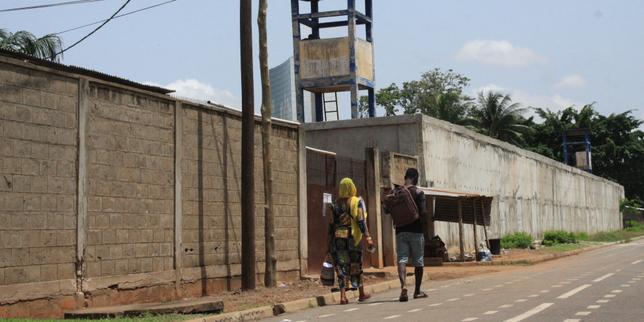
Then reality hit. The Togolese state arrested them—alongside their local fixer, Fred Vedomey—not because of a clerical error on a visa form, but because Lomé is currently navigating a paranoid, high-stakes security landscape in West Africa where unauthorized drone flights over strategic installations look precisely like espionage or reconnaissance for insurgent groups leaking down from the Sahel.
The Western press corps shrieked about arbitrary detention. The Togolese government dug in its heels, citing "indices graves et concordants" regarding unauthorized surveillance and false declarations.
And now, a month-plus later, a provisional release is granted, the lawyers claim the dossier is "suffisamment éclairé", and everyone in Paris breathes a sigh of relief.
The Colonial Hangover of Gonzo Journalism
Imagine a scenario where a foreign film crew rolls unannounced over a military base outside Marseille, unpacks a commercial drone to capture cinematic overheads of naval infrastructure for an entertainment program, and casually waves off military police by citing their artistic intentions.
They would not be held for a month of administrative hearings and then quietly flown home. They would face immediate, aggressive prosecution under domestic security statutes, and rightfully so.
Yet when western production companies operate in the Global South, a deeply ingrained paternalism takes over. There is an unspoken, arrogant expectation that local security protocols are mere suggestions—bureaucratic hurdles to be bypassed with a wink, a well-placed bribe, or the intercession of an embassy attaché.
Tony Comiti Productions and various media defense syndicates framed the arrest of Mocaër and Perez Pezzani as an assault on international journalism. But gonzo travel-documentary production is not hard-hitting investigative journalism exposing systemic corruption; it is packaged exoticism designed for prime-time ratings. When you fly into a sovereign nation grappling with profound regional instability and treat its restricted airspace as your personal playground, you are not practicing the Fourth Estate. You are practicing structural recklessness.
The Local Collateral Damage Nobody Talks About
The most grotesque omission in the mainstream coverage of this saga is the treatment of Fred Vedomey, the Togolese fixer arrested alongside the French directors.
While Parisian editorial desks mobilized high-powered legal teams and diplomatic channels for Mocaër and Perez Pezzani, local fixers across the continent absorb the primary shockwaves of foreign hubris. When foreign crews cut corners on accreditation, dodge local oversight, or violate security perimeters, the foreign nationals eventually get deported on commercial flights back to comfort. The local collaborators are left behind to face the direct, uninsulated wrath of domestic security apparatuses.
Fixers carry the disproportionate risk while foreign production companies reap the commercial upside. If you want to talk about ethics in international reporting, start by dismantling a model that treats local talent as disposable logistics rather than equal partners in risk assessment.
Why the Release is Not a Victory
The sudden release of the crew is being hailed as a triumph of quiet diplomacy. It is nothing of the sort. It is a calculated face-saving exit strategy engineered to avoid prolonged bilateral friction, quietly expedited once Lomé had made its definitive point: our airspace, our rules, our sovereignty.
By treating this release as a win for press freedom, European media is refusing to learn the lesson. The takeaway in executive boardrooms across Paris, London, and New York should not be "we managed to get our guys back." It should be that the era of parachute journalism—where producers drop into developing nations with cameras rolling and local laws ignored—is officially dead.
Sovereignty is making a ferocious comeback across West Africa. Governments are no longer willing to outsource their security oversight or tolerate foreign media crews playing fast and loose with territorial integrity under the sacred banner of documentation.
If production companies do not radically overhaul how they interface with local authorities, secure advance clearances, and respect regional security parameters, the next detention won't end with a quiet flight home. It will end with a heavy prison sentence that no amount of western media outrage will be able to reverse.
Stop romanticizing parachute adventurers as martyrs of the free press. They broke the rules in a high-threat zone, got caught, and relied on the very neocolonial diplomatic leverage they love to critique in their voiceovers to bail them out.
Next time, the door might stay shut.