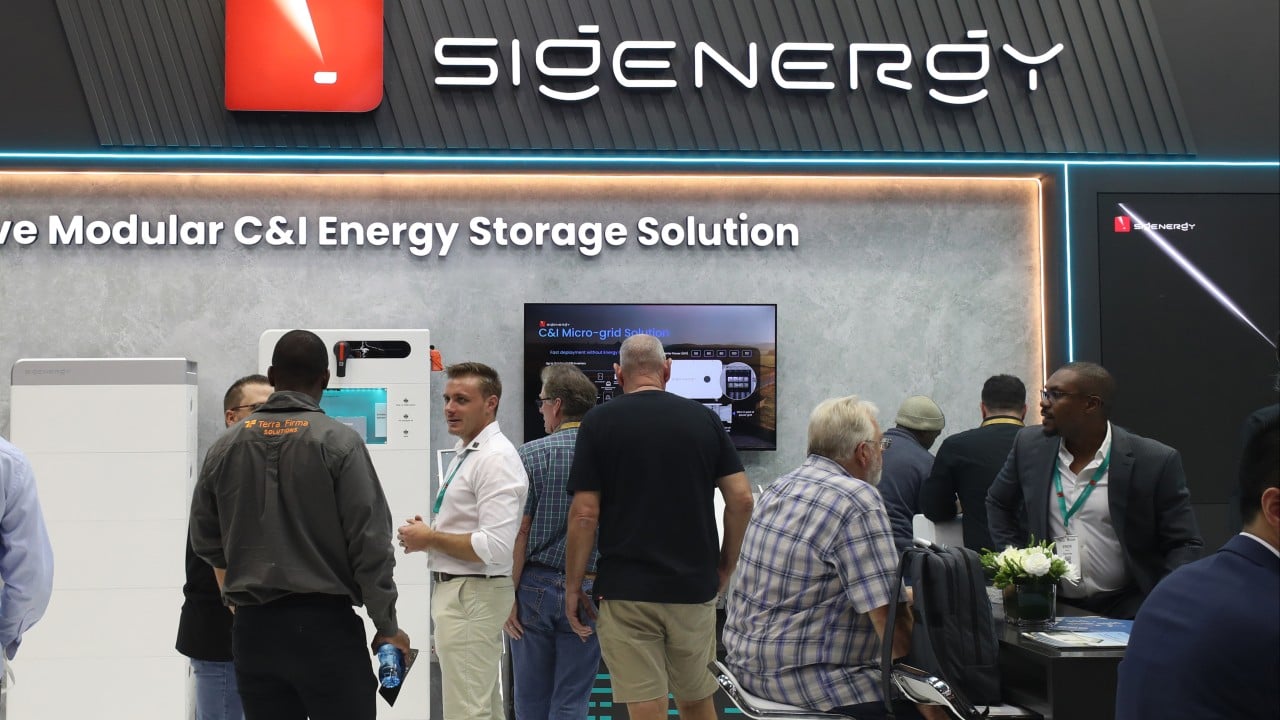
The 1,000x oversubscription of the Sigenergy IPO is not a statistical anomaly but a predictable outcome of extreme supply-demand asymmetry within the Distributed Energy Resources (DER) sector. When an offering is oversubscribed to this degree, the market is signaling that the firm's valuation floor is decoupled from traditional P/E ratios and is instead tied to the scarcity of vertically integrated AI-energy hardware. To understand why institutional and retail capital flooded this specific vehicle, one must analyze the convergence of battery-to-grid (B2G) software maturity, the compression of the solar-plus-storage value chain, and the structural deficit of investable "pure-play" energy technology firms.
The Structural Scarcity of Pure-Play DER Assets
Investors often face a bottleneck when attempting to gain exposure to the energy transition. Traditional utilities offer stability but lack growth velocity, while hardware manufacturers often suffer from low-margin commoditization. Sigenergy occupied a narrow wedge in the market by positioning itself as a systems integrator rather than a component supplier.
The "frenzy" cited in market reports reflects a flight toward companies that control the Energy Operating System (eOS). By integrating the inverter, EV charger, and battery management system into a singular stack, the firm reduces "soft costs" for installers—which typically account for 60% of residential solar project expenses. Capital markets rewarded this reduction in friction, betting that a unified hardware-software ecosystem creates a "moat" through data lock-in and lower churn rates.
Quantifying the Efficiency Gains of Vertical Integration
The 1,000x oversubscription suggests the market has quantified three distinct value drivers that typical analysts overlook:
- Interoperability Premium: Most residential energy systems are fragmented, requiring components from three or four different vendors. This creates high failure rates at the integration points. Sigenergy’s 5-in-1 system architecture removes these points of failure, which translates to a lower Total Cost of Ownership (TCO) for the end-user.
- AI-Driven Arbitrage: The inclusion of GPT-4 or similar LLM capabilities into an energy manager is not a marketing gimmick; it is a tool for predictive load balancing. By analyzing weather patterns and grid pricing in real-time, the system can decide when to sell power back to the grid (Virtual Power Plant participation) and when to store it. The market is valuing the potential revenue from these grid services, not just the hardware sales.
- Deployment Velocity: Because the system is modular, installation times are reduced from days to hours. For a solar installer, this increases throughput, allowing them to complete more projects with the same labor force. This operational leverage is what drives the parabolic growth curves that IPO investors crave.
The Psychological Mechanics of the 1,000x Multiple
The "thousandfold" metric serves as a powerful signal of market sentiment, but it also reveals a specific technical dynamic known as The Allocation Squeeze. When institutional investors anticipate a massive oversubscription, they are forced to inflate their bid sizes to ensure they receive even a fractional allocation. This creates a feedback loop:
- Anticipation: Early indicators suggest high interest.
- Inflation: Large funds bid for 10x their desired position to ensure they get 1x.
- Visibility: The public sees the massive bid-to-cover ratio, which triggers retail FOMO (Fear Of Missing Out).
- Result: The final oversubscription number is artificially inflated by the very mechanisms meant to manage it, yet it remains a valid proxy for intense demand.
The Hardware-as-a-Platform (HaaP) Transition
A critical misunderstanding of Sigenergy’s model is viewing it as a manufacturing play. In reality, the firm is utilizing a Hardware-as-a-Platform strategy. Once the physical unit is installed in a home or commercial site, it becomes a node in a decentralized network.
The software layer allows for remote updates that can unlock new features, such as peer-to-peer energy trading or participation in frequency regulation markets. This transforms a one-time hardware sale into a recurring revenue stream. The market’s 1,000x response is an endorsement of the high-margin software potential hidden within the low-margin hardware shell.
Comparative Valuation and Market Context
To calibrate the significance of this IPO, one must look at the broader landscape of the renewable energy sector. Most companies in this space trade at multiples relative to their manufacturing capacity. Sigenergy, however, is being traded like a high-growth SaaS company.
[Image comparing hardware-centric vs platform-centric energy company valuation models]
The second limitation of current market analysis is the failure to account for the Regional Regulatory Tailwinds. In markets like Germany, Australia, and parts of the United States, regulations are shifting to mandate smarter grid interaction. A "dumb" battery that only stores power is becoming a liability. A system that can communicate with the utility is an asset. Sigenergy’s rapid ascent is tied directly to these shifting regulatory requirements, which effectively create a "protected market" for sophisticated DER providers.
Execution Risk and the Bottleneck of Scale
While the capital influx is unprecedented, the firm faces significant execution risks that could erode the IPO premium.
- Supply Chain Resilience: Moving from a boutique technology provider to a mass-market leader requires a level of manufacturing sophistication that few startups possess. Any disruption in battery cell supply or semiconductor procurement will immediately halt revenue.
- Channel Partner Saturation: The firm relies on a network of third-party installers. If these installers find the system too complex or the margins too thin for their own business models, the "deployment velocity" thesis collapses.
- Regulatory Volatility: While current laws favor DERs, utilities are fighting back against the "death spiral" caused by decentralized power. Future changes to net metering or grid access fees could diminish the ROI for end-users, slowing adoption.
The Virtual Power Plant (VPP) Long Game
The ultimate justification for the market frenzy lies in the concept of the Virtual Power Plant. When thousands of Sigenergy units are networked, they represent a dispatchable power source equivalent to a traditional natural gas peaker plant.
The logic is straightforward:
- Aggregation: Use the IPO capital to subsidize rapid hardware deployment.
- Control: Use the proprietary eOS to manage the aggregate capacity.
- Monetization: Sell the ability to stabilize the grid to utilities during peak demand.
This sequence moves the company from a consumer electronics play to an infrastructure play. Infrastructure assets command much higher valuations because they are essential and have long lifecycles.
Strategic Capital Allocation for Investors
For those analyzing this event after the fact, the lesson is not to chase the 1,000x oversubscription but to identify the next firm capable of solving the "Integration Paradox." The value is no longer in the cell (battery) or the panel (solar); it is in the logic gate that sits between them and the grid.
Investors should prioritize firms that exhibit:
- Low Commissioning Time: A quantifiable metric of labor efficiency.
- Open API Architectures: The ability to integrate with third-party software.
- Local Data Processing: Reducing reliance on the cloud for real-time grid response, which is a requirement for high-security infrastructure.
The Sigenergy IPO marks the end of the "component era" of renewable energy and the beginning of the "system era." The market is no longer interested in who makes the best battery, but who makes the smartest one.
Focus on the deployment-to-grid-services ratio. If the company can prove that 20% or more of its long-term revenue will come from grid orchestration rather than hardware sales, the current valuation, however inflated it may seem, is actually a conservative bet on the future of decentralized power. The immediate move is to track the "attach rate" of their software services post-installation. If the hardware is being installed but the VPP features are not being activated, the story is one of pure manufacturing—and the premium will evaporate. If activation rates exceed 50%, the firm is building a utility for the 21st century.