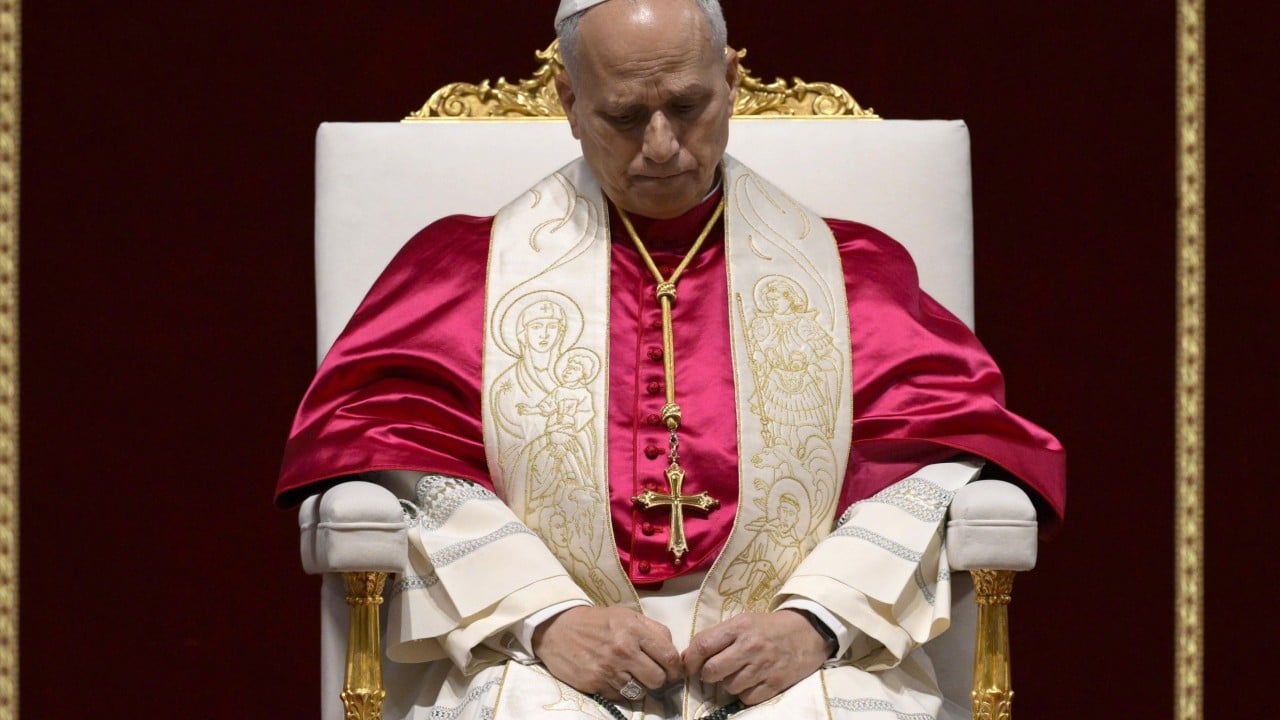
The escalating friction between Donald Trump and Pope Francis represents more than a personal grievance; it is a fundamental collision between two competing models of global stability. This rupture operates on a logic of irreconcilable strategic objectives regarding the resolution of the conflict in Ukraine and the broader security architecture of Europe. While the media focuses on the rhetoric of "not a fan," a rigorous analysis reveals three distinct points of failure in their diplomatic alignment: the definition of sovereignty, the cost-benefit analysis of territorial concessions, and the theological-political weight of the Catholic Church in Eastern Europe.
The Triad of Conflict Escalation
The current rift is structured by three primary variables that dictate the intensity of the disagreement. Understanding these variables provides the blueprint for how this tension will likely influence future foreign policy decisions.
- The Peace-Justice Disparity: Trump operates on a "Realist" peace model, where the objective is the cessation of kinetic operations through immediate negotiation, regardless of territorial integrity. Pope Francis, while frequently advocating for peace, adheres to a "Just Peace" framework that increasingly emphasizes the moral culpability of the aggressor and the rights of the invaded population.
- Institutional Leverage vs. Personalist Diplomacy: The Holy See utilizes a "soft power" network spanning centuries, prioritizing long-term stability and humanitarian corridors. Trump’s strategy utilizes "transactional power," prioritizing immediate, high-impact bilateral agreements that often bypass traditional diplomatic intermediaries.
- Voter Demographics and Moral Authority: In the domestic United States, the Catholic vote is a critical swing demographic. By attacking the Pope, Trump risks alienating a specific segment of the electorate that views the Papacy as the ultimate arbiter of moral standing, creating a political bottleneck in key battleground states.
The Territorial Cession Paradox
A central friction point involves the mechanism of ending the war. Trump’s public statements suggest a rapid resolution achieved by pressuring both Kyiv and Moscow into a settlement. This model assumes that territorial assets are fungible. From a strategic consulting perspective, this is a "Liquidation Strategy" applied to geopolitics.
The Vatican, however, views territorial integrity through the lens of international law and the protection of religious minorities. The Catholic Church has a significant presence in Western Ukraine (via the Ukrainian Greek Catholic Church). Any peace deal that cedes these regions or places them under a regime hostile to Western religious influence creates an existential risk for the Church's regional infrastructure. This isn't just about borders; it is about the protection of human capital and institutional assets.
The Feedback Loop of Retaliatory Rhetoric
When Trump characterizes his lack of affinity for the Pope, he triggers a specific feedback loop in the geopolitical landscape:
- Diplomatic Insulation: European leaders who find Trump’s "America First" policy abrasive will likely use the Pope’s moral stance as a shield. This provides them with a non-partisan justification for resisting U.S. pressure to reduce military aid to Ukraine.
- Fragmentation of the Conservative Coalition: Traditionalist Catholics who might otherwise support Trump’s economic or social policies are forced into a cognitive dissonance. This creates a "friction cost" in political mobilization, reducing the efficiency of his campaign's ground game.
- The Moscow Variable: The Kremlin benefits from this rift. A divided West, where the primary political leader of the GOP and the primary spiritual leader of the West are at odds, reduces the cohesive pressure required to sustain long-term sanctions or military support.
The Catholic Infrastructure in Ukraine
To understand why the Vatican cannot simply "agree to disagree" with a rapid, concession-based peace plan, one must quantify the Church's "Skin in the Game." The Ukrainian Greek Catholic Church (UGCC) and the Roman Catholic Church in Ukraine operate thousands of parishes, schools, and charitable organizations.
The "Cost Function" for the Vatican in a Russian-dominated outcome includes:
- Asset Seizure: Historical precedent suggests that under Russian administration, Catholic properties are frequently transferred to the state-aligned Orthodox Church or shuttered.
- Humanitarian Demand: Conflict resolution that does not address the return of displaced persons increases the financial and operational burden on Caritas Internationalis and other Vatican-affiliated NGOs.
- Erosion of Moral Capital: If the Pope is seen as endorsing a deal that validates the use of force, his ability to act as a mediator in future global conflicts is permanently diminished.
Strategic Divergence in Global Governance
The conflict is a manifestation of two differing views on the "Rule of Law." For Trump, international agreements are flexible instruments of national interest. For the Holy See, they are the bedrock of a "multipolar" world where the weak are protected from the strong through collective adherence to norms.
This creates a structural bottleneck in any potential cooperation. If Trump returns to the presidency, his administration will likely view the Vatican not as a partner, but as an NGO with an oversized ego. Conversely, the Vatican will view the U.S. administration as a disruptive force to the post-WWII order that the Church helped facilitate.
The Mechanics of the "Not a Fan" Doctrine
Trump’s use of the phrase "not a fan" is a calculated "Devaluation Tactic." By framing the leader of the Catholic Church in the vernacular of celebrity culture, he attempts to strip the Pope of his historical and spiritual gravitas. This is a common maneuver in brand management: when an authority figure criticizes your product, you do not argue the merits; you attack the authority's relevance.
However, the efficacy of this tactic is limited by the "Duration Factor." Political cycles in the U.S. last four to eight years. The Papacy operates on a multi-generational timeline. The Vatican can afford to "out-wait" any specific administration, meaning that the long-term geopolitical damage of this rift is disproportionately borne by the U.S. State Department’s ability to project moral leadership in the Global South, where Catholicism is expanding most rapidly.
Quantifying the Electoral Impact
In the United States, Catholics represent roughly 22% of the population. Analysis of the 2020 and 2024 cycles shows that this group is not a monolith but is highly sensitive to perceived attacks on the institution of the Church.
- White Catholics: Historically trend toward the GOP, but show a 5-7% volatility based on the candidate's alignment with social justice vs. traditional values.
- Hispanic Catholics: A critical growth demographic for both parties. Direct conflict with the Pope—who is the first Latin American Pope—creates a cultural barrier that can be exploited by political opponents.
The "Opportunity Cost" of Trump's attack is the potential loss of the narrow margins required to win rust-belt states like Pennsylvania and Wisconsin, where Catholic density is high. If even 2% of Catholic voters shift to "undecided" or "third party" due to this religious friction, it offsets the gains made in other demographic sectors.
The Geopolitical Forecast
Based on the current trajectory, the relationship will move from "cold" to "adversarial" if a second Trump term begins. We can project three specific outcomes:
- The Mediation Bypass: The U.S. will likely ignore Vatican-led peace initiatives (like the Zuppi mission), leading to a bifurcated diplomatic effort where the U.S. and the Holy See are running parallel, and potentially conflicting, negotiations.
- The Funding Freeze: There is a high probability that a Trump administration would scrutinize or reduce funding to international NGOs that align with the Vatican’s "migrant-first" policy, specifically those operating at the U.S. southern border.
- The Orthodox Pivot: To counter the Vatican's influence, the U.S. might seek closer ties with specific Eastern Orthodox patriarchates that are at odds with both Moscow and Rome, further complicating the religious-political map of Eastern Europe.
The strategic play for the Trump campaign is to decouple the Pope’s political stances from his spiritual authority in the minds of voters. For the Vatican, the play is to maintain a "Strict Neutrality" that emphasizes the suffering of the civilian population, thereby making any political attack on the Pope appear heartless or disconnected from human reality. The winner of this exchange will not be determined by a debate, but by which entity successfully controls the narrative of "legitimate peace" in the eyes of the international community.
The U.S. diplomatic corps must prepare for a scenario where the moral center of gravity in Europe shifts away from Washington and toward Rome, necessitating a back-channel strategy to mitigate the damage of public presidential rhetoric. Failure to do so will result in a fragmented Western front that invites further external aggression.