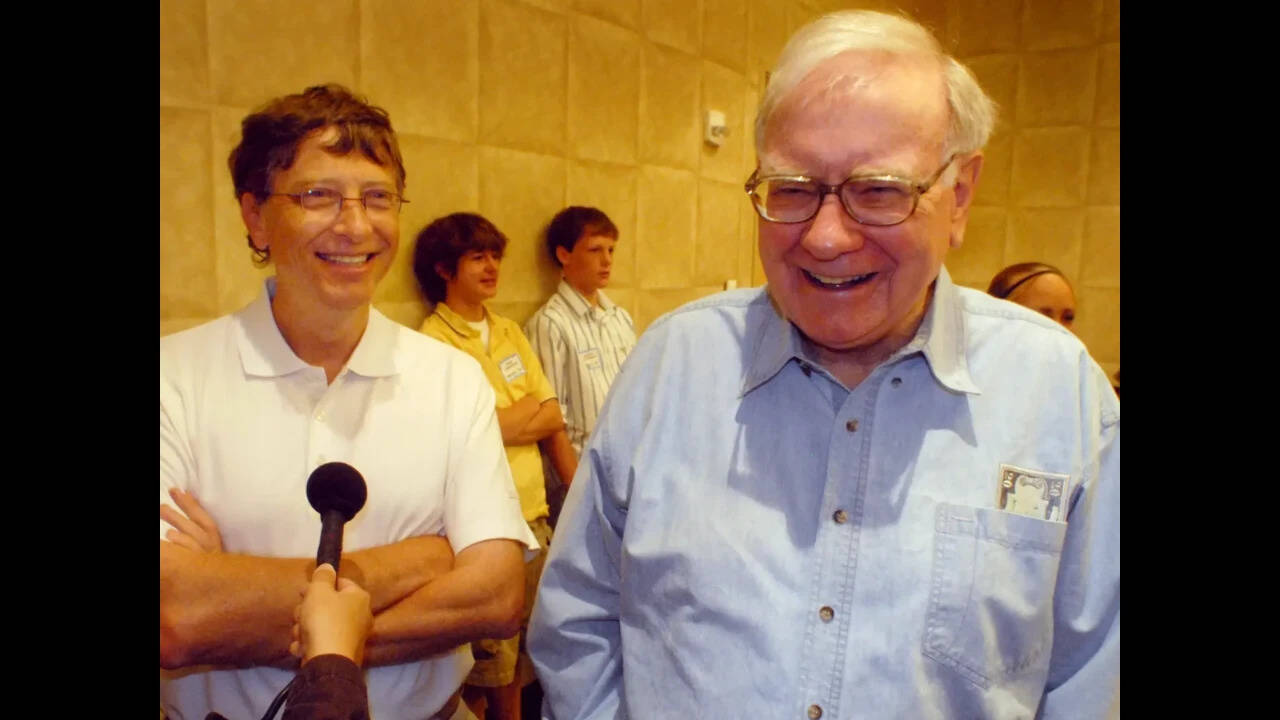
The restructuring of Warren Buffett’s testamentary plans represents one of the largest capital reallocation events in the history of philanthropy. By shifting the destination of his remaining Berkshire Hathaway Class A shares from the Bill & Melinda Gates Foundation to a newly established private trust overseen by his three children, Buffett has executed a strategic pivot that deserves rigorous structural analysis. This decision is not merely a personal choice; it is a calculated risk-mitigation move that highlights the limits of institutional trust, the necessity of governance alignment, and the challenges of generational wealth transfer.
To understand this shift, one must analyze the operational, reputational, and structural variables at play. The transition from a massive, institutionalized third-party foundation to a tightly controlled, family-governed vehicle reveals a fundamental tension in philanthropic strategy: the trade-off between institutional scale and direct governance control.
The Strategic Triad of Philanthropic Governance
The reallocation of Buffett’s remaining wealth—estimated at over $100 billion—can be dissected through three core pillars of estate governance: reputation protection, administrative alignment, and execution velocity.
                  [ Buffett's Wealth Reallocation ]
                                  │
         ┌────────────────────────┼────────────────────────┐
         ▼                        ▼                        ▼
[ Pillar 1: Reputation ]  [ Pillar 2: Alignment ]  [ Pillar 3: Velocity ]
  - Association risk        - Family stewardship     - Unanimous consensus
  - Brand preservation      - Direct oversight       - Adaptable distribution
Pillar 1: Reputational Risk Mitigation and Association Costs
In large-scale capital allocation, brand equity is a tangible asset. The Bill & Melinda Gates Foundation, while highly effective operationally, carries distinct reputational associations. Incidents or relationships that introduce public relations friction create a "reputation tax" on associated donors. For an investor whose entire career has been anchored on integrity and trust ("it takes 20 years to build a reputation and five minutes to ruin it"), any association that introduces ethical ambiguity is a systemic vulnerability.
By systematically winding down contributions to the Gates Foundation and redirecting the terminal estate to a family-controlled trust, Buffett establishes an immediate firewall. This structural separation isolates his legacy from external organizational controversies, governance shifts, or leadership changes over which he has no direct oversight.
Pillar 2: Governance Alignment and Agent-Principal Dynamics
The classic principal-agent problem dictates that as an organization grows, the goals of the agents (the foundation's professional managers and board) can diverge from the intent of the principal (the donor). The Gates Foundation has evolved into a massive global bureaucracy with its own established priorities, methodologies, and geopolitical relationships.
In contrast, the newly designated trust utilizes a highly concentrated governance model. Buffett's three children—Susan, Howard, and Peter Buffett—must act unanimously to distribute the capital. This design yields several distinct advantages:
- Direct Alignment: The trustees share a direct, lifelong understanding of the donor’s core values, eliminating the risk of mission drift.
- Zero-Agency Friction: Because the trustees are family members with established personal philanthropic tracks, the administrative overhead and ideological friction typical of large institutional boards are minimized.
- Adaptive Mandates: Unlike rigid institutional charters, a private family trust can pivot its focus areas in response to real-time global crises, rather than being bound to pre-existing program areas.
Pillar 3: Execution Velocity and Capital Dispersion
A common failure mode of massive philanthropic vehicles is the "wealth preservation trap," where the organization focuses more on maintaining its endowment size than on dispersing capital for maximum utility. Buffett's explicit instruction that the trust’s capital must be spent down within his children’s lifetimes ensures a high rate of capital dispersion.
This mandate introduces a steep spend-down curve. Disbursing over $100 billion effectively within a window of perhaps two to three decades requires an operational structure that prioritizes execution speed over bureaucratic deliberation. A three-person unanimous-consent board can approve multi-billion-dollar allocations with a speed that a complex international foundation cannot match.
The Economics of the Terminal Estate Transition
The financial mechanics of transferring Berkshire Hathaway Class A shares (BRK.A) into a terminal trust require careful examination. Buffett’s estate plan represents a highly structured liquidation strategy designed to minimize market disruption while maximizing tax efficiency.
[ BRK.A Shares in Estate ] ──► [ Conversion to BRK.B ] ──► [ Controlled Trust Distribution ]
                                                                   │
                                                   ┌───────────────┴───────────────┐
                                                   ▼                               ▼
                                         [ Tax Optimization ]             [ Market Stabilization ]
Conversion and Liquidation Mechanics
The transfer of wealth relies on the conversion of Class A shares (which carry high voting rights and value) to Class B shares (which offer high liquidity and lower nominal value). This conversion process serves two vital functions:
- Market Stabilization: Directly dumping billions of dollars of BRK.A shares onto the open market would create severe downward price pressure and disrupt Berkshire Hathaway’s shareholder base. Converting to BRK.B allows for highly controlled, incremental liquidations that the market can absorb without significant volatility.
- Voting Control Preservation: By keeping the unliquidated assets primarily in Class A shares until conversion is necessary for distribution, the estate preserves the voting structure of Berkshire Hathaway during the transitional phase, ensuring corporate stability for the conglomerate’s operating businesses.
Tax Optimization Framework
Under current US tax law, the transition of assets to a qualifying charitable trust yields substantial estate tax deductions.
- Step-Up in Basis: Assets held until death receive a step-up in basis, reducing the capital gains tax burden upon liquidation by the estate or trust.
- Charitable Deductions: By dedicating the assets to charitable purposes via the trust, the estate effectively neutralizes federal estate tax liabilities that could otherwise claim up to 40% of the total value. This ensures that 100% of the generated wealth is directed toward productive societal allocation rather than federal tax coffers.
Strategic Pitfalls of the Tri-Trustee Model
While the concentrated governance model offers clear advantages in speed and alignment, it is not without structural vulnerabilities. Investors and estate planners must evaluate the inherent risks of a three-person unanimous-consent framework.
| Variable | Institutional Foundation (e.g., Gates Foundation) | Concentrated Family Trust (Buffett Model) |
|---|---|---|
| Governance Structure | Large, diverse board with committee oversight | Three trustees with equal voting power |
| Decision-Making | Majority vote, structured bureaucratic processes | Unanimous consent |
| Mission Flexibility | Low (bound by historical focus areas) | High (can pivot instantly to any charity) |
| Key-Person Risk | Low (institutional continuity) | High (dependent on the health/cooperation of three individuals) |
| Disbursement Speed | Gradual, structured, long-term horizon | Rapid, mandated spend-down |
The Unanimity Bottleneck
The requirement for unanimous agreement among the three siblings introduces a classic dead-lock risk. If one trustee disagrees on a massive allocation proposal, the capital remains stagnant. While this prevents impulsive or misaligned distributions, it can also lead to strategic paralysis, particularly as the trustees age or if personal philosophies diverge over time.
Key-Person Risk and Successor Planning
A concentrated model is highly sensitive to the capacity of its trustees. The physical and cognitive longevity of the three siblings is the single point of failure for the entire distribution strategy. If one or more trustees become incapacitated, the trust must rely on pre-defined successor clauses. The transition of this authority to a third generation introduces the exact same principal-agent risks that the model was designed to avoid in the first place.
The Strategic Path Forward
For ultra-high-net-worth capital allocators and estate strategists, the Buffett transition provides a clear blueprint for legacy design. To replicate its strengths while mitigating its structural risks, the following tactical steps must be integrated into any terminal wealth transition plan:
- Define the Liquidation Horizon: Establish a strict spend-down timeline (e.g., 20 to 30 years post-founder) to prevent the trust from mutating into a self-preserving bureaucracy. This forces the organization to focus on immediate, high-impact capital deployment rather than asset preservation.
- Implement a Dynamic Dispute Resolution Mechanism: To prevent the unanimity bottleneck, construct a back-tier arbitration framework. If the family trustees reach an impasse on a major allocation after a set period, a pre-selected board of independent advisors should have the power to break the tie, ensuring capital flow is maintained without litigation.
- Construct an Asset-to-Liquidity Ramp: Ensure that the asset base is systematically converted from concentrated equity holdings to diversified, highly liquid instruments ahead of major distribution cycles. This insulates the charitable initiatives from broader market downturns and prevents forced liquidations of the core conglomerate shares at depressed valuations.
The shift in Buffett’s estate strategy marks a transition from institutional philanthropy back to highly personalized, trust-based stewardship. It asserts that at a certain scale, the most effective way to safeguard a legacy is not through massive, permanent institutions, but through highly concentrated, agile, and time-limited family vehicles.