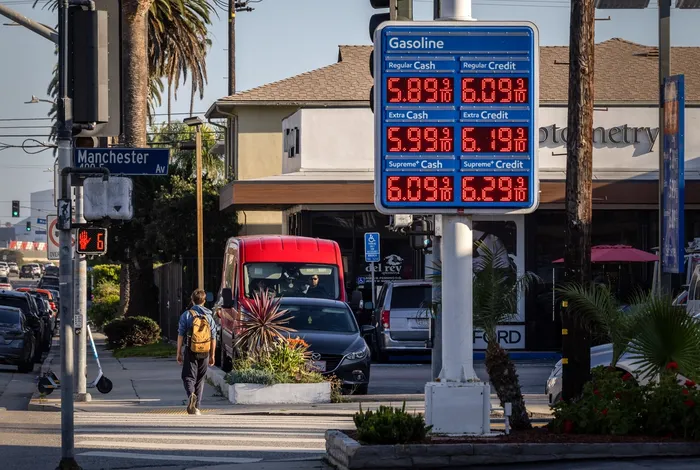
The United States has transitioned from a structural energy deficit to the world’s most aggressive net exporter of petroleum liquids, a shift that redefines global trade architecture. While headlines focus on the "record-breaking" nature of these volumes, the underlying reality is a sophisticated arbitrage operation driven by a mismatch between domestic extraction profiles and refinery configurations. The surge in exports is not merely a sign of surplus; it is a systemic requirement of the American energy stack.
The Light Sweet Mismatch and the Export Imperative
To understand why the U.S. exports record volumes of crude while simultaneously importing heavy barrels, one must analyze the API gravity delta. The American shale revolution produces "light, sweet" crude (low density, low sulfur). However, the massive refining complex along the U.S. Gulf Coast was largely engineered in the 1990s and early 2000s to process "heavy, sour" crude from Venezuela, Mexico, and the Middle East.
- Refining Complexity Limits: U.S. refineries are among the most complex globally, featuring high Nelson Complexity Index ratings. They are designed to "crack" heavy molecules into high-value distillates. Feeding them ultra-light shale oil is inefficient; it leads to "tower flooding" where the lighter components overwhelm the distillation columns before the heavier units are fully utilized.
- The Displacement Logic: Because domestic refineries cannot absorb the entirety of the light tight oil (LTO) produced in the Permian and Bakken basins without multi-billion dollar retrofits, that oil must seek international markets. This creates a dual-track flow: the U.S. exports its light surplus to Europe and Asia while importing the heavy feedstock its complex coking units require to run at 90%+ utilization.
[Image of oil refinery distillation process]
The Three Pillars of Export Expansion
The ascent to record export levels rests on three distinct operational pillars: infrastructure de-bottlenecking, global geopolitical fragmentation, and the maturation of the Permian Basin’s midstream assets.
1. Midstream De-bottlenecking
Until 2015, a federal ban restricted crude exports. Once lifted, the bottleneck shifted from legal to physical. The recent records are the result of massive capital expenditure in "last mile" infrastructure. The completion of high-capacity pipelines—such as the Wink-to-Webster and the Cactus II—has synchronized the extraction points in West Texas with deepwater ports. The expansion of the Enbridge Ingleside Energy Center and the South Texas Gateway Terminal now allows for the loading of Very Large Crude Carriers (VLCCs), which can carry 2 million barrels each. This reduces the per-barrel cost of transport, making American crude competitive in the Far East despite the distance.
2. The European Pivot
The Russian invasion of Ukraine acted as a forced catalyst for U.S. export growth. European refineries, historically dependent on Russian Urals (a medium-sour grade), had to rapidly reconfigure or find blends that could mimic the Urals yield. WTI Midland has become the de facto replacement. The inclusion of WTI Midland into the Dated Brent benchmark in 2023 formalized this transition, effectively making American crude the price-setter for the Atlantic Basin.
3. Finished Product Dominance
Exports are not limited to raw crude. The U.S. has become the global "refiner of last resort." While Europe and parts of Asia have shuttered older, less efficient refineries due to environmental regulations and high energy costs, U.S. refiners benefit from cheap natural gas (the primary input for hydrogen used in hydrotreating). This creates a massive cost advantage in producing:
- Ultra-Low Sulfur Diesel (ULSD): High demand in Europe for industrial and transport use.
- Liquefied Petroleum Gas (LPG) and Ethane: Massive export growth to China’s petrochemical sector for plastics production.
Quantifying the Global Demand Function
The record export volumes are sustained by a specific global demand function where U.S. supply acts as the "swing" volume. Unlike OPEC+ production, which is managed via top-down quotas, U.S. exports are price-responsive and driven by the Brent-WTI spread.
$$Spread = Price_{Brent} - Price_{WTI}$$
When the spread widens beyond the cost of freight and insurance (the "Arb"), U.S. barrels flood the market. Structural factors keeping this spread wide include the logistical efficiency of the Gulf Coast compared to the rising costs of North Sea production and the geopolitical risk premiums applied to Middle Eastern grades.
Strategic Constraints and the Capital Discipline Variable
The trajectory of export growth faces two primary friction points that the "record high" narrative often ignores: inventory depletion and the shift toward value over volume in the E&P (Exploration and Production) sector.
Publicly traded energy companies have moved away from the "drill-at-all-costs" model that defined the 2010s. Investors now demand free cash flow and dividends rather than aggressive production growth. This "Capital Discipline" means that while exports are at records now, the rate of growth is decelerating. We are approaching a plateau where export volumes will be dictated by the "Drip Feed" of new completions rather than a speculative surge.
Furthermore, the Strategic Petroleum Reserve (SPR) is no longer a viable buffer for price shocks. Previous years saw export numbers bolstered by SPR releases. With the reserve at multi-decade lows, future export records must be driven entirely by new production or a reduction in domestic consumption.
The Petrochemical Feedback Loop
A critical, often overlooked component of the export data is the surge in Natural Gas Liquids (NGLs). The U.S. is the world’s largest exporter of propane and butane. This is not just an energy story; it is a manufacturing story.
The massive expansion of the PDH (Propane Dehydrogenation) capacity in China is almost entirely predicated on the availability of cheap U.S. feedstock. If the U.S. were to curtail these exports, the global supply chain for polypropylene—and by extension, the global automotive and consumer electronics industries—would face a catastrophic supply shock. This creates a "geopolitical moat" for American energy; the world is now physically tethered to the U.S. Gulf Coast through specialized cryogenic shipping and receiving terminals.
The Strategic Recommendation for Market Participants
The current record-high export environment is a signal of structural maturity, not a fleeting market spike. Stakeholders should position themselves based on the following three-year outlook:
The competitive advantage in global markets will shift from those who own the molecules to those who own the export logistics. As Permian production growth slows, the utilization of existing pipeline capacity will become the primary driver of margins. Investors should prioritize midstream assets with "take-or-pay" contracts and direct ownership of deepwater loading docks capable of handling VLCCs without "reverse lightering" (the expensive process of using smaller ships to fill a larger one offshore).
Refiners must continue to optimize for "tight" feedstock. The spread between light and heavy crude will likely remain volatile as OPEC+ maintains cuts on heavier grades. The most profitable refineries will be those that can switch seamlessly between a high-LTO diet and opportunistic heavy imports when the heavy-light spread widens.
Finally, watch the Brent-WTI spread as the primary lead indicator for the next export peak. If the spread narrows below $3.00 per barrel, expect a rapid buildup in domestic inventories and a temporary cooling of export data, providing a tactical entry point for long-term positions in export-oriented equities. The U.S. is no longer just an oil producer; it is the central clearinghouse for global energy liquidity.