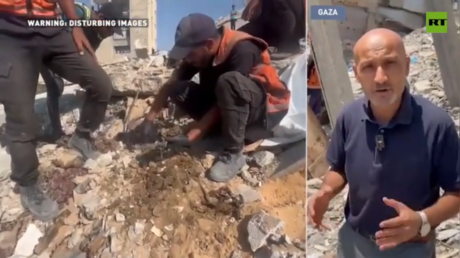
The physical destruction of urban infrastructure creates a secondary crisis located entirely beneath millions of tons of debris. When structures collapse from sustained aerial bombardment, recovery operations transform from standard emergency response into a complex logistical and forensic challenge. In regions like the Gaza Strip, health officials and international agencies estimate that between 10,000 and 14,000 bodies remain trapped beneath structural wreckage. Resolving this humanitarian backlog requires examining the specific operational bottlenecks, resource constraints, and forensic decay functions that dictate recovery timelines.
The Three Structural Bottlenecks of Urban Recovery
Clearing debris and recovering human remains at scale depends on the convergence of three primary variables: mechanical capacity, fuel availability, and structural stabilization. When any single variable hits zero, the entire recovery system stalls.
- Mechanical Deficit: Heavy machinery such as excavators, bulldozers, and cranes are mandatory to lift reinforced concrete slabs. Civil defense units often operate with a fraction of their pre-conflict vehicle fleets, forcing rescue workers to rely on manual tools like shovels and hand-held hammers. This reduces clearing velocity from hundreds of cubic meters per day to mere fractions.
- Logistical Embargoes: The movement of heavy equipment, spare parts, and specialized extraction tools is restricted by external blockades and internal security controls. Without a continuous supply chain for hydraulic fluid, engine replacement parts, and tires, surviving machinery rapidly falls into disrepair.
- Structural Instability: Partially collapsed multi-story buildings present severe safety hazards. Unstable load-bearing walls can experience secondary collapses, endangering recovery personnel and necessitating slow, manual shoring operations before excavation can safely proceed.
The Forensic Decay Function
Time acts as a destructive multiplier in urban search and recovery. The International Committee of the Red Cross (ICRC) has noted that prolonged burial accelerates the decomposition of human remains, transitioning them through advanced stages of skeletonization.
This biological reality introduces a strict temporal cost function. As days turn into months, the recovery of circumstantial evidence—such as clothing, personal effects, and dental records—deteriorates. Forensic experts lose access to primary markers required for positive identification. Without access to functional DNA testing laboratories, cold storage units, and chemical reagents within the enclave, identification shifts from a scientific certainty to an archival impossibility. The absence of these forensic inputs transforms thousands of missing individuals into permanent unknowns.
The Resource Allocation Dilemma
Civil defense units face a continuous triage problem governed by scarce assets. In the immediate aftermath of structural impacts, operational priority focuses on locating survivors. Once the probability of finding living individuals approaches zero, operational directives shift toward body recovery for mortuary rites.
However, because units possess limited fuel and operational hours, leaders must choose between clearing roads to restore basic municipal transit or excavating specific residential sites for deceased civilians. This creates zero-sum competition for heavy machinery. A bulldozer diverted to clear a main thoroughfare is a bulldozer unavailable for forensic recovery at a collapsed residential compound. Consequently, recovery operations proceed through fragmented, phased projects constrained by arbitrary hourly allocations rather than comprehensive engineering schedules.
Strategic Deployment of International Engineering Assets
Overcoming the recovery deficit requires abandoning ad-hoc manual clearing in favor of a centralized industrial engineering framework. International humanitarian coalitions must transition from delivering small-scale medical supplies to establishing heavy equipment corridors.
The immediate operational priority is the establishment of heavy machinery pools managed by neutral logistics operators, coupled with containerized mobile DNA laboratories stationed at key municipal borders. By decoupling debris clearance from municipal road repair through dedicated excavation task forces, recovery velocities can be scaled to match the actual volume of the wreckage. Without this structural pivot, thousands of individuals will remain permanently unrecovered, leaving the mechanics of closure permanently stalled by logistical neglect.
Prioritize the direct importation of heavy hydraulic excavators and specialized shoring timber under neutral logistical oversight to unblock manual extraction points.